




Unconventional Relationships: Escape, Healing, and the Search for Love

【🤲🏻❤️:This bonus feature is even better paired withthe main episode!】
Hello, everyone. I’m Xuemin.
This Episode 6 bonus feature uses the Korean film A Man and a Woman, starring Jeon Do-yeon and Gong Yoo, to discuss affairs and loneliness. Its cinematography and interiors are beautiful; if you have not seen it, I recommend watching first.
Many viewers see a restrained, heartbreaking affair. I want to ask: is it really love?Why, in extreme loneliness, do we so readily treat someone who comforts us as the love of our life?
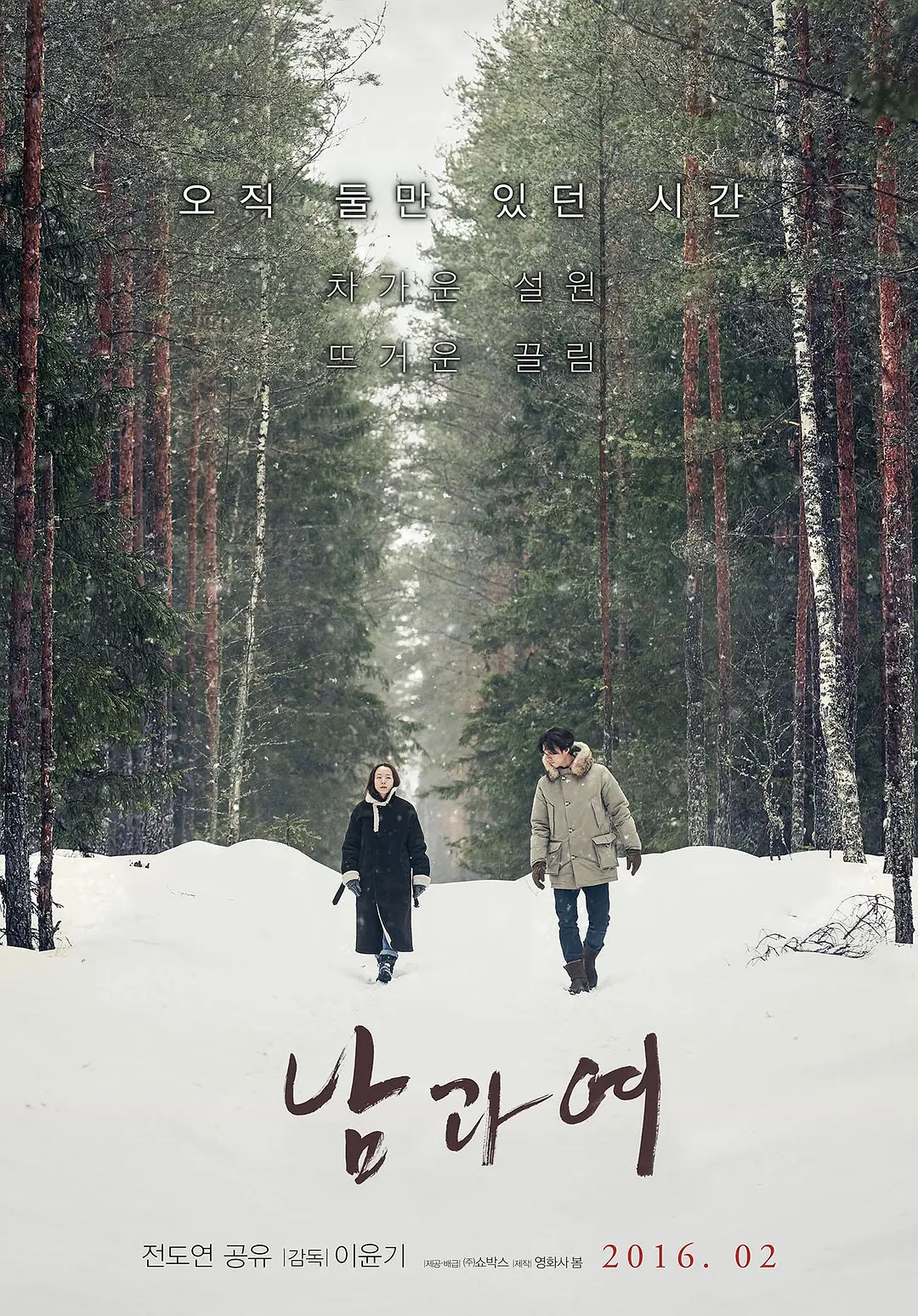
A Man and a Woman poster (image: Douban)
First, the story.
Jeon Do-yeon’s heroine balances work with caring for an autistic son; Gong Yoo’s hero cares for a depressed daughter and emotionally unstable wife. Both live for others as tools that cannot stop.
They meet in wintry Finland while their children receive special treatment. A strange setting and similar predicament let two long-lonely, suffocating people see and approach each other, finding rare comfort and wordless understanding.
What seems a brief encounter persists. Back in Korea he cannot forget her. With no contact details, he uses fragments she mentioned to find her clothing store, and they reenter each other’s lives.
They meet secretly, accompany and comfort one another. She finally chooses herself for love, tells her husband “I cannot live without him,” leaves her family, and goes to the man.
When choice and responsibility become real, he hesitates and retreats. As she leaves alone, he rushes from a restaurant with car keys to follow, but stops upon seeing his young daughter and returns to his family.
That is the story. Slow rhythms and quiet snow make the affair a fire in winter and an inner avalanche amid silence.

A still from the film (image: A Man and a Woman)
Does this sound like love?
For the man, at least, perhaps not.
His impulse to begin and continue comes largely from prolonged loneliness. For him,it is less love than an intense attachment to comfort after long isolation.
He scarcely considers a lasting relationship or how choosing it would affect his duties to wife and daughter. Not thinking means he never imagines the future;he only grasps desperately at the person who finally makes him less lonely now.
Psychology and neuroscience echo the film:prolonged loneliness changes how people handle intimacy.
Research finds that it weakens self-regulation and impulse control, makes cognition more negative, pessimistic, anxious, and self-denying, impairs risk judgment, and encourages overvaluing anyone or any relationship that temporarily relieves isolation.
Thus a long-lonely person who falls for someone is more easily controlled by feeling and impulse, less able to consider risk and cost or manage action, and less prepared to love responsibly and build for the long term.
That describes the hero. What drives him may be less love than a survival instinct that has finally found an exit.Someone long hungry and cold cannot yet seek their favorite lifetime meal or destination; first they must stop suffering. The intensity of that impulse is easily mistaken for love.
Though lonely too, the heroine has beloved work and a habit of reflection. Her action resembles a considered, all-or-nothing choice rather than impulse. Their doomed romance becomes a door toward freedom and the unknown, releasing courage and strength throughout her life.
Now back to loneliness.
When someone long isolated believes they found love, they may need to slow down and ask:Do I love this person, or merely that someone finally makes me less lonely?
If a long-lonely person says they love you, observe further:Is their love what you truly want? Do they love you, or the feeling of finally receiving a response and temporarily escaping loneliness?
This does not mean lonely people cannot love, but loneliness makes comfort easy to mistake for love. Before immediately committing, observe:Will the love change as loneliness eases? Can it still support both people toward the future they want?
For single people, long-term loneliness has another effect: it can make a good, healthy relationship easier to miss.
Research finds it disrupts empathy and executive function, hindering accurate understanding and responses to kindness, and creates defensive cognition that misreads neutral or friendly situations.
An ordinary suggestion becomes criticism; someone’s need to rest becomes rejection. Thusa long-lonely person grows more sensitive and defensive and finds trust increasingly difficult.
Lacking positive relational experience, they also struggle to express and share joy, which healthy, high-quality relationships need. Thusrelationship becomes a vicious cycle: loneliness impairs connection, and impaired connection deepens loneliness.
Others move the opposite way. Desperate to end loneliness, they crave love and immediately invest or sacrifice themselves, readily entering a bad relationship.
That is,loneliness weakens regulation and social judgment, blurring sincerity and manipulation and encouraging blind investment in exploitative relationships. Negative cognition also creates sensitivity and defense, prevents honest self-disclosure and enjoyment of intimacy, drives partners away, and produces repeated inner depletion.
Loneliness is far more common than imagined. Some studies suggest at least twenty percent of people worldwide experience strong chronic loneliness.
If you wonder whether this applies to you, try the classic UCLA Loneliness Scale.
It asks how often you feel you no longer want closeness, that people do not accept your interests, that nobody understands you, or that you have nobody to confide in. The scale appears below.
Scores of 49 or 53 and above warrant attention because loneliness is likely high and may affect health, self-perception, and relationships.
A score does not define or judge you or place you in a rigid quantitative system. The scale is simply a mirror that helps you see and understand yourself and remember:I am experiencing loneliness and need and deserve understanding, care, and response.
Every lecture in Chapter 1 of Abnormal Relationships discusses ways of responding: loving ourselves and others and building more loving, genuinely healthy relationships are all ways of living with loneliness.
That is all. Share your thoughts on loneliness or your reading of A Man and a Woman in the comments. Until next time.
📝 UCLA Loneliness Scale, Version 3
The statements describe feelings people sometimes have. Enter a number after each to show frequency. Example:
How often do you feel happy?
If never, answer “never”; if always, answer “always.”
1 Rarely 2 Sometimes 3 Never 4 Always
1. How often do you feel in tune with people around you?
2. How often do you feel that you lack companionship?
3. How often do you feel there is no one you can turn to?
4. How often do you feel alone?
5. How often do you feel part of a group of friends?
6. How often do you feel you have much in common with people around you?
7. How often do you feel you no longer want closeness with anyone?
8. How often do you feel people around you do not accept your interests and ideas?
9. How often do you feel outgoing and friendly?
*10. How often do you feel close to people?
11. How often do you feel left out?
12. How often do you feel your relationships are not meaningful?
13. How often do you feel no one truly knows you?
14. How often do you feel isolated from others?
15. How often do you feel you can find companionship when you want it?
16. How often do you feel someone truly understands you?
17. How often do you feel shy?
18. How often do you feel people around you are unwilling to be with you?
*19. How often do you feel there are people you can talk to?
20. How often do you feel there are people you can turn to?
The word “lonely” intentionally does not appear because men are less willing than women to admit loneliness. To score, reverse starred answers: 1 becomes 4, 2 becomes 3, 3 becomes 2, and 4 becomes 1; then total all ratings.
Young men tend to be lonelier than women, averaging 42 versus 39, with a standard deviation of 9.5 for both. A score of at least 53 indicates greater loneliness than most men; at least 49, greater than most women. A score of 31 or lower indicates less loneliness than most men; 29 or lower, less than most women.
2026.07.06
Audio in Chinese
Related programs

When Love Ends: The Infinite Life Reading List, Season 18
What Is Left to Say About Love?
¥48.00
Included with membership

Solitude: The Infinite Life Reading List, Season 9
A New Philosophical Experience of Confronting Loneliness
¥48.00
Included with membership

Dai Jinhua on Beauvoir: When Women Choose to Face the World
Embrace the contradictions within through reading and writing
¥68.00
Included with membership