



The Origins of Totalitarianism: How Total Domination Works and What It Leaves Behind | Citizenship Course, Season 9

Hello, I’m Yang Zhao. Reading Hannah Arendt’s The Origins of Totalitarianism requires some twentieth-century historical background.
Stalin’s Show Trials and the Mystery of Confession
Stalin gained leadership of the Soviet Communist Party in 1929 and launched the Great Purge in 1935, targeting chiefly veteran comrades who had joined Lenin in the October Revolution.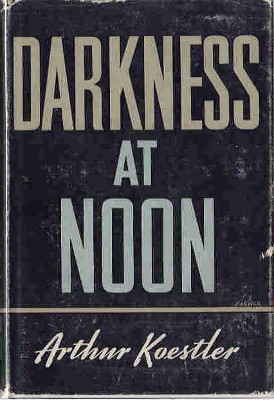
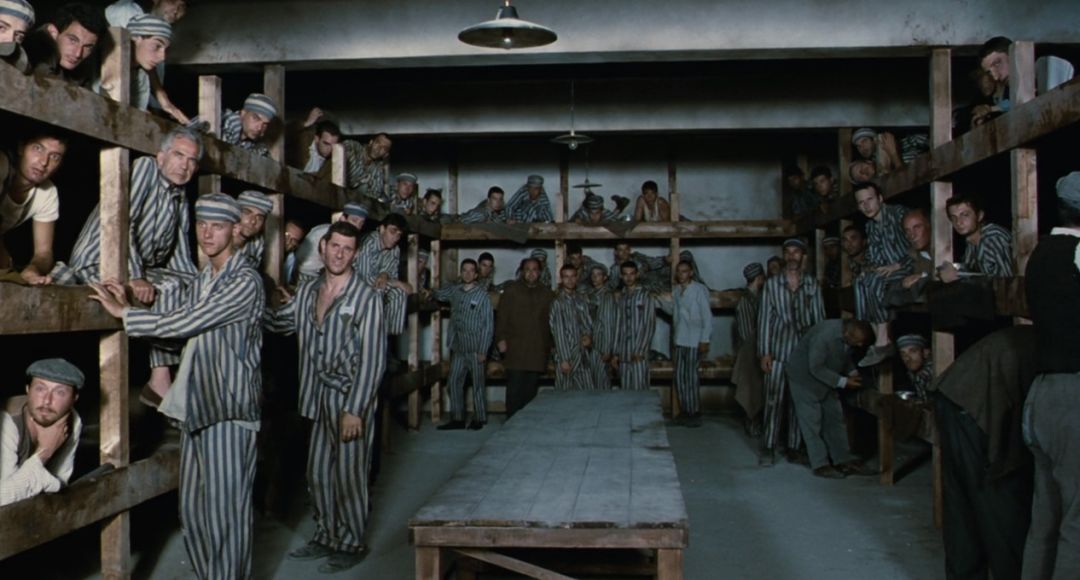
He fabricated charges against them, expelled some from the party, and subjected them to staged public show trials. Once-powerful old cadres stood in rows through trial after trial.
The proceedings were publicly performed according to a script. Arthur Koestler’s Darkness at Noon offers a powerful representation of the whole purge.
1st US edition of Darkness at Noon
Most strangely, every accused person confessed. No one protested that the party or Stalin had framed and persecuted them.
Not one used the public trial to resist or question the charges.
Why?
Why Confess When Confession Still Means Death?
Most defendants did not confess to save their lives. One might yield when confession offers survival and refusal means death.
But most were executed and many knew in advance that confession would not spare them. That creates the fundamental puzzle.
If either choice ends in death, why not die without confessing?
After Stalin’s death, materials about the purge gradually emerged, inspiring works such as Darkness at Noon. These people submitted to those taking their lives: Stalin crushed not only their bodies but their wills.
Why could they neither resist nor even remain silent? Why confess publicly?
Six Million People Die Almost Without a Sound
Another immense question concerns the Jews.
In 1945 Allied forces discovered concentration camps across German-occupied Europe. Reconstructing their records after Germany’s defeat revealed that as many as six million Jews had been murdered between 1939 and 1945.
So many deaths in only five or six years were astonishing.
How could Germany kill six million so efficiently outside the battlefield, a number difficult to kill even in war?
How did Germans devise and execute such efficient, cold-blooded mass murder? Why could they do it? These became essential questions.
A still harder question confronted Jewish survivors, including Arendt: why did the Jews not resist?
The scale of six million murders shocked the world when first discovered.
Yet it also forces the question: how could six million people be murdered so quietly?
Even amid wartime distraction, how could slaughter on this scale remain unknown until Soviet forces entered Germany from the east and British and American troops entered occupied territory from France, discovering camps and records one by one?
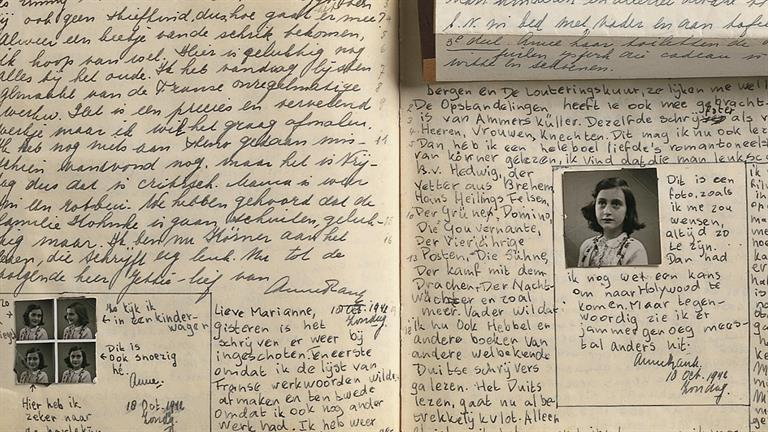
The Diary of Anne Frank, written by a Jewish girl while the Nazis occupied the Netherlands
To grasp the reality, ask the brutal question: could anyone silently kill twenty people, or even five? How could the victims die without noise, resistance, or attracting attention?
This leads to a question painful enough to seem like a second injury, yet one that long haunted Jewish survivors such as Arendt:
Was there a Jewish resistance movement? Almost none on a scale recognizable as a major historical event opposed Nazi persecution.
Because Jews had already suffered so deeply, outsiders hesitated to ask why they had not resisted. But some Jews themselves asked what had happened to them.
Familiar accounts show sealed ghettos, residents taken to stations and packed into freight cars like livestock, then transported to camps where each person became a number.
All property and possessions were seized. Victims received the simplest camp clothing and sometimes entered gas chambers naked.
The concentration camp in the film Life Is Beautiful
The process was long rather than immediate: ghetto to station, freight train to camp, registration and waiting, then a queue for the gas chamber.
An Overmobilized Germany Still Had Capacity for Murder
Nazi Germany called this process the Final Solution.
Given Germany’s wartime demands, few administrators were available. How many people should it have taken to gather, transport, and gas six million victims?
Germany was already overmobilized. More than a million young Germans had died in World War I. Only two decades later it mobilized again across eastern and western fronts, deep into the Soviet Union and across occupied France, while fighting Britain and later America and occupying much of Europe.
How could a country with finite population still have manpower to murder Jews?
In fact only several thousand administrators operated the Final Solution, making it stranger that they could kill more than six million.
What made Jews so compliant? They did not repeatedly launch large revolts that were defeated; they scarcely attempted resistance. Why?
Germans Did Not Resist Either
Jews may appear unusual, but were Germans less puzzling? What relationship allowed the Nazis to rise, plunge Germany into war, and murder six million Jews?
Postwar Germany struggled profoundly with this question.
We find almost no organized Jewish resistance during extermination.Likewise, Germans offered little resistance as Nazism mobilized the whole country. Assassination plots are celebrated precisely because they were so rare. Germans too followed the Nazis with relative obedience and helped form this history.
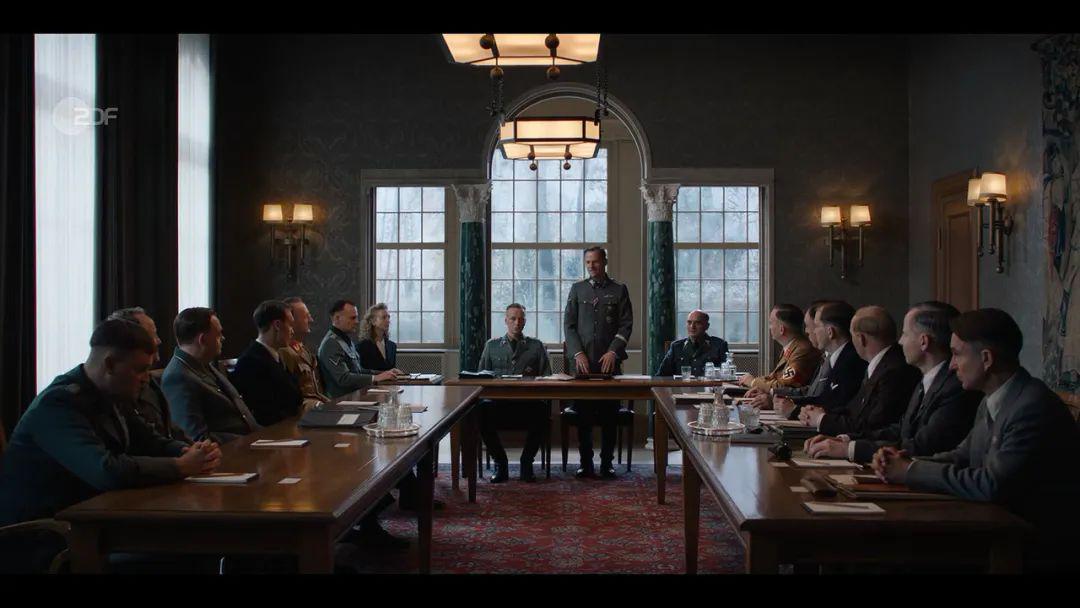
The film The Conference depicts Nazi officials discussing the Final Solution to the Jewish question.
Arendt stood before these immense questions and sought an answer.Her title identifies the framework: totalitarianism helps explain Soviet veterans’ conduct in show trials and, in part, Jewish and German responses under Nazi rise and rule.
Arendt’s Position: Understanding Rather Than Shock
Two approaches could explain Nazism’s rise and German behavior.
One treats them as general human reactions and searches other societies and eras for parallels: evil in human nature, collectivism, obedience to authority, and similar factors.
The other isArendt’s approach: examine seriously how this event relates to earlier history and human nature, without assuming from the outset that it merely expresses a universal flaw or familiar humanity gone astray.
Genuine Understanding: Rejecting Ready-Made Explanations
The question was immense. After World War II, many thinkers tried to answer it.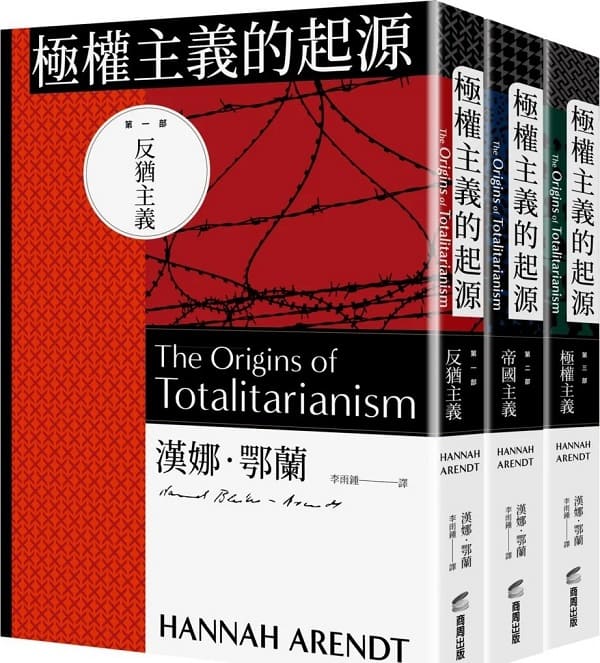
Arendt’s answer carries special weight within that historical setting.
Begin with her attitude.
She called it human comprehension, which Chinese can render only as human understanding or humanistic understanding.
Comprehension mattered enormously. The first edition of The Origins of Totalitarianism appeared in 1951 with a short preface.
A substantially revised second edition followed in 1967. Its three parts each received a separate new preface.
Hannah Arendt’s trilogy The Origins of Totalitarianism
She discussed human comprehension in the 1951 preface and again in 1967, while deliberately retaining the original preface.
The repetition shows how central comprehension is to reading her answer.
After completing this book she developed the concept further in The Human Condition.
Her emphasis answered a widespread inability to understand the terrible mid-century catastrophe.
People were stunned by an immense spectacle: imagine six million people, almost a quarter of Beijing’s population, queuing over five years for trains, camps, and gas chambers.
That spectacle was only one extreme. From trench warfare to three-dimensional land, sea, and air war, new weapons transformed conflict. Nazi Germany developed V-1 cruise missiles and V-2 ballistic missiles. War itself became a terrifying spectacle.
Some people were shocked, frightened, and crushed into intellectual surrender. They offered no explanation and felt none was needed: the events had simply happened.
What was missing was comprehension. Merely accepting horror and cruelty without understanding means surrender. Crushed by spectacle, one cannot criticize or resist it.
Writing from 1946 to about 1949, Arendt saw many people still in shock and unable even to seek what had happened.
She also rejected a form of apparent understanding that was not understanding at all.
Its clearest version selected historical analogies, assuming twentieth-century catastrophe must be an existing human experience differing only in degree.
People compared it with Greek or Roman dictatorship, Athenian imperial development, or Rome’s movement from republic and magistrates toward emperors and concentrated power.
If one assumes every event has a precedent, the easiest path to comprehension is historical comparison.
Arendt opposed that attitude. Her insistence on human comprehension forbids laziness and evasion: genuinely knowing and understanding the frightening phenomenon is a responsibility human beings must accept.
How should we pursue such comprehension? In the next episode I will continue explaining Arendt’s position. Until then.
2026.08.13
Audio in Chinese