Hello, I’m Zhang Xiangrong. Welcome to the reading-list series New Insights and Criticism in History. We begin with Ma Boyong and The Lychees of Chang’an.
The ‘Lonely’ Ma Boyong
Is Ma Boyong lonely?
The title means that over the past decade Ma has stood far ahead of other historical novelists in output, quality, and screen adaptation—unlike the crowded fields of science fiction, mystery, and crime. We begin with historical fiction because, despite outstanding historians, archaeologists, and popular-history writers, Ma is its most recognizable public figure.
Consider sales figures from OpenBook through June: the 2022 Lychees of Chang’an sold 2.45 million copies; The Ming under the Microscope and The Bothered Taibai Jinxing each sold one million; two editions of The Longest Day in Chang’an together exceeded 800,000. These are top-tier bestsellers in today’s market.
Ma and I are the same age. I first saw his name online while at university in the early 2000s. For nearly twenty years it appeared on genre fiction, bestsellers, and essay collections filled with deadpan jokes. His early direction and style were unsettled, like internet humor extended onto paper across many publishers—the freewheeling forum era that readers now call his embarrassing past.
Yet that early writing mattered. Historical subjects already suited him best and earned him readers. By The Longest Day in Chang’an in 2016, he was well known in historical fiction and popular history; friends often recommended works such as The Wind Blows from Longxi. He was one step from mass recognition.
Today’s audiences live in separate circles: an author famous within one may be unknown outside it. National, collective popularity has faded across books, music, and film, making a breakthrough crucial. Liu Cixin needed The Three-Body Problem’s major award and The Wandering Earth adaptation. Ma’s breakthrough likewise came through the screen version of The Longest Day in Chang’an.
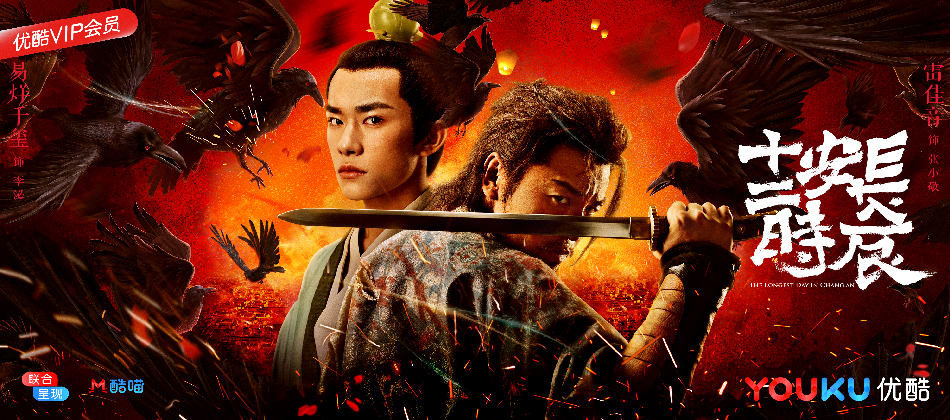
The 2019 television adaptation of The Longest Day in Chang’an
Ma Boyong Breaks Out
















The ‘Lonely’ Ma Boyong
Ma Boyong Breaks Out