




历史的新知与批判:2016-2025十年之选书单特辑04

Hello, I’m Zhang Xiangrong. Welcome to the Historical Knowledge and Critique reading series.
This third installment reads Jerry Brotton’s A History of the World in Twelve Maps and considers how historical readers interpret images, especially maps.
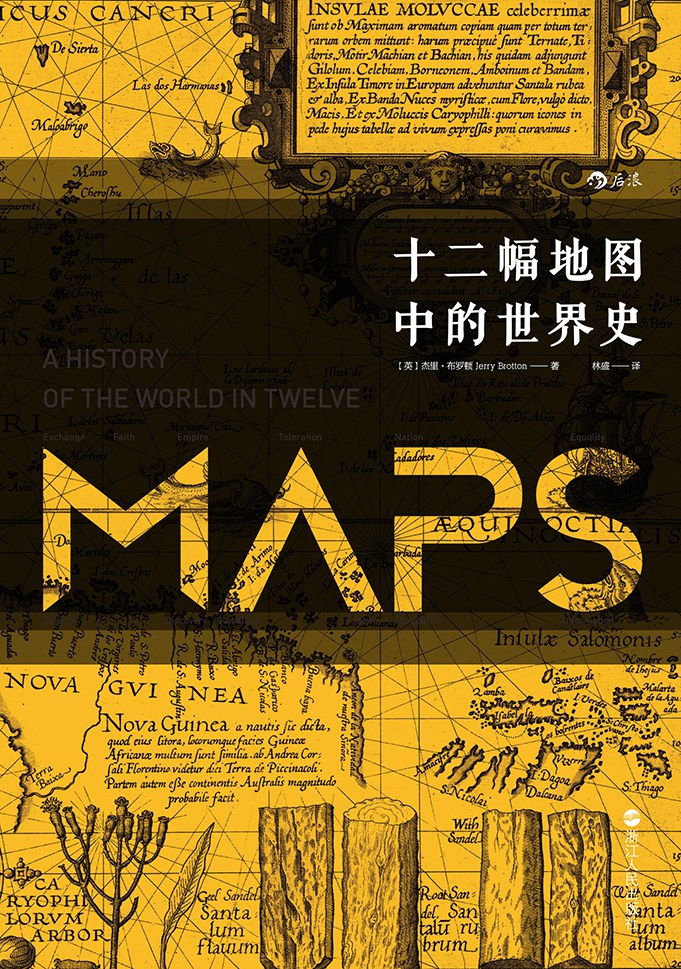 A History of the World in Twelve Maps, Jerry Brotton; translated by Lin Sheng; Zhejiang People’s Publishing House, 2016
History in Ancient Maps
Anyone who reads history encounters maps and may love studying them. As a child, my desk mate and I raced through school atlases to locate places named by the other. Once those names became familiar in adulthood, some fun disappeared.
History and maps broadly involve two things. One ismaps made in antiquity:artifacts and historical sources, sometimes paired with texts, made by ancient people for their own needs and ideas. The other ismaps of antiquity:modern scholarly reconstructions and maps in present-day publications intended to clarify historical research.
Both have become popular in public history over the past decade. Let us begin with ancient maps, the more time-specific phenomenon, and end briefly with maps used to read antiquity.
Chinese maps emerged extremely early. A partly legendary record concerns the Nine Tripod Cauldrons, source of the expression ‘asking about the tripods.’ The Zuo Commentary says:‘When Xia possessed virtue, distant regions depicted their objects, contributed metal for nine vessels, and cast those objects upon them.’The Book of Han says:‘Yu collected metal from the nine provinces and cast nine tripods representing them.’Thus Yu allegedly cast images of the provinces and their creatures on the vessels. Even if legendary, the record is plausible, though the images were probably symbolic rather than detailed topographic maps.
Instead of discussing this abstractly, search your phone for theZhaoyu Tu.This bronze plan from the Warring States state of Zhongshan symbolically shows a royal mausoleum layout. Excavated in the late 1970s, it is generally considered China’s earliest surviving map.
2026.09.18
Audio in Chinese
Related programs

There Are No Islands in World History
A live event for A Global History from China — Video Edition
Members only

Kodansha History of China, Season 1: The Age of Myth and the Xia Dynasty
From myth to history
¥36.00
Included with membership

Mediterranean Civilizations: Traveling Through World Heritage, Season 2
Around the Blue Coast to the Cradles of Civilization
¥128.00
Included with membership