






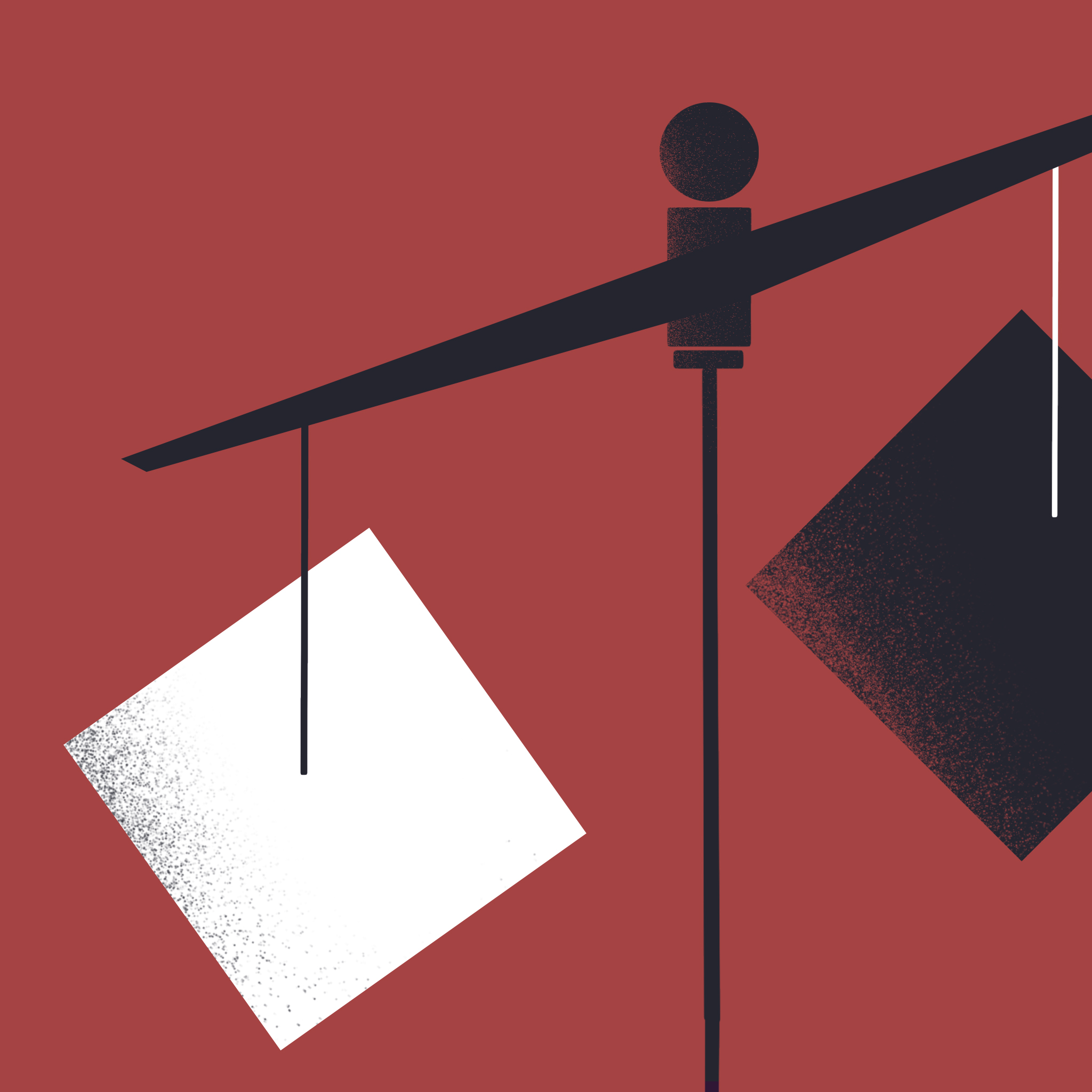
Justice and Reality: Think Like a Lawyer

Hello, I’m Zhan Qingyun.
Last time, President Truman confidently seized steel mills during war and was sharply rebuked by the Supreme Court. The case had still greater significance.
It reopened modern debate over presidential power, its division from Congress, and separation of powers.
What Are the Limits of Presidential Power?
A president’s authority has two sources: Article II of the Constitution, which makes the president chief executive responsible for faithful execution of law; or a delegation from Congress.
Justice Black, Truman’s friend and author of the Court’s opinion, was considered a formalist.
He asked whether the president was executing an existing law or making a new one—in substance, administration or legislation?
The seizure was plainly legislation, he said, and the president had no such power.
Critics replied that legislation and execution are often difficult to separate.
The case’s most famous writing was not Black’s controlling opinion but Justice Jackson’s concurrence—a separate explanation by a justice who agrees with the result but finds the main opinion incomplete.

Jackson proposed a basic test of presidential power that remains influential and sounds remarkably simple.
He divided presidential action into three categories.
When Congress expressly or implicitly approves, the president is generally empowered.
When Congress expressly opposes, or opposition can reasonably be inferred, the president generally cannot act.
Between them is a blank where Congress’s attitude is unknown.
Jackson said that twilight zone must be considered case by case.
The three categories later developed into a spectrum from explicit congressional opposition to explicit approval. Courts locate the presidential act on that spectrum.
The framework makes presidential power subject to Congress, with the Supreme Court as final judge of its boundaries.
That is an expression of judicial legitimacy.
The steel seizure fell in the difficult middle because neither Congress nor the Constitution had spoken directly.
Jackson inferred implicit congressional disapproval from two earlier statutes.
One allowed a president, during a strike affecting national interests, to require workers to postpone it for sixty days as a cooling-off period.
2019.07.04
Audio in Chinese
Related programs

The Possibility of Rule of Law: Legal Reasoning in 30 Lectures
Rule of law is a way of thinking
¥98.00
Included with membership
Realizing Justice: The Legal System in 40 Lectures
How far are we from the law?
¥128.00
Included with membership
The Measure of Civilization: A Brief History of Law in 30 Lectures
What problems did humanity create law to solve?
¥98.00
Included with membership


