






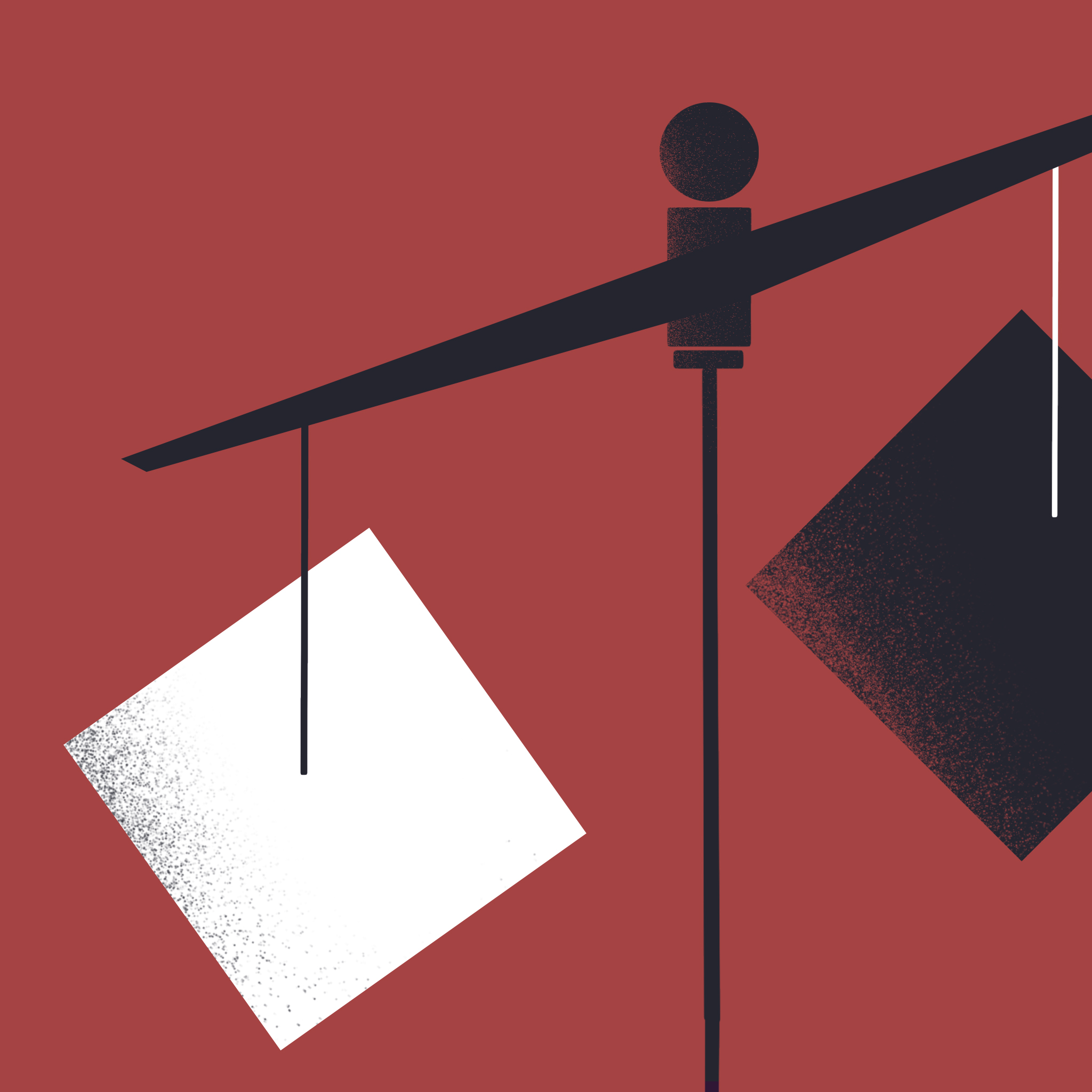
Justice and Reality: Think Like a Lawyer

Hello, I’m Zhan Qingyun.
After many turns, we are still discussing jurisdiction, though the concept has led us far beyond the original plan. Over the last two episodes I realized that our earlier discussion was too broad—macroscopic, philosophical, and abstract. In actual life and daily litigation, lawyers exploit jurisdiction’s extraordinary complexity to fight for their clients. Technical details truly determine the course of countless cases.
Where Are the Boundaries of Judicial Power?
These real courtroom battles correspond to the larger questions we discussed earlier. May a court bind a particular person? May a particular body of law bind them—law enacted after the event, foreign law, international law, or the law of a civilized society?
Besides lawyers, the court itself is another actor. Judicial institutions continually define and interpret jurisdiction in ways that can enlarge their own power.
That corresponds to another abstract question: where should judicial power end? When society faces disputes and choices, are judges—members of a selected elite—entitled to decide on behalf of everyone?
The boundary of judicial power sounds as though it should be certain. If law cannot even constrain the power of its own courts, it seems impossibly vague. From childhood we learn that different organs of government have different roles, functions, and powers.
In a country such as the United States, which defines itself through separation of powers, the content of each branch’s authority should be clear both in principle and in law.
In reality, separation of powers is a broad and imprecise principle. Its checks and balances require the branches not only to perform their own functions but to restrain one another. Their actual boundaries have never been fixed by a formula or by a slim booklet called a constitution.
The boundaries among powers continually shift in practice.
Sometimes they reflect original legal design, but more often they result from people: concrete choices, struggles, interpretations, and maneuvers by officials and institutions in different eras.
As previewed last time, we will examine judicial review in America’s founding era—the origin of what is now perhaps the Supreme Court’s and federal judiciary’s most important power. Where does judicial power truly come from? It did not fall from the sky; judges fought to acquire it.
2019.10.10
Audio in Chinese
Related programs
The Spirit of the Laws: The Purpose and Dignity of Law | Citizenship Course, Season 1
How Can Power Be Checked and Civil Liberty Protected?
¥48.00
Included with membership
The Possibility of Rule of Law: Legal Reasoning in 30 Lectures
Rule of law is a way of thinking
¥98.00
Included with membership

Inequality: Power, Status, and Social Distribution
Why does equality recede the harder we pursue it?
¥98.00
Included with membership


