




35 Lessons in Critical Thinking: Think Like a Debater

Transcript
Hello, I’m Pang Ying, a debate coach and management consultant.
Most people know me from two seasons of I Can I BB. Beyond the show, I debated for more than a decade, winning international championships with the National University of Singapore and a Harvard-Yale joint team. As an NUS coach I taught university and secondary students, and during those years our teams won nearly every major international tournament, an unusual record.
After earning my master’s degree from Yale School of Management in 2018, I joined Boston Consulting Group. Debate training helped me through business-school tests, case interviews, and daily consulting. Colleagues often recognize its influence in my analysis and ask me to summarize what debate can teach everyone, not only competitors.
Debate as the Technique and Art of Critical Thought
I agree that debate has helped me even more outside competitions.
Some see it as verbal sparring or public speaking. I believe its essential benefit is internal: the power of critical thought.
That includes logical analysis, mental frameworks, clear and organized thought and expression, and deep understanding.
Deep understanding means distinguishing the core from noise in complexity; finding common links, underlying values, and logical patterns among seemingly unrelated things; and dividing an immense problem into smaller ones that can be analyzed and solved.
Critical thought overlaps with cognition and learning. As a foundational ability it matters throughout life, work, and study, which is why Chinese civil-service exams and American business- and law-school entrance tests resemble debate exercises.
I previously appeared as a regular emergency guest on young lawyer Zhan Qingyun’s Vistopia law program, debating whether the American Factory represented opportunity or exploitation and whether Twitter’s ban of Trump did more good than harm.
My participation in a law program despite not being a lawyer shows how widely critical thought applies.
In management consulting I advise decision makers across industries. As a consultant, I often face corporate directors and senior officials with far more experience. I must create genuine value through analysis and problem-solving, then persuade them that I have done so.
The work shares debate’s core requirements: rigorous logic and analysis, detailed evidence and data, valuable insight, resonance in vision and values, and clear structure and expression. Even emotional connection in a meeting can matter.
What is emotional connection? An analysis of I Can I BB found that whether the opening speaker energized the room strongly affected the whole debate.
Being right is one thing; making people willing to listen and organizing the reasoning effectively are equally important. Debate therefore needs not only theory and data but good examples and stories.Debate is both technique and art.
The assigned position may not be one’s natural view. Setting aside prior commitments, prejudice, and emotion to think from the opposite side can reveal reasons we missed, differences of social position and perspective, or experiences that produced different underlying values.
My ultimate position may remain unchanged, but the other side no longer appears merely stupid or evil. Our disagreement can be discussed rationally. In an environment of instant camps and online abuse, that attitude is already valuable.
Consider whether surrogacy should be legal. I can defend either side not because I lack principles, but because legalization is complex, can be viewed from many angles, and divides into many stages.
Answers differ depending on whether we discuss principle alone or practical operation.
Consider three forms of surrogacy.
First, Phoebe in Friends voluntarily carries a child for relatives. No one coerces or even persuades her; it is voluntary and noncommercial.
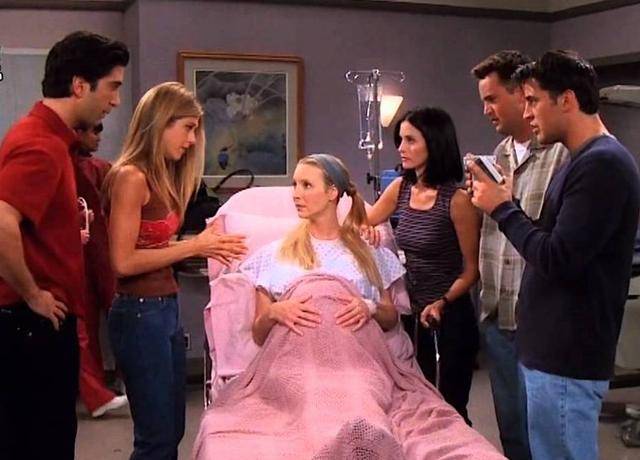
Phoebe voluntarily serves as a surrogate
Second, commercial surrogacy is legal in parts of the United States, allowing someone to earn money by carrying another person’s child.
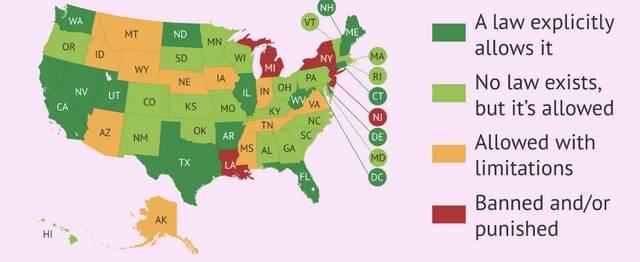
Approaches to commercial surrogacy across U.S. states
Third, in Indian surrogacy villages prices are extremely low and husbands or families may compel women, saying, “Why refuse an opportunity to earn for the family simply by lying down?”
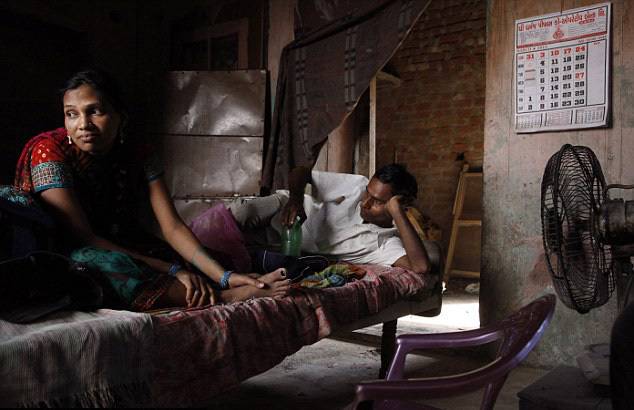
An Indian surrogacy village
When opposing legalization, which form and what exactly do we oppose?
Opposing even Phoebe’s voluntary act likely rests on a principle: perhaps no one should carry another person’s genes, a child should not have two biological mothers, or one person should not assume another’s bodily risk even voluntarily.
Supporting voluntary but rejecting commercial surrogacy locates the problem in sale. We may sell time and labor, but beyond some threshold an effect on life and body becomes too great to trade.Because wealth and power are radically unequal, putting such things on a market may deprive poor and vulnerable people of control over their bodies and expose them to coercion and inducement.That reasoning opposes all commercial surrogacy.
Alternatively, one might accept the first two forms but reject the third, finding commercial surrogacy acceptable in principle while believing India lacks sufficient development, medical care, and legal protection for gestational mothers.
We must then ask when a society becomes good enough for commercial surrogacy. Does it depend on overall wealth, inequality, rule of law, medicine, respect for personal choice, or a family’s cultural power to impose decisions? Answers identify indicators to monitor and reforms needed before legalization.
Thus support can differ in theory and practice. Is individual voluntary surrogacy acceptable, or do unequal gender and economic power make authentic consent impossible? Each position is possible.
Social media rarely provides a calm environment for such rational analysis.It rewards camps: choose A and B attacks, choose B and A attacks, choose neither and everyone accuses you of evasion. I hope Vistopia can preserve room for critical thought.
How Do We Think Critically?
What transferable abilities appeared in that analysis?
First, remain intellectually open and resist premature conclusions.Try the other side’s perspective and divide large questions into smaller ones. The willingness to listen and think is itself useful.
Second, common analytical models and logical patterns transfer to other problems.Our surrogacy example distinguished an ideal state from reality: principle from practical costs and benefits. It resembles physics with and without friction. This separation quickly locates agreement and disagreement.
Third, methods of proof and expression, including choices of examples and data, also matter.To support surrogacy, I might show a successful American colleague’s photograph with her family, doctor, gestational mother, and child in a warm, sincerely happy scene. Would that evidence strengthen the claim?
Or consider why we selected Phoebe, the United States, and India from countless examples. Which cases most efficiently expose shared logic and representative differences? Choosing them is another transferable skill.
In summary,open and rational thought, rigorous logic, and appropriate evidence and expression together constitute critical thinking.
What This Program Will Cover
Now let us return to the program’s design.
Interesting and thought-provoking content comes first, while each episode extracts transferable methods for other settings. The ability to apply one lesson widely is crucial to improving cognition and learning.
The program has three sections: rebuttal, construction, and classic motions.
First comes rebuttal. Many discover an interest or talent in debate through enjoying contradiction; I will teach you to identify errors with logic and critical thought.
If someone says unmarried women become miserable in middle age, we can identify reversed causation: women do not need family because their income falls in middle age; marriage itself is associated with women’s declining income.
We will analyze why correlation is not causation, circular reasoning, false dilemmas, hasty generalization, equivocation, and common data errors, all through engaging motions.
Second comes construction. Why follow demolition with construction? Pulling something down does not mean you can build, and identifying error does not reveal what is right. Mere contrarians are common. We move from point-by-point logic to an argument’s overall structure.
A common framework for policy debate is“need, root cause, solution, and trade-offs”: whether a problem requires action, whether the proposal addresses its root, whether it works, and whether benefits outweigh costs.
When debating a junk-food tax, we must establish health harms and burdens on health care, but also whether the tax can work.
Can it be collected from a night-market fried-chicken stall with no sales records? How do we define junk food—is a bowl of plain carbohydrate noodles included? Wealthy people can afford high-protein healthy meals while laborers rely on cheap calories. Would the tax raise poor people’s living costs so much that harms exceed benefits?
Management consulting offers another framework:MECEmutually exclusive, collectively exhaustive, meaning that components do not overlap and together omit nothing.
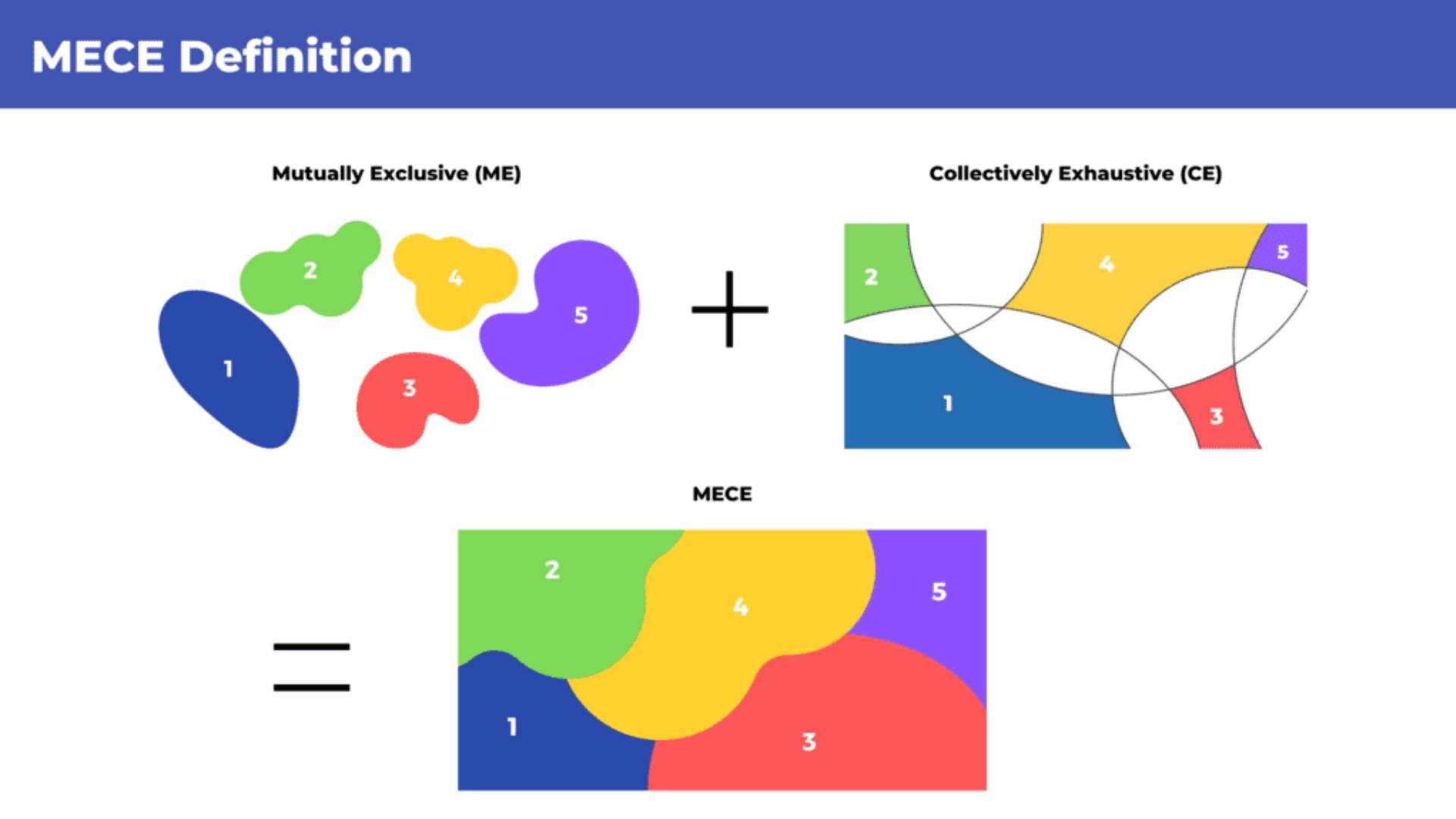
MECE analysis
It also helps debate. Motions asking whether Liu Bei or Cao Cao makes a better leader, or whether Lin Daiyu or Hua Mulan makes a better girlfriend, easily become alternating lists of virtues and faults.
But who wins such a list? Comparison requires an overall standard and framework.
We might say leadership has three tasks: building, operating, and guiding a team. If Cao Cao excels in all three, that structured case is stronger than scattered advantages and disadvantages.
Construction therefore emphasizes frameworks and a holistic view. Each rebuttal and construction episode teaches one core logic or framework through several engaging motions and transferable applications.
The third section covers classic motions, using foundational disputes to reveal broadly applicable methods.
The world has countless disagreements but relatively few underlying logical and value models. I will invite my debating counterpart Zhan Qingyun to examine classics such as whether killing one to save a hundred is just, what justice means, and how the trolley problem applies to reality.
During the 2003 SARS outbreak, several cases appeared in Taipei’s Hoping Hospital. With no effective prevention or treatment and inadequate isolation facilities, closing the hospital meant cross-infection inside, while leaving it open risked broader transmission. Was sealing it off an act of justice?
What is justice? Does it guide action, or is it an absolute command that cannot be compromised even when impossible to fulfill?
Many similar questions follow.
- Is euthanasia humane?
- Should we stop someone who has carefully decided to die?
- May I sell my organs?
- Am I free to choose to be fat?
- Is placing culinary pleasure above personal health an inferior ordering of values?
- May advocates of gay rights abandon the argument that homosexuality is innate?
- Even if it is an acquired choice, should a person who harms no one still possess freedom and equal rights?
- Everyone endorses freedom, but can you accept it beyond familiar boundaries?
These questions help you apply ideas widely, defend one side, and attack another. Can even the claim that debate clarifies truth itself be debated?
Debate is useful. Why do philosophers, candidates, and policymakers debate? Why do standardized tests ask how to strengthen or weaken an argument? Why can structured analysis become a highly paid career, debate training develop talent, and argumentative writing remain compulsory?
If you love thinking even about questions without clear answers; want more organized thought and expression; wish to add logical frameworks and classic problems to your knowledge; and want to improve the foundational capacity ofcritical thinking, this program may suit you.
Vistopia editor Yaya once told me she had met few people who could explain something as systematically as I do. Her words encouraged me. I am honored to stand beside so many masters on this platform and will work hard on the program. Please leave any feedback or suggestions; I will welcome them with gratitude.
I’m Pang Ying. Thank you for joining this journey of Think Like a Debater.
2021.09.02
Audio in Chinese
Related programs

Understanding Music: 32 Journeys in Musical Decoding
Think like a musician
¥98.00
Included with membership

Justice and Reality: Think Like a Lawyer
Law is not the same as justice; it is a system of rules
¥198.00
Included with membership

Economics Within One Square Kilometer
Think Like an Economist
¥98.00
Included with membership