



To Your Unique Self: 40 Lessons in Personality Psychology

To celebrate the launch of 40 Lectures on Personality Psychology, you are invited to take a Big Five personality test and understand yourself through the lens of personality >>>
Introduction
Hello, I’m Wang Fang. This is Lecture One of To the Unique You: 40 Lectures on Personality Psychology. I would like to begin with an extremely popular and much-loved system of personality classification: zodiac signs.
Zodiac signs immediately remind me of a story. Perhaps you have seen The Theory of Everything, a film about Stephen Hawking’s love story. Before filming, Eddie Redmayne, who was about to play the young Hawking, paid the scientist a special visit. Meeting a great scientist for the first time was inevitably nerve-racking. Searching desperately for a way to break the ice, Redmayne finally thought he could start with small talk about astrology.
He excitedly told Hawking, “We have the same sign—we’re both Capricorns!” Unexpectedly, the room suddenly fell silent. After a while, Hawking replied, “Sorry, I’m a cosmologist, not an astrologer.””
At that moment I felt I understood Hawking completely! You see, people who study psychology inevitably… unavoidably… get asked about zodiac signs all the time. Psychology has suffered under astrology for far too long. Today I am going to offer a scientific and polite complaint.
Still Believe in Zodiac Signs? They Are Highly Unscientific
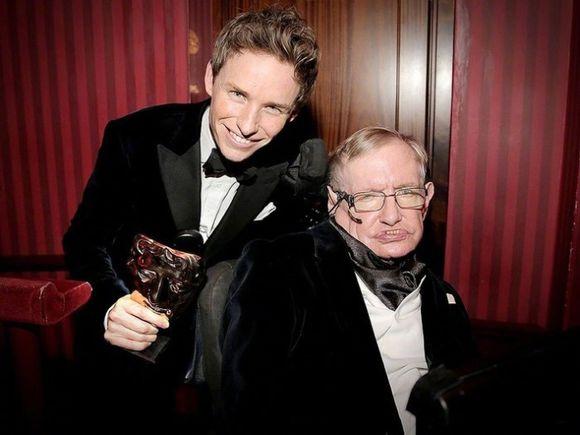
The most popular part of astrology is its claimed connection with personality. Even someone like me, who knows little about it, can readily say things like “Capricorns are conflicted, Pisces are romantic, and Sagittarians are optimistic.”
But dopeople born under the same sign actually share personality traits? Is connecting zodiac signs with personality merely entertainment, or does it have a factual basis?A fascinating study was recently published in the Journal of Personality and Social Psychology, a leading international journal of personality and social psychology (Lu et al., 2020)。
It first used a large sample to examine how familiar Chinese people were with zodiac signs and what they believed about them. More than 40 percent of participants said they would avoid signs they disliked when choosing romantic partners or friends. Asked which sign they believed was least popular in society, over 30 percent surprisingly chose Virgo, because they considered Virgos demanding, obsessively clean, and difficult to get along with.
That was in dating and friendship. Surely something as serious as hiring would not refer to zodiac signs? To test this, researchers recruited professional human-resources staff and showed them fictitious résumés. Gender was assigned at random and every other detail was identical; only the zodiac sign differed. One group of applicants was Virgo and the other Leo, and the HR professionals were asked how willing they were to hire them. The result genuinely shocked me: all else being equal, they were less willing to hire Virgo applicants than Leos because they thought Virgos might be harder to get along with.
In other words, not only in friendship but even in formal recruitment, zodiac signs can produce a quietly operating form ofimplicit discrimination.。
The researchers later conducted a survey in the United States, a Western country where astrological culture originated, and found that Americans were significantly less familiar with and accepting of zodiac signs than Chinese people. When asked which sign was least popular, nearly 60 percent of Americans said they were unsure. The rest nominated various signs in small proportions; Cancer ranked relatively highest, chosen by 7.7 percent.
This is interesting. If each sign really implied a certain personality, why was Virgo not disliked in the United States, while Cancer was relatively unpopular?
The researchers found a simple reason:it was all in the name. In English, Cancer is also the word for the disease. In Chinese, by contrast, Cancer is seen as family-loving, perhaps because a crab stays in its shell. Meanwhile, the Chinese word for “virgin” suggests being demanding, picky, and perfectionistic, so Virgo is disliked.
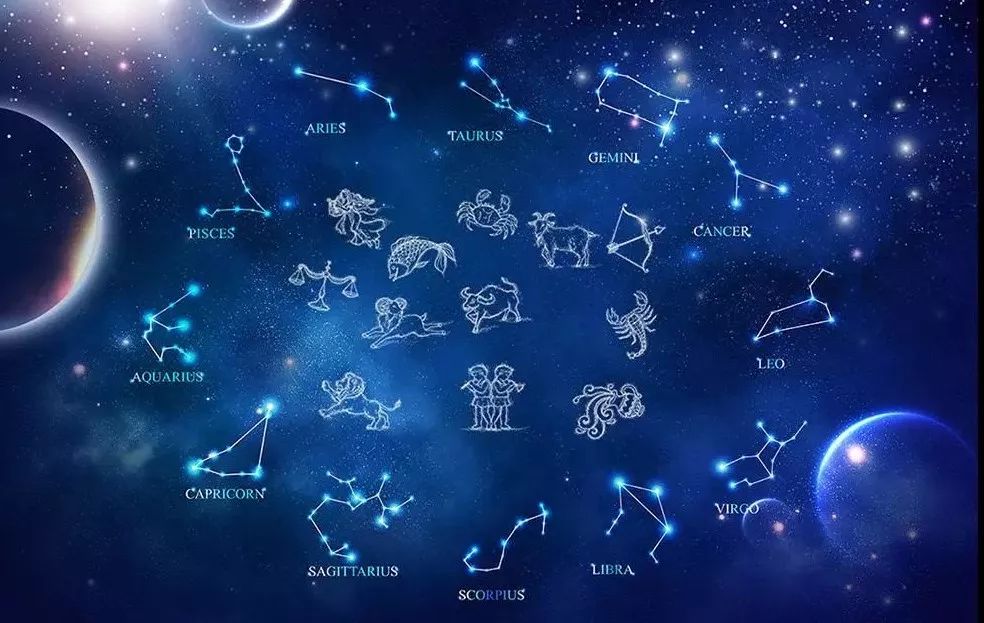
Finally, using two large-sample databases, the authors directly tested the relationships between zodiac signs and scientifically measured personality, and between zodiac signs and job performance. Their conclusion was:a person’s zodiac sign is unrelated to either personality or job performance. This entire series of studies systematically demonstrated thatzodiac signs are merely stereotypes with no basis in reality.
Of course, many people say it is only entertainment—a game or a topic of conversation. That is true and generally harmless. But treating such stereotypes as tools for understanding ourselves and others, or even for guiding life choices, may be dangerous. First, they are inaccurate: this ruler simply does not work, so it cannot help us understand ourselves and may even mislead us. Second, the study shows that even when astrology is treated as entertainment, it can invisibly impose an inexplicable stigma on groups such as Virgos.
These Tests Are Extremely Popular—but Are They Scientific?
Now that we know astrology is unscientific, what about other tests and models that, like zodiac signs, divide people into different categories and types? Are they scientific?
This may remind you of the many so-called “little psychology tests” often seen on Chinese social media—I call them folk psychology tests. Many people take them out of curiosity or for fun because we all want to know who we are and better understand ourselves and others.
These quizzes come in every conceivable form. Based on my possibly imperfect observation, however varied their presentation, the final result is usually the same: it tells you that people in the world fall into a certain number of types, identifies yours, and explains what people of that type are like. Ideally it also generates a beautifully drawn graphic that you can cheerfully share to your social feed with one click—perfect!
Classifying people assumes that endlessly varied personalities can be divided into a limited set of categories. Easy as that method is to understand, it does not reflect reality. Think about how many people there are in the world: surely they cannot belong to only nine, twelve, or sixteen types.
Here I must say this:modern personality psychologists do not agree that human character can be divided into several mutually independent categories.On the one hand, people are far too diverse to be covered by only a handful or a dozen categories. On the other,differences between people are more often differences of degree than of kind. In other words, we are all human; our similarities greatly exceed our differences, and the boundaries between people are not so stark.
Why, then, is categorical personality classification so popular? The answer begins with the nature of human cognition—
The Brain Loves Classification: Categorization Fits Human Cognitive Nature
Classification is part of human cognitive nature. We categorize things in our minds constantly. This helps us recognize them quickly, simplify a complicated world, conserve cognitive resources, and rapidly form an idea of what an unfamiliar thing may be like.
Suppose, for example, there is an unfamiliar fruit on a tree that looks rather like an apple. We can classify it as fruit. Fruit is familiar within our existing experience; if this unknown object is fruit too, we can judge that it is edible.Through this process of categorization, the complex world we face becomes much simpler and clearer.
Yes,categorical perception is clear, fast, and economical when we process objects. When the object is a person, however, it is excessively simplistic, blunt, and crude. Distinguishing people by categories inevitably produces one error: it exaggerates differences between categories while underestimating differences within them. In reality, individual variation inside any category may be far greater than the difference between two categories. Categorization therefore fails to capture subtle differences between people.
Beyond this cognitive tendency, another possible reason is that classifying one another allows us togain a form of social identity. If I am a certain “type” of person, I can readily enter the corresponding group, find like-minded people, and communicate with them, therebysatisfying my need to belong and acquiring a sense of social identity. Classification also separates “us” from “them.” Better still if “we” are superior to “them” in some way—although this may be nothing more than an unfounded positive feeling about ourselves. That sense of collective superiority then further strengthens identification with the group called “us.”
What Potential Harm Does Classification Cause?
Classification is a fast, easy, efficient, and economical cognitive method, and it meets people’s need to belong, so people like it. But what potential risks arise from perceiving ourselves through categories?
I think the chief risk isself-labeling.。Once we place ourselves firmly in a category, believe it completely, and satisfy our need for social identity, a framework intended to aid self-exploration and self-understanding can become a cage that limits us. Discovering what kind of person we are matters chiefly because it helps us understand the relationship between personality and our feelings, behavior, and experiences, and to seek growth on that basis. Once a label is securely attached, however, the more important task becomes continually proving that the label is correct. This plainly hinders growth: it makes the self rigid and turns “That’s just who I am” into an explanation for everything or an excuse for every experience. Self-labeling also drives people to keep searching for evidence that supports the label while ignoring evidence against it. If that supposed evidence lacks scientific grounding—as zodiac signs do—it becomes misleading.
A test is only an auxiliary tool. It may help you understand who you are at present, butpersonality develops. You will change, develop, and grow continually. So although folk psychology tests may look entertaining, their results are best taken lightly. Do not turn them into rules for your actions, much less into shackles. The greatest problem with a label is that it oversimplifies—and you are certainly far more complex and interesting than a few short paragraphs.
If Classification Is Unreliable, How Can We Understand People?
If classification is unreliable, is there a scientific way to help us understand ourselves and others better? We cannot possibly write an individual description of the personality of every one of the more than seven billion people on Earth. That is both impossible and unnecessary.
All complexity arises from simplicity, and personality is no exception. One basic way we understand the world is throughelementalism. Red, yellow, and blue, for example, are three primary colors from whose mixtures endlessly varied colors can be produced. Likewise, the immense variety of substances can arise through interactions among a set of basic chemical elements.
Does personality also possess a limited set of such basic elements? Just as nitrogen and hydrogen combine with other chemical elements to form innumerable complex substances, every one of us possesses certainpersonality elementsin differing degrees; their combinations should be capable of producing countless distinct personalities.
Personality psychologists call suchpersonality elementscalltraits(traits)—and clearly,describing personality through traits is much more precise and reasonable than dividing people into a limited number of types.
What function does a “trait” serve in understanding someone’s personality?The celebrated psychologist and father of American personality psychology who introduced the concept of traits,Gordon Allport,famously said, “The same heat that melts the butter hardens the egg.” Although butter and eggs encounter the same situation, differences in their properties lead to very different outcomes. Therefore,understanding a person’s traits enables us to predict their behavioral responses.
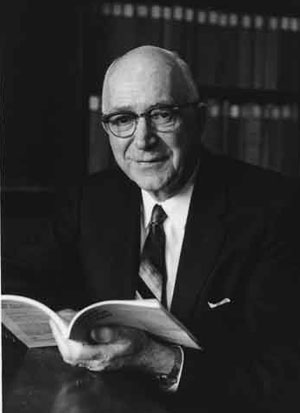
Gordon Willard Allport
Most of the time, however, we cannot observe traits directly. We can infer them from the choices, responses, and behaviors people display across a series of events—in other words, from a person’s stablebehavioral patternsfrom which to infer traits.
A pattern is a tendency toward behavioral responses that recur in particular situations. A highly aggressive person, for example, may bully weaker companions during play, be fiercely competitive in study and contests, dominate interpersonal interactions, and exercise authoritarian control as a leader. These form a pattern.
Moreover,behavioral patterns can even constitute recurring themes in a person’s life.Some people, for instance, are always enthusiastic for only a few minutes. They greet novelty with passion, quickly fall in love with it and throw themselves in completely, ignoring possible risks. Soon the feeling fades; they become bored and abandon the pursuit halfway, until the next stimulus appears—whether a book, a person, or a business venture. Others are habitually hostile: all sorts of people and events can anger them, from a somewhat noisy neighbor to a passerby who accidentally brushes against them, or their coworkers and supervisors. They are often dissatisfied and complain that others are not friendly enough.
The time, object, and situation differ, yet the behavioral response remains similar. Such recurring patterns not only portray a person’s distinctive psychological characteristics, prompting you to exclaim whenever you see one, “Of course—that is exactly what they would do!”
They also define the prominent themes of a person’s life: repeated cycles of “passion–withdrawal–passion again–withdrawal again,” for example, or “frustration–aggression–frustration–aggression.” These main melodies of life, like background music, are functions of personality traits. If we identify someone’s core personality traits, we can infer their habitual patterns of response and even predict their life themes.
The Big Five: An Ocean of Personality Traits
Unlike height or weight, personality cannot be seen or touched and has no clear ruler for measurement. For a very long time psychologists tirelessly searched for a perfect personality display, only to return empty-handed again and again; the measurement of personality even fell into confusion. Finally, in the 1980s and 1990s, a model for describing and measuring personality traits brought some order to the disorder. Researchers discovered that the many concepts previously used to measure personality could largely be placed within its framework. Simple, clear, and refreshing, this model is the renownedBig Five”。
. The Big Five, also called the five-factor model of personality, comprises five fundamental personality traits:extraversion, agreeableness, conscientiousness, neuroticism,andopenness. The initials of the five English terms happen to spell OCEAN, which is why some call it the ocean of personality traits: broad and all-encompassing.
This model emerged from a vast body of empirical research and quickly became one of today’s most active topics in personality research. It is also regarded as the most comprehensive, reliable, and useful description currently available of basic human traits. For personality researchers like me, the Big Five is a common currency: everyone knows what it means, and it provides a shared basis for dialogue and exchange.
Over the next several episodes, then, I will explain these five traits in detail. By now, are you already eager to take the test? Yes—at the end of an episode that has criticized psychological tests, we still offer you this relatively scientific personality assessment. You may ask: how does the Big Five test differ from other psychological tests? What makes it more scientific? And how should we understand its results?
Do not worry. Beginning next time, we will answer these questions one by one. Thank you for listening. I hope all is well with you. I’m Wang Fang, and I will see you next time.
References
Lu, J. G., Liu, X. L., Liao, H., & Wang, L. (2021). Disentangling stereotypes from social reality: Astrological stereotypes and discrimination in China. Journal of Personality and Social Psychology.
2021.11.11
Audio in Chinese