







To Your Unique Self: 40 Lessons in Personality Psychology

Maslow: From Behaviorism to Humanism
Hello, I’m Wang Fang. Today’s theory may be psychology’s best known, thanks to its simplicity, vivid image, and explanatory power. Even nonstudents can recite it. Fame can cause us to underestimate a theory’s depth and overestimate our understanding. This is true of the famous hierarchy of needs.
First, its creator, psychologist Abraham Maslow. Born in New York to Russian Jewish immigrants and trained first in law and literature, he entered psychology under the influence of behaviorism’s founder J. B. Watson. Watson treated Pavlov’s theory of classical conditioning as scripture and believed the same principles could control and change all animal and human behavior.
Maslow was captivated until his first child’s birth revealed the wonder, mystery, and possibility of an individual life. He could no longer accept the rigid stimulus-response machine and said: “Anyone who has a baby couldn’t be a behaviorist.””(Hall, 1968, p.55)。
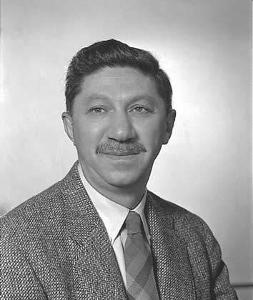
Abraham Maslow (1908–1970)
His research reflected the change. His behaviorist dissertation studied sexual and dominance behavior in monkeys. In the 1930s and 1940s, conversations with refugee European psychologists including Adler, Fromm, and Horney inspired interest in excellent people, later called self-actualizing people. Motivation and Personality (1954) made him the voice of psychology’s third force: humanistic psychology.
The third force contrasted with psychoanalysis and behaviorism.Psychoanalysis makes humans victims of conflict between instinct and culture; behaviorism makes them passive recipients of environmental reward and punishment. Both are deterministic and focus on dark, pathological, animal aspects. Humanistic psychology studies positive humanity, healthy functioning, progress, and dignity.
Maslow led this movement by devoting his life to healthy, excellent people, clearing away the earlier bleak image. His foundation was the hierarchy of needs.。
2022.03.24
Audio in Chinese
Related programs

Living Like Animals: Field Notes on African Wildlife (Expanded Edition)
What can wild animals teach us about being alive?
¥128.00
Included with membership

Beyond Fauvism: Matisse and Twentieth-Century Western Art | Vistopia × UCCA
In this sick world, Matisse is a gift from heaven
¥48.00
Included with membership

Class Entrenchment and Social Mobility: Infinite Life Reading List 8
Is equality at birth only a dream?
¥48.00
Included with membership


