







To Your Unique Self: 40 Lessons in Personality Psychology

Introduction
Hello, I’m Wang Fang. Pixar recently released Turning Red, and I loved it. After the short Bao, director Domee Shi again explores Chinese family relationships. The protagonist, Meilin, is an adolescent model child: an excellent, courteous, multitalented student who helps at home and is deeply devoted to her parents.
Yet to her mother, this outstanding child is still imperfect. Meilin may make no mistakes or do anything her mother dislikes. A suffocating series of moves follows, painfully familiar to many viewers. Under relentless pressure, Meilin suppresses herself until she can bear no more. Her anger erupts—and she transforms into a bright-red panda.
I interpret the panda through Jung’s shadow, and it is irresistibly adorable. Neither Meilin nor her mother can accept this ‘monster,’ yet this strange, disowned other side wins her classmates’ hearts and makes her a star. The story then moves toward a kindly reconciliation; I will not spoil it.
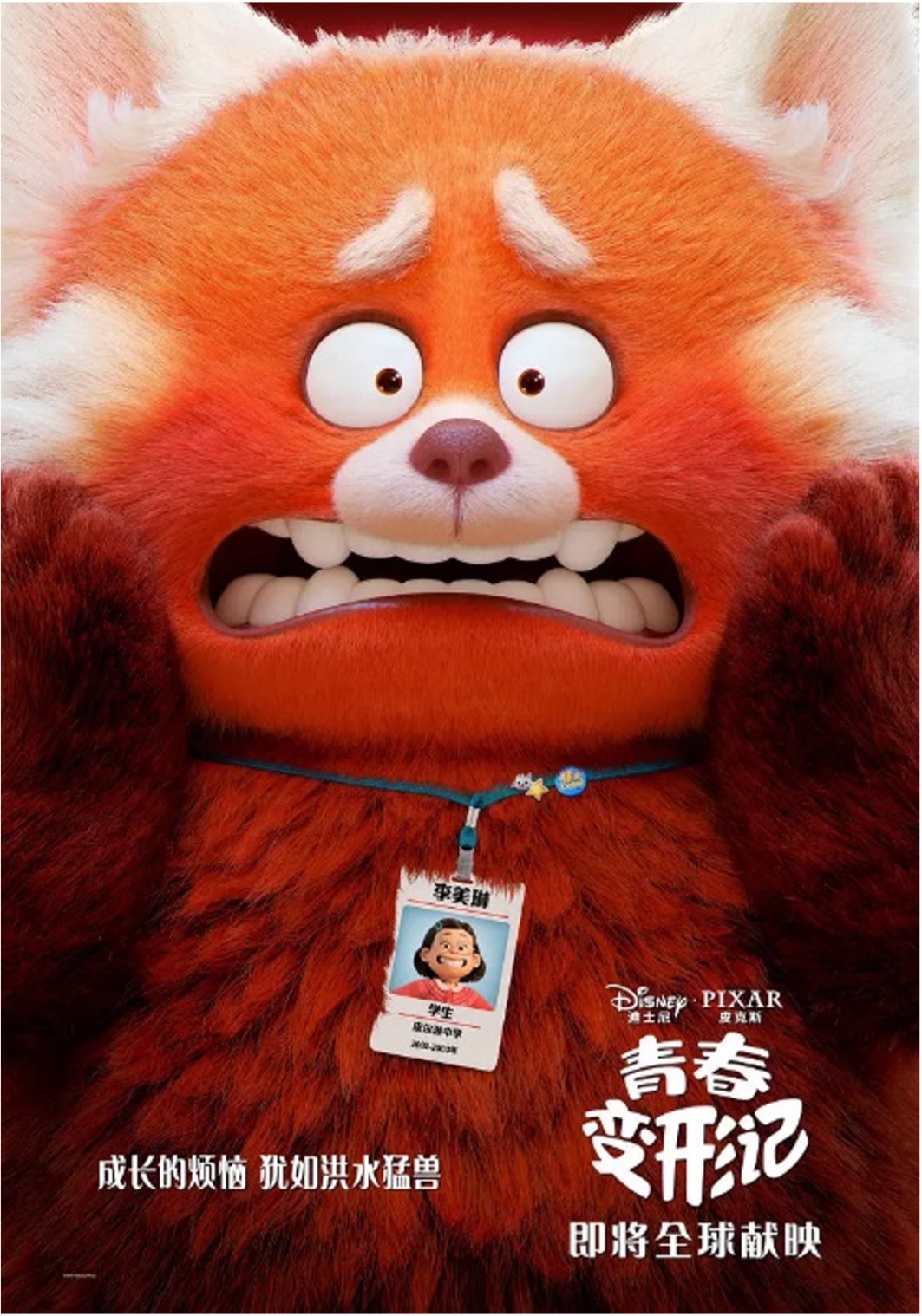
Turning Red is a story of adolescence, growth, and family love, but even adults who left both adolescence and home long ago may recognize Meilin’s problem. Suppose you are nervous before a first date and a friend says, ‘Relax—just be yourself.’ But will your date like that self? You do not know. Or suppose you work extraordinarily hard and enjoy the achievement, excitement, and fulfillment, yet late at night, exhausted, still ask what all this effort is for. Sylvia Chang voiced the same question in her 1985 song Busy and Blind:‘Am I busy for my own ideal, or simply to keep others from being disappointed?’”
There is no easy answer. The tension between being oneself and becoming the person one’s parents, partner, or others expect and prefer lies at the heart of Rogers’s personality theory.
The Need for Positive Regard and Conditions of Worth
As the previous episode explained, Rogers believed everyone has an actualizing tendency toward growth and flourishing. Yet this natural, innate tendency can be obstructed or distorted. Experiences inconsistent with self-concept are distorted, while a wide gap between ideal and actual selves creates anxiety. Why can we not accept every experience and our complete selves, good and bad, and move toward self-actualization?
2022.04.07
Audio in Chinese
Related programs

The US Election and a World in Transition
Understand a divided American society through its election
¥98.00
Included with membership

Ten Stand-Up Comedy Specials
American culture behind the jokes
¥28.00
Included with membership
The Road to Freedom: The Infinite Life Reading List, Season 15
Through history's tunnels in search of freedom
¥48.00
Included with membership


