







Finding Peace: 40 Introductory Lessons on Buddhism

Hello, I’m Cheng Qing. Welcome to Relief for Life. This episode tells Siddhartha’s story.
Before beginning, ask yourself:Who is the Buddha, and how do you picture him?
The Buddha’s thousand faces
Visitors to Mogao or Yungang encounter countless distinctive yet related images of Buddhas and bodhisattvas. Chinese Buddhist art can make us assume images existed from the beginning and that one face must represent the real Buddha.
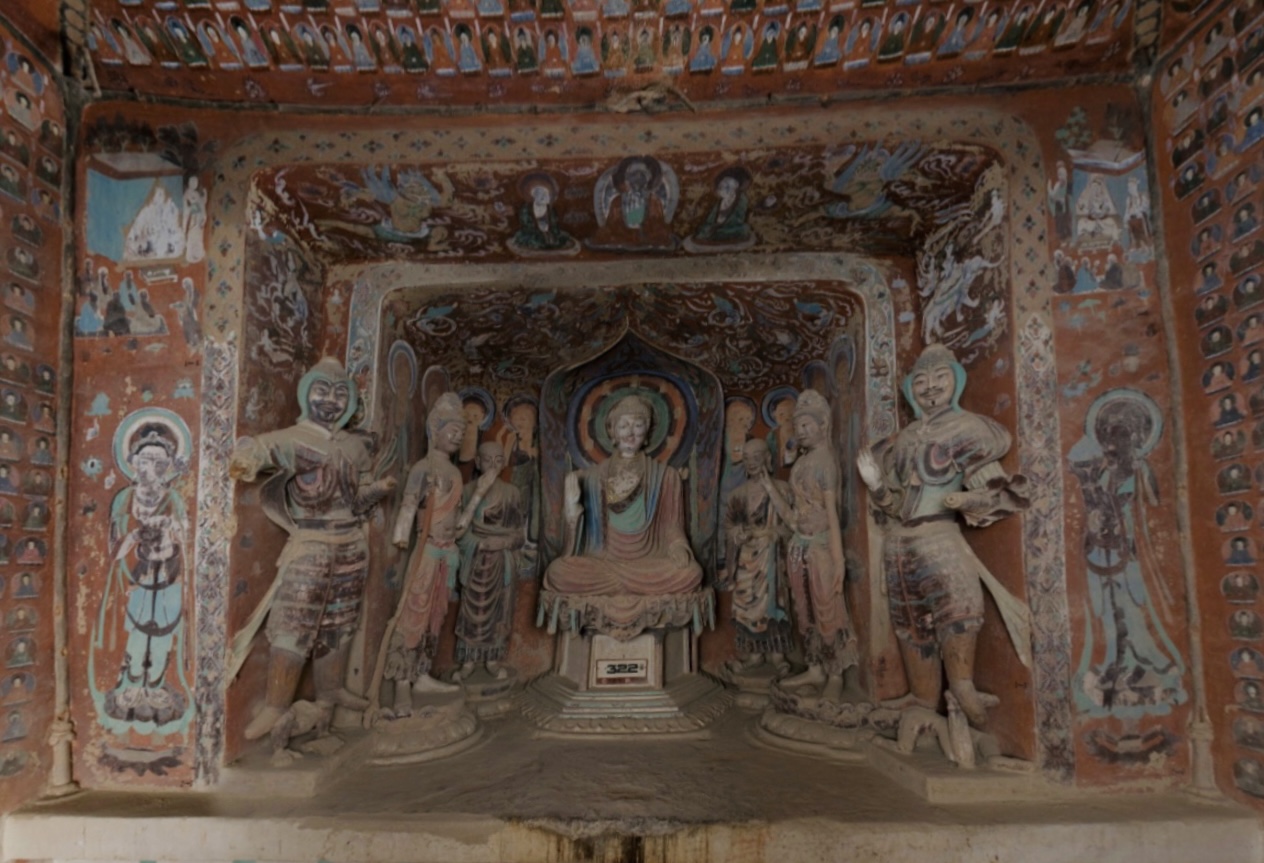
Nobody knows what the historical Buddha looked like, since no recording technology existed, yet two millennia produced millions of faces.
In fact,Buddha images were uncommon in his age.No physical examples survive. For centuries Buddhists symbolized him through stupas, footprints, hair, the Bodhi tree, or the Dharma wheel. At third-century BCESanchi Stupacarvings show spirits, animals, and plants but no Buddha. At second-century BCEBharhut StupaJataka scenes use footprints, thrones, and trees. The earliest surviving human images arose under the Kushans around the first to third centuries in Gandhara and Mathura and differ greatly from Chinese temple statues.
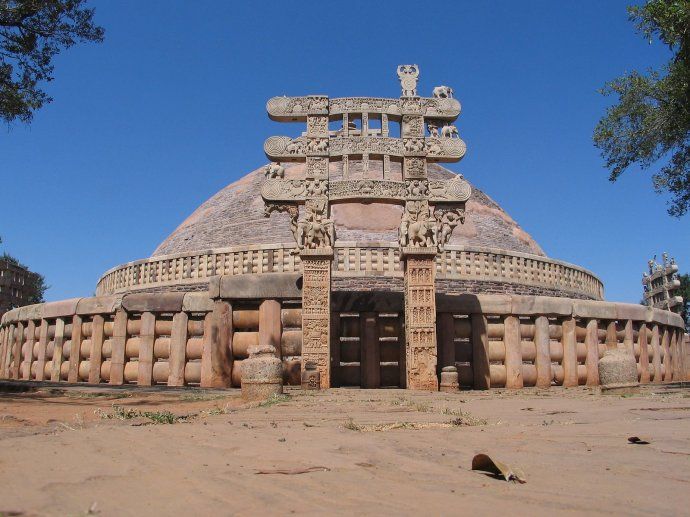
Sanchi Stupa near Bhopal, Madhya Pradesh, India
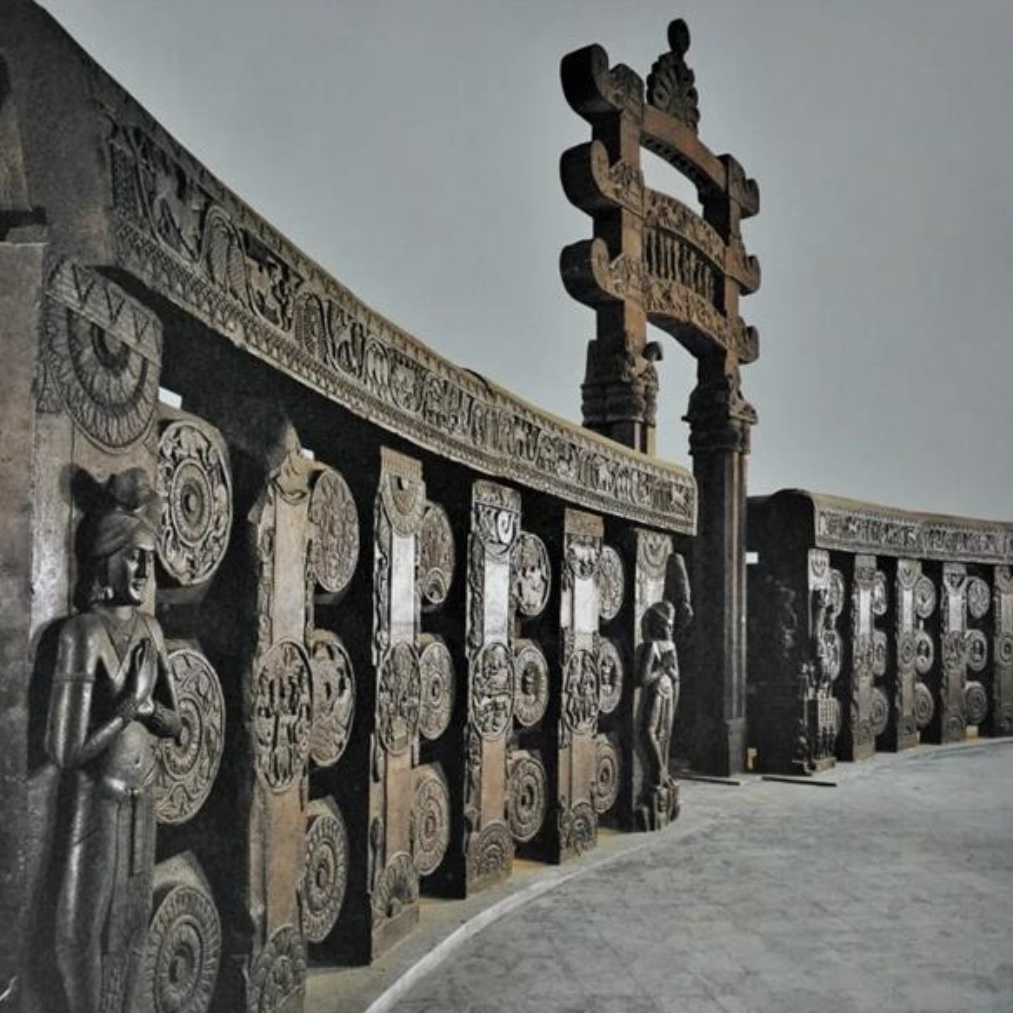
East gate and railings from Bharhut Stupa, reconstructed at the Indian Museum, Kolkata
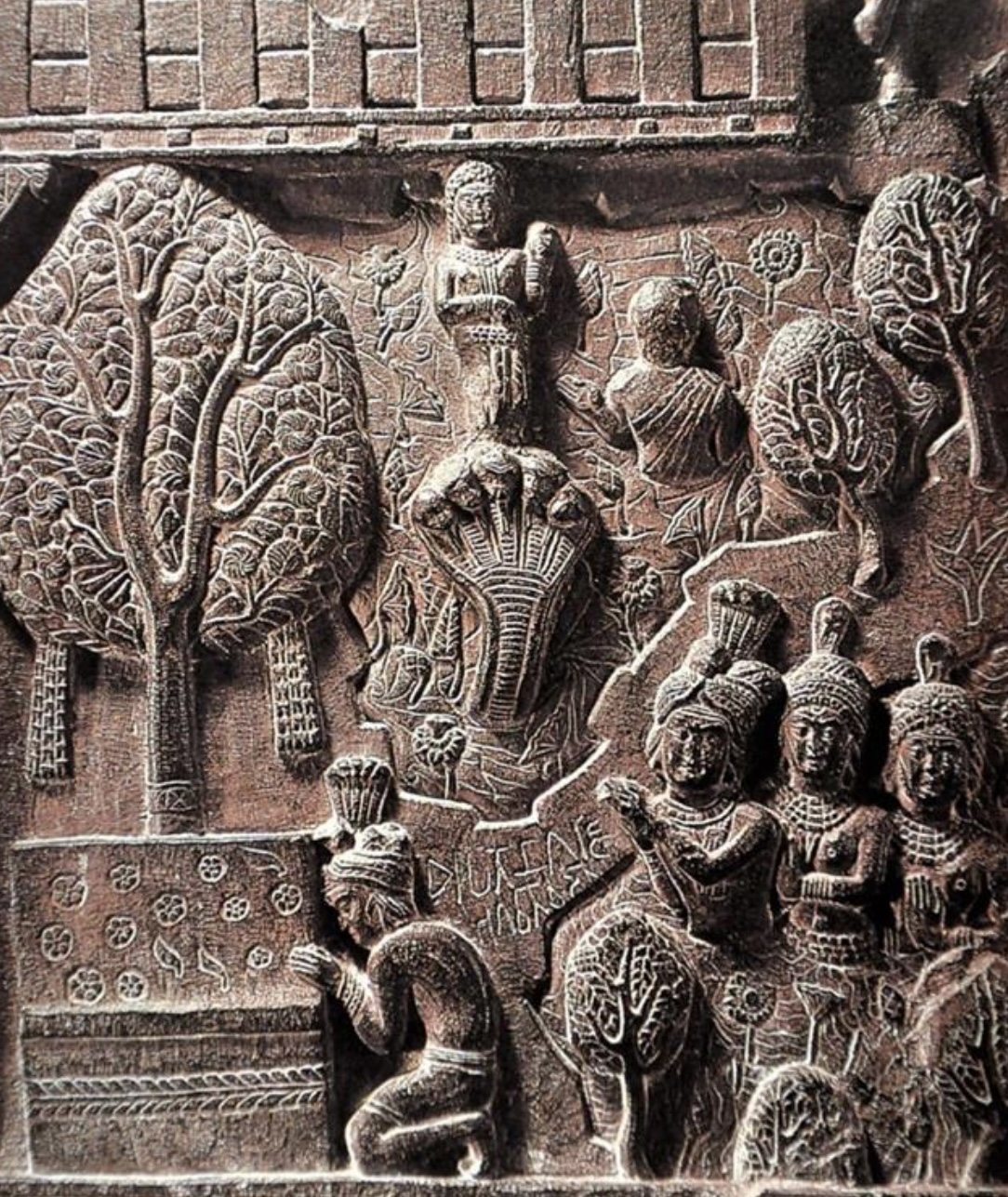
The Nāga King Elāpatra Worships the Buddha
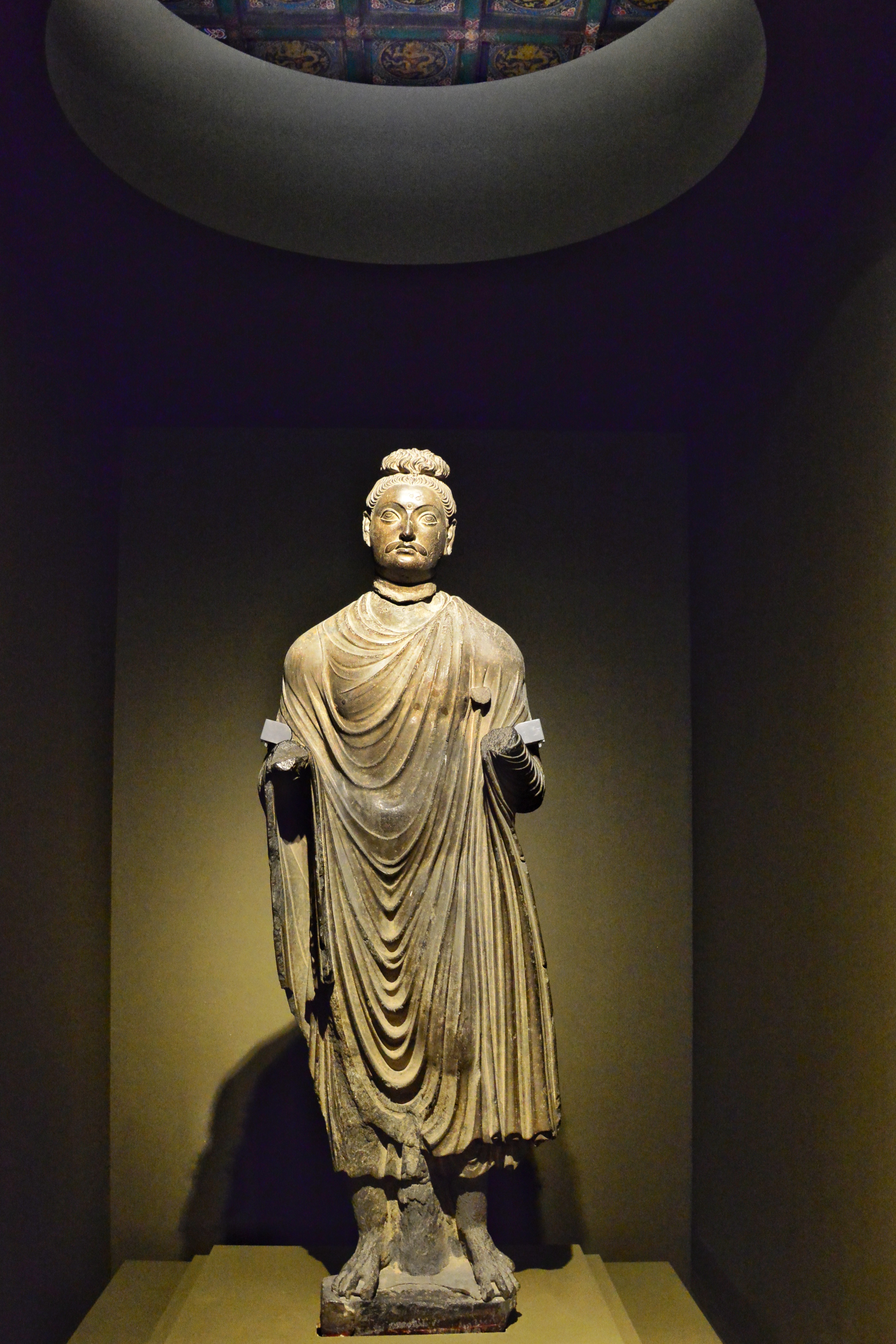
Gandharan Buddha, first–second century, Peshawar Museum
Images became widespread around the second century with Mahayana Buddhism. Like stupas and wheels, they support remembrance and reverence, but are symbols rather than portraits. More precisely,appearance matters less than understanding the Dharma.The Diamond Sutra says:‘To see that all forms are not form is to see the Tathāgata.’The true Buddha is seen by recognizing that outward forms are impermanent.
Towering temple statues nevertheless make Buddha seem divine.
Divine and historical Buddhas coexist. Scriptures give him supernatural golden skin and webbed fingers, encouraging deification; yet he was also a historical human, necessarily worldly.
Chinese historical culture combined both. Xuanzang’s Great Tang Records mixes marvels with humanistic antiquarian travel, recording the prince’s departure at Kapilavastu, the Buddha washing a sick monk at Jetavana, and his cremation at Kushinagar:‘Three hundred paces north across the river stands a stupa where the Tathāgata’s body was burned.’A stupa houses relics. Xuanzang treated these Indian sites as tangible history, giving China’s Buddha a realism unlike purely mythical scripture.
Western scholars long doubted whether Buddha existed. In 1898 engineer William Claxton Peppé discovered a reliquary containing remains at Piprahwa; a year earlier General Khadga Shumsher and archaeologist Alois Führer found Ashoka’s pillar at Lumbini. These finds persuaded scholars that Buddha was a real itinerant teacher.
Scriptural marvels once repelled novelist Jin Yong until he understood the Lotus Sutra’s idea ofskillful meansand reconsidered Mahayana.
Skillful means adapts teaching to different characters, experiences, and attachments. Apparently contradictory, shallow, deep, or even unorthodox teachings temporarily use desire against desire, all aiming at awakening.
Why did the historical prince become a supernatural being? Buddhism speaks of three bodies: manifestation, enjoyment, and Dharma. Ordinary people see a simple monk manifested for their capacity; awakened bodhisattvas perceive majestic enjoyment-body; the formless Dharma-body appears according to minds and has no fixed form.
This view rests on deeper theory explained later. First follow the historical prince from ordinary life toward awakening.
Siddhartha’s suffering and freedom
Dates are disputed. Sri Lankan chronicles suggest 563–483 BCE; calculations from Ashoka suggest nirvana around 383 BCE. None is certain, butexact dates matter less than the ideas Siddhartha conveyed.
A short biography: married Yaśodharā around nineteen, renounced at twenty-nine, awakened at Bodh Gaya at thirty-five after years of austerity, taught barefoot across north India for forty-five years, and entered nirvana at Kushinagar aged eighty. Traditions vary.
His full name wasGautama Siddhartha.Born a Kshatriya of the Śākya clan, he lost his mother Māyā soon after birth and was raised by her sister Mahāpajāpatī. Legend says Māyā dreamed of a white elephant and gave birth at Lumbini. The small Śākya state depended on Kosala. Seer Asita wept on seeing the infant because the prince would attain supreme wisdom, but the aged seer would not live to hear him teach.
Fearing the prophecy of renunciation, King Śuddhodana enclosed his son in luxury and hid suffering, yet Siddhartha still left.
Today he resembles a privileged heir with secure livelihood, marriage, and career—a life with no obvious reason to abandon.
Why did he renounce it?
Aging, illness, and death: life’s absolute unfreedom
Aśvaghoṣa describes the prince seeing exhausted farmers, oxen, and dying insects and feeling compassion.
Compassion showed goodness, but pervasive suffering moved him more deeply: an inexpressible sorrow at life’s lack of freedom.
The four gates tell it directly. At one gate he saw an old man and asked why. His attendant said:‘The old approach the end of their allotted years and have little life remaining.’At another gate he saw grave illness and asked what sickness was:‘Many pains press upon him and life or death is uncertain; this is illness.’Later he saw a corpse surrounded by mourning relatives and asked:‘What is death?’The attendant answered:‘Death is ending: wind and fire depart, faculties decay, and family separates.’A few words express life’s helplessness.
Seeing aging, illness, and death depressed him. His father surrounded him with dancers and pleasures, but at another gate he saw a śramaṇa and asked who he was:‘He leaves attachment, disciplines the senses, rejects desire, harms none, shows compassion, and remains unmoved by pain or pleasure.’Renunciation promised freedom from desire and universal compassion, inspiring the prince.
Why did he not already know aging, sickness, and death? Recall childhood and asking after a relative dies:‘What is death? Where did they go?’Parents may say:‘They went somewhere else.’The child asks:‘Will we never see them again?’” Such questions express awakening curiosity about life’s origin and destination.
Indeed,first encountering aging, illness, and death creates awareness of unknown life phenomena. Applying them to oneself awakens fear and anxiety.A wrinkle, gray hair, or sallow face in the mirror can likewise trigger the realization ‘I am aging’ and grief over passing time.
Whatever the scene, Siddhartha did not renounce because worldly life was bad. He sensed early thateven a perfect world meets the ceiling of aging, sickness, and death—life’s absolute lack of freedom.
Sensitivity to suffering and the ultimate desire for freedom
The pursuit of freedom drives civilization: economic security reveals deeper injustices and inspires reform. Yet no progress removes aging, illness, and death, which keep the question of meaning alive.
From another angle,modernity releases people from God, Heaven, and ancestors toward affirming and reconstructing self. Strong individuality intensifies freedom and rights, yet unprecedented self-assertion brings anxiety and invisible chains beneath consumer abundance.
Aging, death, and fleeting pleasure suggest that transforming the outer world cannot secure inner freedom and may deepen confusion.Across millennia, our pain and Siddhartha’s remain connected; there is little new under the sun.
The four gates become a metaphor for modern society.Glittering malls resemble palace luxury, and digital spectacles resemble dancers placed around the prince. Desire repeatedly binds our search for freedom, like the fairy in Dream of the Red Chamber trying to warn Baoyu:‘First awaken him through desire and sensuality, that he may escape enchantment and enter the right path.’Yet Baoyu remains lost in illusion.
Understandably,when life runs smoothly we lose sensitivity to suffering and avoid urgent problems like frogs in warm water.Decades of stable expectations were shattered by pandemic: travel stopped, face-to-face contact shrank, and work and life overturned, reminding us that suffering never left.
Undoubtedly,Siddhartha was exceptionally sensitive to suffering and universal unfreedom. Wealth could not cure it. His urge to transcend suffering produced disenchantment and the renunciant mind—the true reason he left home.
One version says he secretly rode Kanthaka over the wall at midnight with Channa. Another says he removed royal clothes under a full moon, bade farewell to father and infant Rāhula, received Yaśodharā’s permission, and calmly walked out to practice.
Hermann Hesse’s Siddhartha describes the moment:‘Govinda realized the time had come: Siddhartha would go his own way. His destiny was beginning to sprout.’”
Siddhartha reached life’s turning point and a decisive moment in civilization. Next time, his path of practice. See you then.
2023.05.18
Audio in Chinese
Related programs
How to Listen to Beethoven: The Great Composer and His Age
Jiao's Classical Music: Beethoven Plus
¥98.00
Included with membership
The Story of Life: Darwin and Evolution in 60 Talks
Where Did Life Come From, Why Is It Different, and Where Is It Going?
¥128.00
Included with membership

Song of the Great Tree: The Buddha's Life in Pictures
Enter Buddhist thought in a profound and approachable way
¥28.00
Included with membership


