






Finding Peace: 40 Introductory Lessons on Buddhism

Hello, I’m Cheng Qing. Welcome to Relief for Life: Forty Introductions to Buddhism.
We have argued that environments trigger suffering but attachment is its root. Now let us examine how attachment arises.
What Is Attachment?
We have touched on its meaning. Its English translation,attachmentvividly describes the mind sticking tightly to what matters, repeatedly entangling and constructing around it, unable to separate.
Buddhism uses attachment to summarize a law of mind. Chasing desired pleasure, we constantly discriminate: possessing what we like and avoiding what we dislike. More importantly, thought clings even after events pass, staging fantasies around what concerns us and tasting imagined joy, anger, sorrow, and delight.
Buddhism calls this stained, persistent fixation attachment.
Finnish director Laura Neuvonen’s 2005 wordless short The Last Knit contains no Buddhist symbol, yet precisely depicts attachment:
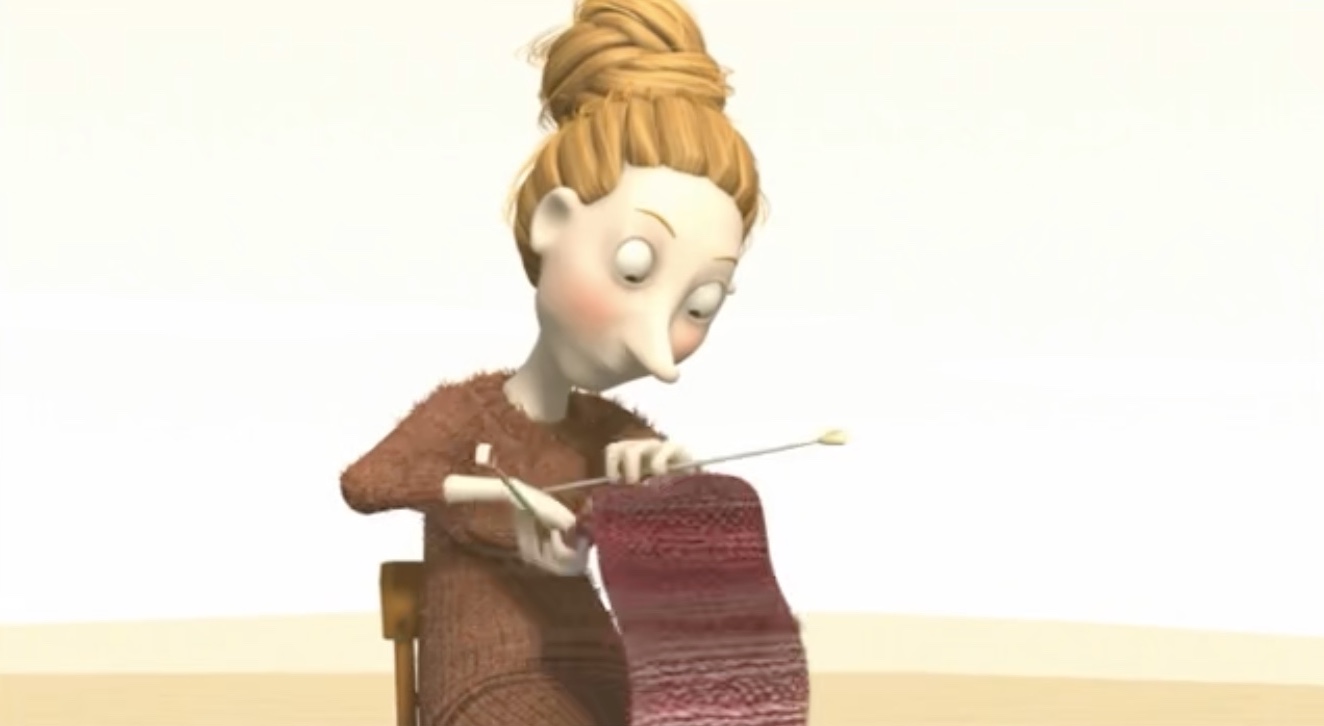
An old woman knits at a cliff edge. Absorbed, she uses nearly all her yarn while the heavy scarf drags her toward the precipice. Instead of stopping, she weaves in her long hair. Only at the edge does she awaken and crawl toward scissors, too late to prevent her fall.
Much later she climbs back, sees the needles, and reflexively knits empty air. Remembering the nightmare, she throws them away. Boredom soon arrives; she notices scissors and becomes fascinated by clipping her nails, beginning another journey of absorption.
Search online for The Last Knit to watch it.
The animation observes mind subtly. Habits begin as preferences—knitting, eating seeds or chips, scrolling videos, playing matching games. Preference makes mind stick to its object. Even when conditions change and pleasure becomes thirst, boredom, or disgust, the rhythm continues. Attachment has become habitual momentum, causing harm rather than enjoyment.
The woman could have stopped when the yarn ended, but committed body and mind after events left their proper course. She noticed danger only when escape was nearly impossible.
More subtly, after learning the lesson and discarding the needles, the naturally grasping mind still demanded an object. Emptiness and boredom led it to the scissors, foreshadowing another crisis.
2023.06.07
Audio in Chinese
Related programs

A Sociological Compass for a Confusing Life
How can we stay awake in a chaotic world?
¥128.00
Included with membership

Goodbye to Language: A Decade at Cannes
No institution is secure forever; Cannes faces many challenges
Free

How to Understand Chopin: Ten Talks by Chiao Yuan-Pu
Beyond Beautiful Melodies and Nocturnes
¥28.00
Included with membership


