







Finding Peace: 40 Introductory Lessons on Buddhism

Hello, I’m Cheng Qing.
This week I discussed Buddhist precepts, mysterious to many, and the legendary modern monk Hongyi. His transformation from elegant Li Shutong into a rigorous Vinaya master is difficult without understanding renunciation and discipline. Memories of visiting his sites in Shanghai, Hangzhou, and southern Fujian inspired this bonus episode.
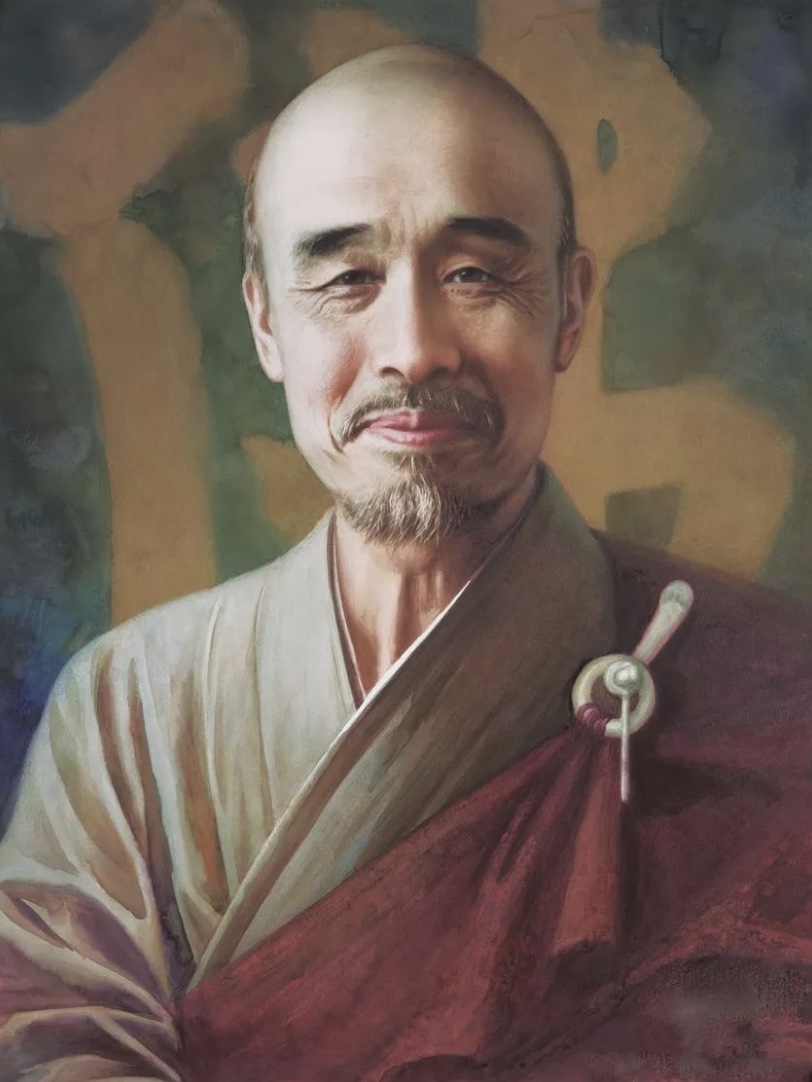
Li Shutong Before Master Hongyi
Many first know Li through Farewell, heard in My Memories of Old Beijing:‘Beyond the pavilion, beside the ancient road, green grass meets the sky. Evening wind touches willows, a flute fades, and sunset lies beyond mountains.’The song shaped Chinese feelings about parting for a century. It was reportedly written for his literary friendXu Huanyuan.A student of Wang Tao and Shanghai writer, Xu housed Li and his mother at Southern Thatched Cottage when they arrived from Tianjin. The site is now lost. When Xu’s family declined, he returned to Beijing; by their reunion Li was Hongyi, whose influence eventually led Xu to Buddhism.
Hongyi’s chronology dates Farewell to about 1915, after Li returned from Japan and taught at Zhejiang First Normal School, now Hangzhou High School’s Gongyuan campus on Fengqi Road. Nearby once stood Zhaoqing Temple, a major monastery since the Song and a famed Vinaya center.
From the Tang and Song onward, Chinese monasteries can be roughly divided by emphasis intoChan monasteries, teaching monasteries, and Vinaya monasteries.Chan monasteries follow Bodhidharma’s direct pointing to mind; teaching monasteries serve Tiantai, Huayan, Yogācāra, Pure Land, and scriptural study; Vinaya monasteries specialize in discipline. After Ming political intervention, ritual specialists also received separate liturgical monasteries.
During his second Hangzhou stay in 1912, Li lived by Qiantang Gate, drank tea near Beishan Road, and visited Zhaoqing Temple. Curious about monastic life but not yet planning renunciation, he taught art and music in Hangzhou and Nanjing while letters described exhausting travel. Neurasthenia acquired in Tokyo brought chronic breathlessness and coughing blood.
2023.07.08
Audio in Chinese
Related programs

Ten Landmark Albums of the Twentieth Century
The studio as an instrument
¥28.00
Included with membership

Shōwa Kayō: Japanese Popular Music after World War II
Music as a way to see the future
¥68.00
Included with membership
A Survival Guide to Tomorrow's World
Thirty letters to a daughter
¥68.00
Included with membership


