Editor’s note: This article first appeared in Youth Life Recovery, which promotes knowledge of adolescent depression and mental health among parents and helps young people recover from distress.
Reference Transcript
Recovery Partner:Adolescence is unforgettable and often difficult, bringing major confusion, rapidly developing self-awareness, and bodily change. How did you pass through it? What troubled you most?
Cheng Qing:As a teenager I had abundant freedom and time to read widely. My family neither intervened nor restricted me, for which I feel fortunate.
I read philosophy such as He Huaihong’s Meditations on Life, which introduced Pascal and moved me deeply. Since childhood I had vaguely longed to understand life’s meaning, and that book opened another intellectual door. I also read ordinary youth books and entertaining magazines such as Zheng Yuanjie’s King of Fairy Tales.
Reading made the question of meaning a key influence, like an intellectual landmine buried inside: every book on philosophy or meaning could suddenly trigger it. Despite intense college-exam pressure, I enjoyed an adolescence of free exploration.
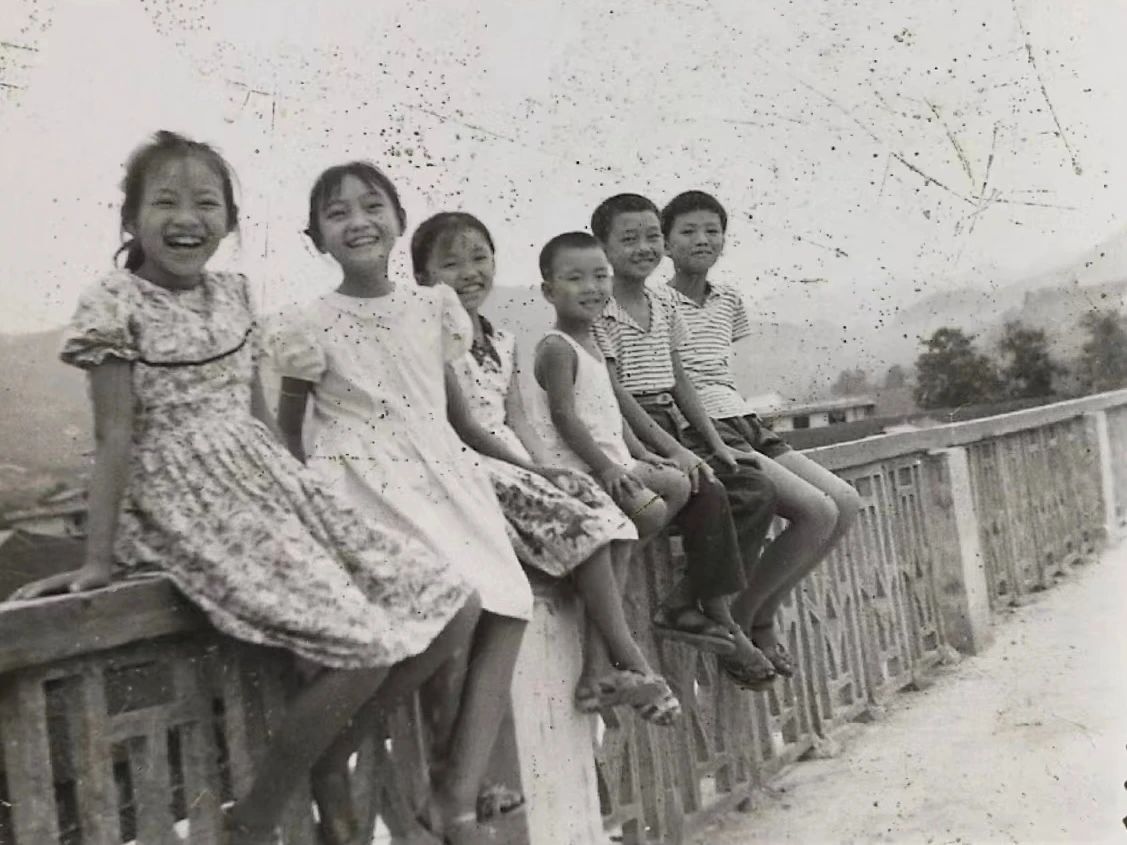
Cheng Qing, third from right
A childhood photo with siblings and friends
Greater psychological trouble came after university. My parents did not force a lucrative major, but we instinctively chose popular fields—computer science, electronics, business, finance. I chose electronic engineering, then discovered that philosophy, economics, and politics suited me better.
I vividly remember borrowing Nietzsche, Karl Popper, and Hayek every day, in sharp contrast with engineering. The conflict between interest and major created a spiritual crisis.
Recovery Partner:So anxiety about livelihood and future conflicted with your true inner impulse.
Cheng Qing:Yes. Employment pressure was lighter than today, but comparison remained. Others had clear paths to graduate school, Huawei, or multinationals, so I felt pressure. Yet today is incomparable. If students ask how I dared change disciplines, I had some courage, but recommending the same choice today demands more from them.
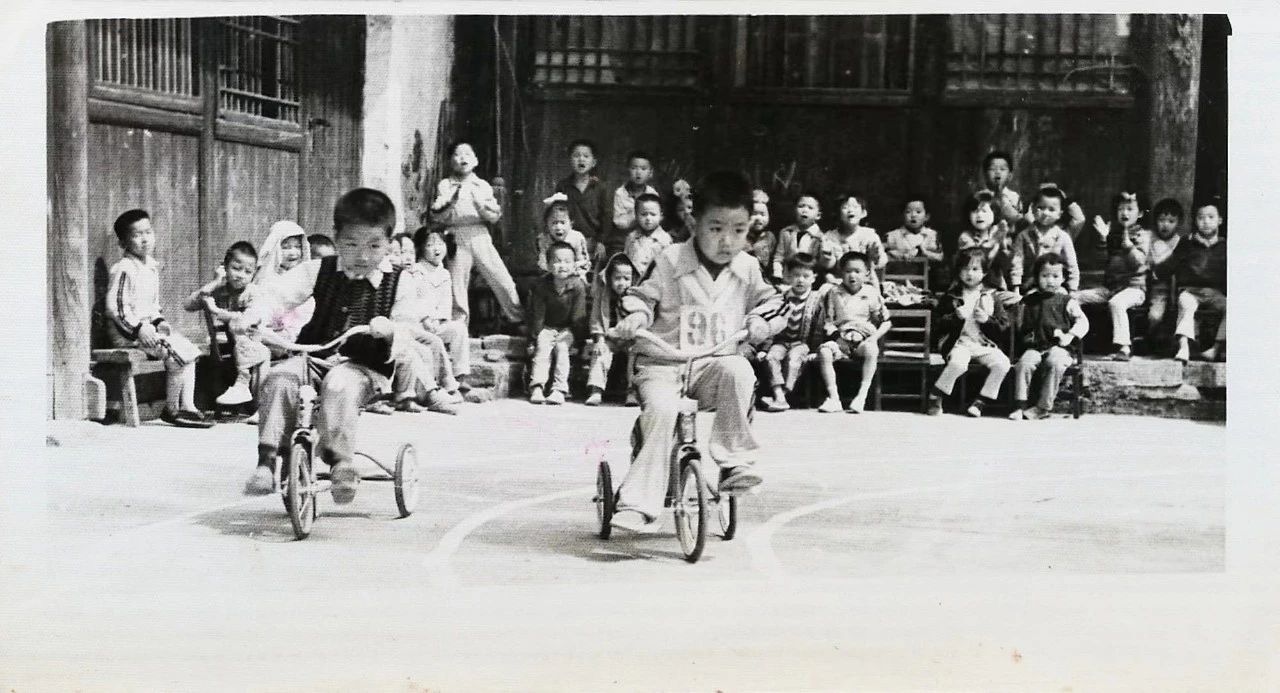
Contestant No. 96, Cheng Qing, at a kindergarten sports day
Recovery Partner:When did you change fields?
Cheng Qing:After graduation I worked two years as a computer engineer at my hometown telecom company, then resigned and came to Shanghai for the history graduate exam. The pressure caused severe insomnia the night before. Many people experience this:when you abandon everything ready-made to explore an unknowable future, the unconscious produces anxiety.I failed the first exam. Alone and unemployed in Shanghai, I faced money problems, loneliness, and an uncertain future—one of my darkest periods.
Later I found a well-paid, pleasant editing job and even considered buying a Shanghai apartment. But I never surrendered myself to that career or extinguished my passion for meaning.
My original adolescent drive carried me through these choices. It stayed strong because my family never attacked or restricted it. They cared about daily well-being but did not deny what I truly wanted. That was crucial.
Cheng Qing just after university graduation
Recovery Partner:How do today’s parents differ from those of the past?
Cheng Qing:Social values then were less uniform. People wanted money and elite schools, but parents expected less and interfered less with inner thought. Today parents and society form a mutually reinforcing structure of homogeneous values, intensifying competition and worsening psychological problems even among children.
Parents say everyone else’s child works hard, so how can they demand less? That is an excuse. They lack courage to break social values and seriously examine the actual price of another path. Fear makes alternatives seem unimaginably dangerous.
It resembles a fairy tale: everyone says outside is dangerous. Someone goes out and reports it is wonderful, but elders inside call that person a lying fraud and forbid others to leave.
Many young people today have not failed competition; they are competing along the wrong road.Had I stayed on another career track, I might have been mediocre and unhappy. The question is what life I want. Let adventurers take risks and stability-seekers take civil-service exams. Forcing someone with strong preferences onto another track creates severe repression.
This does not mean everyone should reject the mainstream. It reflects broad social tendencies, and some individuals willingly flourish within it.Whatever the path, the key is whether the person’s inner life is settled.
Talking with students, I often see family-of-origin problems. This generation of parents lacks values and experience adequate for the increasingly plural society their children face. Young people complain of family pressure and receive little support for what they love.
Students seek my advice, but their constraints are much stronger than ours: family values and social uniformity leave little freedom or tolerance. They also resist communication and opening up. Even when teachers invite questions or after-class conversation, willingness is low.
Cheng Qing organizes a university-club conversation with director Chang Chao-wei
Recovery Partner:How is young people’s reluctance to communicate offline related to the internet?
Cheng Qing:The internet makes people lonelier. We seem together, yet avoid real-world interaction and seek less demanding ways to engage the world.
At a recent event on Byung-Chul Han’s The Disappearance of Rituals, we discussed how the internet strips ritual from real life. Online voice chat is casual. Meeting me in Shanghai requires dressing, traveling, and arriving on time. Social media conversations begin and end at will, without emotional involvement or deep understanding. Fast, shallow exchanges prevent intimacy between parents and children, spouses, lovers, and friends.
At university my friendships endured, but today adjacent classmates may not want to know one another. Modern communicationmakes relationships shallow and estranged.
Yet many young people idolize celebrities or anime as an outlet for loneliness. At concerts, shared devotion dissolves boundaries: strangers scream and embrace. Philosophy or Buddhism calls this an experience of a greater self, feeling connected. Back in daily life, fragmented and isolated small selves have few exits from their problems.
Recovery Partner:How does life for the internet generation differ from life before it?
Cheng Qing:The flattening of information makes contemporary childhood fundamentally different.
Parents once knew a narrower world and gradually gained experience, so they warned children from a position of lived knowledge. Today’s children can see almost every possible life online from an early age. Though they have not lived those lives, their senses have previewed them. This apparent transparency makes life feel meaningless more easily.
Before the internet, cognition opened gradually. I grew up in Enshi, an ethnic-minority region. Wuhan broadened my world at university; Shanghai broadened it again after graduation. Each layer brought spiritual shock. If everything is revealed with a wow at the beginning, as spoilers, later places bring neither surprise nor wonder, and living can feel pointless.
Technology turns many experiences into purely mental existence.Anime culture shows how consciousness can gain substitute satisfaction without other senses or real encounters. But equivalent fulfillment in reality demands bodily and mental effort, so people retreat from it.
Consequently,people sense and use the body less while depending excessively on conscious and mental activity.The brain stays busy all day, not the body, producing imbalance.
Every generation entered imaginary spaces through fairy tales, novels, and film, experiencing other lives and worlds. Butmodern society separates consciousness from reality at excessive frequency and intensity.Young people may escape into undisturbed subcultures that offer recognition, making them secluded utopias. This widespread tendency locks people into groups and creates barriers against other real-world communities—another closed cognitive pattern.
Information flattening harms older people too; many are addicted to Douyin. A popular account called Xiucai attracted middle-aged and elderly women, including a seventy-two-year-old who traveled far to find him. Were they not also transported into another world by an internet persona?
Everyone wants another dream but forgets it is a dream and treats it as total reality, becoming willing to be deceived and used. This is universal, not uniquely Chinese. The internet’s rapid rise makes the psychological symptoms especially visible now.










 2023-12-21 14:18:33
 2023-12-20 19:54:36
 2024-05-10 11:18:35





Reference Transcript