







To Your Unique Self: 40 Lessons in Personality Psychology

Editor’s note: This episode originally appeared inThe Ideal Youth,Episode 18, October 8, 2021, shortly before To the Unique You launched.
Listening Guide
03:01 How does ‘hollow-heart syndrome’ differ from depression?
09:12 Why is it so widespread?
19:21 How does exam pressure hollow children out?
23:47 What can individuals do in a viciously competitive environment? Can we change it?
36:30 Anxiety and loss of meaning as ailments of our age
45:56 How Professor Wang explored herself as a young student
51:57 Overwork and no time to reflect readily cause loss of meaning
58:19 What kind of discipline is psychology—is it useful?
1:03:58 Must we choose between ideals and reality?
1:12:43 What would you tell your twenty-something self?
——————
(Transcript follows)
Xiaxia:I first learned ‘hollow-heart syndrome’ from Xu Kaiwen’s article Hollow Hearts and the Anxiety of Our Age. He said many incoming Peking University students showed it. They were obedient, high-achieving, outstanding children, yet generally unhappy. Pushed by utilitarian goals since childhood, they grew into adults without an inner compass.
It reminded me of myself. Its symptoms resemble depression, which I experienced for years. Because I felt severe stigma, I wondered whether depressed people might call it hollow-heart syndrome, avoid admitting illness, and delay treatment. How are the two different?
Wang Fang:Professor Xu coined the term. As I understand it, it is not a formal psychological or psychiatric disorder; no diagnostic classification lists it.
It summarizes a widespread state among particular people in a particular society and era—an ailment of the times. Like depression, it may involve low interest and mood. Xu’s cases often appear to be elite ‘chosen ones.’
That contradicts stereotypes of mental illness involving childhood trauma, major upheaval, impaired functioning, poor relationships, or failure. These model children may be top exam scorers with sound functioning and no obvious trauma, yet suddenly choose death. Traditional medication or therapy may not resolve the state, making it unlike familiar disorders.
It may lead to depression, but not all depression is hollow-heart syndrome. Depression has complex causes and requires professional diagnosis based on symptoms, duration, and severity. Hollow heart is a descriptive phenomenon that vividly captures many young people’s state. The two are different.
This distinction matters because relabeling depressive symptoms may delay diagnosis and care. If related symptoms appear, seek professional assessment whichever condition you suspect.
Professor Xu’s term grew from observation and clinical experience, not an established scientific category. Yet ‘hollow heart’ vividly names a phenomenon. University teachers strongly recognize it, and it seems increasingly common, so it attracts discussion.
Beyond youth, society broadly feels a loss of meaning and value—uncertainty about one’s place in the world. ‘Hollow’ precisely describes this widespread spiritual emptiness and poverty.
Xiaxia:Why so widespread? Perhaps I was too obedient; my parents made nearly every decision.
Wang Fang:So a little rebellion might prevent hollowness.
Xiaxia:Possibly. I never lived for myself, only followed parents and others. Is that why?
Wang Fang:Partly. The answer is complex enough for experts from many fields to debate for days.
Psychologically, it first relates to social development. Economic progress has brought us to a stage where many can ask this question. Everyone knows Maslow’s hierarchy.
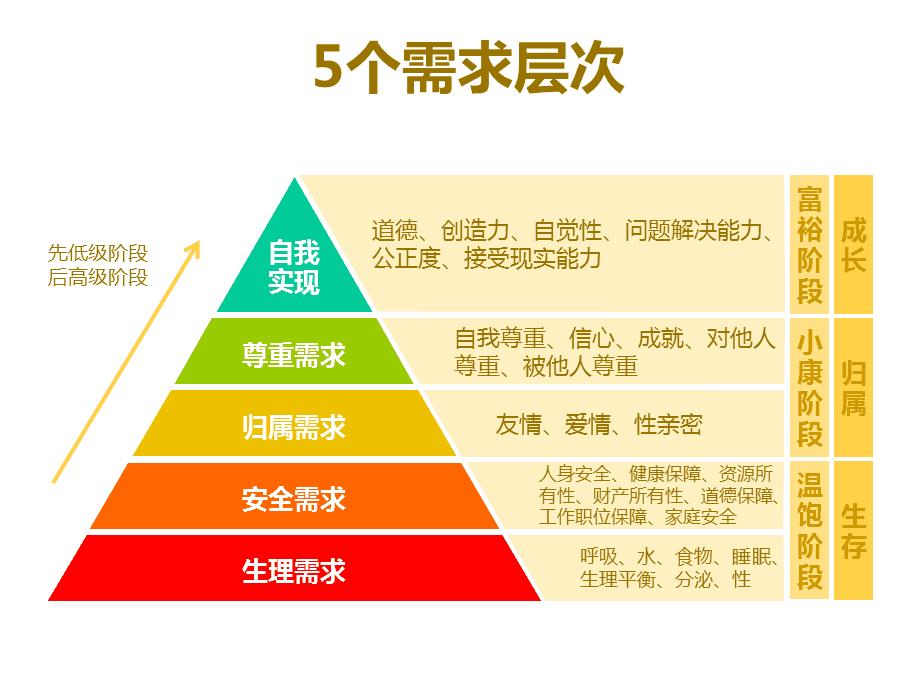
It maps psychological development. Unmet bodily and safety needs create discomfort, fear, and anxiety. Once food and shelter are secure, love, relationships, identity, and self become salient. Higher still are meaning and self-actualization.
Rapid economic growth has moved society toward a stage where many seek answers about meaning, so the issue has become prominent.
That is good—it signifies progress. But without answers, people suffer the problems described.
The era also matters. Frankfurt School scholar Hartmut Rosa’s social acceleration theory describes how faster technology speeds social change, which accelerates life, which demands still more technology—a self-reinforcing cycle.
Society accelerates beyond control. Each person must run faster merely to stay in place.
When competition, efficiency, and busyness become society’s core, human alienation follows.
The irony is striking. My research concerns dehumanization. Slave societies treated people as tools; civilization should reduce objectification.
Yet today we strive to make AI machines humanlike while making ourselves machinelike. We humanize machines and dehumanize ourselves.
Why? Efficiency and competitive success dominate. To pursue socially defined goals, we instrumentalize ourselves.
Hollow-heart syndrome expresses this. Parents set targets because they too are disciplined by society and want its ‘best’ outcomes for their children.
Unconsciously and ‘for the child’s good,’ parents transmit what Rogers called conditions of worth—a concept that explains hollowness well.
What are conditions of worth? People have innate value, but it becomes based on others’ evaluations and external rewards, usually beginning with parents.
Parents use ‘if … then’: ‘If you obey, Mommy will love you more’; ‘If you score well, I’ll be proud.’ Wanting love, children perform the ‘if’ to receive the ‘then.’
The condition reflects parental wishes, not necessarily the child’s interests. Love becomes an exchange and control conducted in love’s name.
Eventually we believe our worth rests on others’ love: ‘If I’m not beautiful, nobody will love me’; ‘Without success and money I’m a loser.’ Instead of inherent worth, external conditions hollow us out. Life becomes continual proof of value—learning to please a mother, for example—without asking what success means to oneself.
The better and more obedient the child, the more accustomed they are to meeting conditions and chasing externally recognized success. Because they can succeed, they pursue validation almost addictively.
It becomes habit: living as others’ idea of ‘good.’ Achievement then feels empty and meaningless because external metrics have displaced the inner self. That is how hollowness develops.
More broadly, prosperity raises questions of meaning, while the era encourages people to use others and themselves as tools. Parents transmit its goals, children ground worth in external indicators, and the inside empties.
That account may be incomplete, but it offers one explanation for the prevalence.
Xiaxia:You once said today’s university students resemble high-school students and graduate students resemble undergraduates—a developmental delay. Compared with whom?
Wang Fang:Earlier students. Development has social tasks. Adolescence, roughly twelve to twenty, should explore the outer world and inner self. Under our educational system, students instead study under prison-like pressure.
I think they are connected. Students are told university admission transforms life: happiness arrives and every unresolved problem disappears, as if entering university automatically creates an excellent adult.
But university students were high-school students yesterday; no overnight transformation occurs. Suppressed problems erupt in university’s freer setting, where autonomous decisions are required but parents are absent and students have never practiced independence.
If we never make decisions, how can we take responsibility for life? Enrollment does not teach it; practice must come earlier, but opportunities are denied.
‘Undergraduates resemble high-school students’ mainly in identity: they do not know who they are, what interests them, what they can do, how they relate to others, or what life means. Questions deprived of exploration in high school move into university, displacing university’s own tasks, then move later still. People may face identity crises in their thirties.
From the perspective of ‘having,’ they possess everything; from ‘being,’ nothing, because they never considered it.
Xiaxia:So that too is hollowness.
Wang Fang:Yes, it is all connected to unresolved developmental tasks.
People ask what is wrong with university students. Ask instead what happened to them in secondary or primary school. University teachers cannot repair every accumulated problem, especially after the best time for addressing it has passed.
Xiaxia:When I entered university, everything was new. I explored myself through bands and student activities and nearly failed courses.
I had always been obedient and high-achieving, so a near-fail in accounting shocked me. My parents asked about grades; I had long pleased adults through achievement. My father told me to prioritize study and quit activities. I lived in the library and improved enough not to fail, but disliked the subject and suffered.
Everyone competed for GPA, scholarships, exchanges, and internships. Pressure and anxiety were intense, and effort brought little result in a subject I disliked.
I came to see society as a jungle: kill or be killed. After graduation I changed jobs repeatedly. Only at Vistopia did my views change, showing how strongly environments affect people.
Yet environments are made by individuals. I cannot call the old system evil, but it harmed me. What can an individual do inside vicious competition? Can we change the environment?
Wang Fang:Excellent question. Social psychology stresses that change cannot always begin with individuals. A group is more than their sum: it creates social dynamics and a collective psychology distinct from individual minds.
We also overestimate individual agency against powerful environments, which set goals and rules of behavior.
Think of each person as an actor. Different stages supply music, props, roles, goals, and opponents. You remain yourself but perform an entirely different play. That is environmental context.
If a stage’s rule is fighting for GPA, where a tenth of a point defeats many rivals and unlocks rewards, that rule organizes behavior.
Evolutionarily, people adapt. Ruthless competition may become the winning strategy, then a social norm; refusing it brings material or psychological punishment.
We should not blame individuals under such pressure for failing to unite and change the environment. Anyone placed there may face the same force.
So Xiaxia, you as an individual did nothing wrong. But what can someone already inside do?
Awareness and awakening come first, because systemic change ultimately requires collective action. Under unequal power this takes time, so individuals also need ways to live during the process.
Your change is instructive. Similar systems include the 996 work culture: a different stage with different settings but the same outcome.
Even when forced to play by the rules, preserve awareness. Participate without coming to believe in or defend the system.
Psychologically, when unable to escape a painful place, people may begin to love it for comfort and balance. Some do this. Awareness means saying ‘I comply and suffer, but I do not endorse or applaud it.’
Then find openings. My students must meet evaluation systems they dislike and afterward wonder whether they acted from interest or reward.
I do not tell them to refuse participation and suffer real losses, such as losing graduate admission. I ask them to preserve interest and meaning while participating.
Alongside external rewards, seek internal ones: something you truly want, or an inner return discovered during the process.
Do not surrender early and become an unfeeling machine. Sometimes we not only obey oppression but oppress ourselves because it feels easier.
Calling ourselves ‘workers’ or ‘corporate livestock’ is self-dehumanization: reducing ourselves to income machines. Denying higher needs may ease discomfort, but it is self-oppression and stabilizes the system.
The opening is to survive within the system while finding something meaningful and worthy of commitment.
That is difficult and individual. Xiaxia recognized her dislike, changed tracks after graduation, and explored genuine interests. What she gained compensated for apparent losses in the old system.
Everyone must balance external career—promotion and pay—with internal career—growth and learning. Books, courses, and exploration require no competition and may later become new opportunities. Do not surrender yourself too quickly.
Xiaxia:We discussed delayed identity and widespread loss of meaning among young and middle-aged people.
My grandparents never asked life’s meaning; adequate food and clothing made them happy. When I ask, they say education made me foolish.
Perhaps this is an ailment of our age because their generation lacked education and lived where collective interests outweighed individual thought.
Wang Fang:Yes. In an age of scarcity, abstract higher questions were a luxury.
Xiaxia:Maslow’s lower needs were unmet.
Wang Fang:Yes. Society had not reached that level, and meaning was not a common topic people knew how to discuss.
But today’s young parents belong to a new era, yet still rarely discuss meaning with children.
Psychology suggests that however old Xiaxia becomes, her parents will still see a child. When we classify someone as a ‘child,’ we unconsciously ignore higher psychological needs.
We do likewise to older adults, treating care as food, clothing, and safety while overlooking higher concerns.
Parents say, ‘How can a child be depressed? You just don’t want to study.’ They recognize only play, food, and simple happiness, erasing higher needs.
This too is dehumanization: failing to treat a child as a whole, independent person. Pain cannot escape an inseparable parental relationship when parents see children as extensions whose only needs are food and college admission.
If I see you as an equal adult, we can discuss meaning; if I see only a child, I assume you do not need it.
Thus even parents considering their own meaning may deny the child’s, leaving that need neglected throughout development and the child unable to resolve the pain.
Xiaxia, perhaps your first-year release was rebellion against prolonged obedience and escape from disliked coursework. Many university problems may similarly resist the old condition.
Xiaxia:Many students hear ‘University means freedom!’ then game every day and fail courses.
Wang Fang:Can freedom be excessive? Some students want to return to high school. Long-awaited university freedom becomes pressure because they never chose for themselves. Faced suddenly with many options, they wish everything were arranged so they could solve problems mechanically. This is truly an escape from freedom.
Did we practice making decisions while growing up? Parents panic at any deviation, distrusting children and living in a society intolerant of error. Nobody dares experiment, and following the prescribed road seems to prove experimentation unnecessary. Without practice, students reach university frightened and helpless.
A student once agonized over two graduate-school options, though both seemed excellent to me. She could not choose.
Xiaxia:Perhaps she thought one must be better and she had to identify it.
Wang Fang:I asked what she feared. She replied, ‘I have only one life. What if I choose wrong?’
I recalled Nietzsche: precisely because life is singular, explore its possibilities. Her refusal to choose despite two good options illustrates modern freedom’s paradox. Children become rigid because parents say any error or small deviation is irreversible.
Xiaxia:My father often said, ‘One wrong step makes every step wrong.’
Wang Fang:That is exaggerated. Society also defines success and happiness too narrowly, turning possibilities into disasters. Children then fear even good choices.
Xiaxia:You studied from undergraduate through doctorate at Beijing Normal University and stayed to teach. What were you like when you first arrived?
Wang Fang:I entered psychology almost by accident. Recommended for admission, I simply wanted Beijing Normal University and had no strong preference. Without that route I would have studied Chinese language, despite being a science student.
I could choose chemistry or psychology. Psychology was obscure and unknown to me; since I was poor at chemistry, I eliminated it and chose psychology blindly.
I might have accepted any subject. I arrived without expectations and slowly learned what psychology was. In my first year I followed study habits mechanically and earned average grades.
By my third year I began to feel the discipline; by fourth year I wanted to continue. I was lucky that this almost-random choice matched my interests, abilities, and values, and I gradually loved it. I remain grateful.
Xiaxia:Like a seed landing in suitable soil.
Wang Fang:Yes, heaven threw accurately. But nobody can rely on such luck. Today students can explore subjects before choosing. Many first-year psychology students already read books and watched related films in high school and arrive because they love it.
If we have some voice, we should learn what the discipline does, what attracts us, and whether our interests and abilities fit.
Students ask me what career they should choose without gathering information. I cannot know for them. Try the work—intern for two months, experience its rhythm and lifestyle—then answer yourself. Thinking in isolation cannot settle it.
Self-understanding is delayed because people lack time for exploration, so the task keeps moving later.
Tolerance for error also matters. I imagine a parallel world where I chose chemistry and another Wang Fang perhaps lives equally well, even better.
Choices often lead to different roads, scenery, and experiences, not destiny’s irreversible overthrow. Do not fear them so much.
Society is increasingly diverse and tolerant. If one job does not fit, another may. Even after earlier mistakes, future opportunities remain. Relax; do not make one choice decisive.
Xiaxia:Did you experience a loss of meaning while growing up?
Wang Fang:Probably during my first two or three years of work.
My husband recently recalled that I seemed depressed my first year: withdrawn and low after coming home.
I had suddenly become extremely busy. Without free time to reflect or simply be yourself, constant activity feels meaningless however much you accomplish.
I had lost my research direction, no longer wanted my doctoral topic, and could not find another. I also advised a class of over ninety students, learned all their names, prepared stressful new courses, pursued publications under annual review, and cared for the students.
I still startle when a school-number call arrives after work. During those four years it nearly always meant a serious incident, keeping me in constant stress.
Much work was trivial administration. Conversations and student growth were meaningful, but newcomers need adaptation. I wondered whether I could be a good teacher or researcher and lacked confidence. It was my clearest period of this kind.
Xiaxia:That explains why a very busy, pressured period at Vistopia left everyone in poor condition.
Wang Fang:We need breathing room. A study my student presented today found an inverted-U relationship between busyness and happiness. No time for oneself or family lowers well-being; too much idle time also does. Moderate busyness plus self-directed free time is best.
Xiaxia:Time and a habit of reflection matter.
Wang Fang:Very much. Work naturally turns the self into a means for performance goals. Separate time must return us to experiencing ourselves as human. Without it, body and mind become exhausted.
Xiaxia:When overworked I lost awareness. Even at home I did not reflect. Normally I intentionally read or watch something and consider what it gives me.
Wang Fang:But then you had no energy.
Xiaxia:I could not read and watched shows only superficially, just for background noise.
Wang Fang:My theory is that short videos perfectly fit this age. Exhausted workers returning at midnight will not open a book; scrolling is their final relaxation.
Xiaxia:It seems relaxing but really consumes time.
Wang Fang:It feels empty but meets the need. Extreme overtime and short video grow together.
Xiaxia:Does that create a vicious cycle?
Wang Fang:Yes. That is how a way of life gradually becomes an ailment of the times.
Xiaxia:I disliked finance at university and abandoned it as a career. In my second year, a psychology student showed me how fascinating psychology was. Books helped me understand what makes us human, how I became myself, how different people are, and how complex humanity and society are.
That knowledge was precious. Yet you said many psychology graduates feel disappointed after four years, as if they learned nothing. Why?
Wang Fang:From your perspective, meeting psychology was fortunate; perhaps psychology was fortunate to meet the right person too.
The public associates psychology with mental health and counseling and expects it to solve problems. At one level it can, but people hoping coursework will cure unresolved personal issues may be disappointed.
Your experience reveals that psychology alone did not act; your interaction with it did. You approached consciously, linked knowledge to self, let it enter your life, and used its perspective to reconsider the world.
That is the prerequisite. Some students learn psychology only as information, without asking how it relates to life or changes them.
Xiaxia:Like learning facts in secondary school.
Wang Fang:Exactly. They expect immediate utility and a miraculous cure, then feel disappointed.
Psychology has principles but few formulas; it trains inner strength. Integrated with self, it gives new eyes for familiar things. It rarely supplies numbered steps, and even those remain tricks without deep personal connection.
I tell students psychology will not produce immediate cash or effects. Its action is patient, long, and gradual.
After more than twenty years, psychology still nourishes me—perhaps especially in middle age. Its effect is moistening rather than shocking. I still exclaim over wonderful findings.
If you want immediate results, invest in psychotherapy. If you want psychology as a lifelong discipline, patiently engage it and invest the self. Learning its way of thinking matters more than acquiring a technique.
Born from philosophy, psychology works more like philosophy than a directly practical field such as finance.
Xiaxia:Friends in other industries often reveal anxiety. One idealistic friend sees former classmates buying homes and cars, marrying, and raising children while he owns nothing and still struggles in Beijing.
He says he is behind because they chose lucrative paths and he did not. His hometown offers no suitable work, while Beijing offers no visible future. What would you tell such people?
Wang Fang:They should ask themselves questions. Perhaps low-paid work brings fulfillment of an ideal despite an unglamorous life, creating a choice between two directions.
Clarify what you defend. If it is merely embarrassment at returning home without ‘making it,’ others’ standards still define you. But if poorly paid work supplies irreplaceable meaning, it may be worthwhile.
Why enter this field, and what do you hope to create? Pursue the ideal, not a life that merely looks ideal. A lower-paid but more valuable and enjoyable environment can compensate materially.
Many truly hold an ideal and receive inner value yet remain anxious about falling behind on society’s track.
Every field has this problem. Researchers call ourselves academic laborers and publish for performance metrics too.
Every system has rules and shortcuts. Students worry that slow, principled methods lose to fast ones. I ask whether they want to switch. Every one says no.
That is the answer: what they defend ranks highly in their values. Anxiety is the cost, but would they pay the greater cost of abandoning what matters?
Every choice costs something. We see others’ glamour but not its price. Clarifying the price reveals the choice.
Do not focus on merely looking idealistic. Nor assume meaning comes only after achieving a result. Perhaps how we act matters more than what we do.
Meaning can be found in any activity. For idealistic youth, it nourishes and counters anxiety.
We also think in extremes: idealistic or not; pure or corrupted. In reality there is a continuum. If an ideal makes survival impossible, move somewhat toward practicality without leaping to the other pole.
Conversely, secure survival first and return to ideals with resources later. Many balances are possible; one need not reach the destination in a single jump.
Effort and ‘lying flat’ are similar. As Liu Qing said, lying down and standing form a continuum; nobody strives or rests twenty-four hours a day.
Idealistic young strivers need rest and room to vent. My students constantly claim to lie flat while working harder than anyone.
Successful elders panicked at the phrase and ordered youth to stand up. But wanting to lie down comes from exhaustion; someone who always rests does not announce a wish to rest.
Society’s successful members should offer youth more tolerance, possibilities, and room for error.
I told graduates that even lying down can be a worthwhile life if done with dignity and awareness, toward self-chosen goals, through self-determination, and with responsibility for the result.
Idealistic or not, understand your needs and balance them: preserve what matters most while maintaining at least a normal life. A way should exist.
Xiaxia:Final question: if you could return to your twenties, what would you tell yourself?
Wang Fang:Twenty years ago, in 2001, I had just begun my second graduate year.
My first response is nothing. I am easily influenced, yet my major decisions turned out well. Let her decide; advice might alter her judgment.
Xiaxia:A butterfly effect.
Wang Fang:Perhaps. But I did agonize over pursuing a doctorate. Few did then, and female doctoral students faced stigma as a supposedly undesirable ‘third sex.’ A master’s degree already promised good work. My first choice was publishing; my second, my childhood dream of radio DJ.
People said enough study was enough and a boyfriend would leave before I finished a doctorate, so I hesitated.
Strangely, the 2003 SARS outbreak pushed me forward. In my final master’s semester, I could not go out to find work. With an existing wish to continue, I entered the doctoral program.
If I spoke to that uncertain self, I would say: commit to the doctorate; soon you will discover a lifelong vocation you love.
That is the most meaningful message for that stage. I thank her choice—every choice makes who we are today.
2023.12.29
Audio in Chinese
Related programs

Earworm: Ma Shifang's Musical Time Machine
Popular music, youth culture, and echoes of an age
¥98.00
Included with membership

Young Idealists
Twenty conversations between young editors and senior thinkers
Free

Idealist Salon Vol. 004: Art Begins with Life's Uncertainty
A members-only cultural salon in video
Members only


