Hello, everyone. I’m Cheng Qing, and I’m delighted to meet you again on Vistopia.
Relief for Life: Forty Introductory Lectures on Buddhism concluded some time ago. Since then, many friends have told me it gave them some power to relieve life’s distress, which greatly encouraged me. I originally agreed to record it because I sensed a collective psychological crisis in recent years and hoped to offer inspiration and help to those in need. The response exceeded my expectations, and I sincerely thank every listener.
Among the feedback, I discovered with surprise that the audience came from extremely varied backgrounds. Most were not the traditional Buddhist audience. They had received mainstream elite education over recent decades and had little connection with traditional culture, especially Buddhism. Yet many positive responses came precisely from this group, across fields throughout China and from people studying or living for years in Europe, North America, Japan, and Australia. Their lavish praise made me feel undeserving.
Looking more objectively, why have these apparent winners in the competition of our age turned toward Buddhism, a field that sounds so passive to many?
Since the modern period, the Buddhist intellectual tradition has nearly disappeared among mainstream intellectuals and ceased to be an element of mainstream cultural thought. Most highly educated people today have almost no place for Buddhist ideas or religion in their conceptual structure.
They lack basic knowledge of Buddhist thought and a correct understanding of Buddhist faith. Consequently, mainstream society’s view of Buddhism is almost entirely negative—or, more accurately, there is no real understanding at all. For a century, Buddhist thought has constituted neither important knowledge nor an attractive faith.
Young people today may show some interest, but receive fragmented, disordered information, producing an absurd and playful collage of Buddhism. They are not necessarily hostile, but their understanding remains everyday cultural consumption. The chief cause is the absence of a mainstream Buddhist intellectual and cultural tradition.
My Vistopia program tried to reinterpret this important tradition in modern language. This was neither simple nostalgia nor preservation of an antiquated culture. Buddhist ideas possess important powers of psychological healing and liberation, enough to help modern people confront the mental prison built by market consumerism and technological supremacy.
In 2013, I spent three months as a visiting scholar in Taiwan and strongly felt differences between Buddhist scholars on the two sides of the Strait. Taiwanese scholars formed within traditional culture rarely viewed tradition and modernity as enemies. Some whom I met at Dharma Drum Mountain had undergone modern intellectual training while retaining sympathetic understanding of, and even faith in, Buddhism. This produced a distinctive quality: intellectual clarity and reason combined with tolerance and humility toward different religions and cultures.
Mainland China, by contrast, underwent several anti-traditional movements. We can scarcely encounter traditional culture’s genuine value in daily life and drift instead among superficial folk customs. Buddhism rapidly lost influence among scholar-officials after the Ming and Qing. Only in the late Qing and Republican periods did some reconsider its value: Gong Zizhen, Wei Yuan, members of Zeng Guofan’s circle such as Zhao Liewen and Yang Wenhui, and reformers including Kang Youwei, Tan Sitong, and Liang Qichao. In the Republican era, Lü Cheng, Zhou Shujia, Tang Yongtong, Chen Yuan, and others began modern Chinese Buddhist scholarship in doctrine and history. Yet their understanding remained sympathetic: Lü and Zhou were lay Buddhists, while Tang affirmed Buddhism’s role in Chinese culture.
Historical change interrupted this tradition. Even today, highly educated humanists and intellectuals broadly defined contain almost no Buddhist dimension in their thought. Academic Buddhist studies barely resumed in the 1980s. Mainland scholars generally approach Buddhism through modern Western scholarship, with little awareness of its indigenous role in their own tradition. Still less do they understand how this ancient civilization settled human life, treating it only as a topic in an academic knowledge system. This creates a common phenomenon: those who study Buddhism often lack the character of traditional wisdom.
This naturally has historical causes. Besides the rupture of traditional thought, mainland culture underwent another dramatic change in the 1980s. With the rise of the market economy, social thought emphasized individual rights, freedom, and the priority of interests. This positively liberated individuals, but also produced deep distrust of traditional cultural forms that seemed collective. Traditional religion and culture were classified accordingly and drew little intellectual trust or attention.
What concerns me more, however, iswhat questions of life gave rise to a civilization or system of thought. Understanding that lets me cross time and space and draw spiritual resources from it.
Critical and reflective modern Buddhist scholarship remains important. Yet I hope even more to experience the concern for life within the words of the Buddha and countless monks and laypeople, absorb their wise insight, and make it nourishment for my own life.
What surprised me most in Taiwan was that ordinary volunteers and scholars alike often had strong educational backgrounds together with a clear, peaceful quality of faith. A design-company director I knew volunteered at Dharma Drum Mountain every Sunday. He understood Buddhism deeply. Though he did not meditate or recite every day, his dealings with people and management of his company revealed the composure and openness Buddhist wisdom had brought him.
I therefore did not burden this program with footnotes to innumerable academic studies. At its source, the Buddha’s awakening was plainly a direct realization of mind, not endless argument over concepts and names. Buddhist history produced many analytical treatises, but their motivation remained awakening and liberation. Modern Buddhist studies offers many perspectives yet generally doubts Buddhism’s claimed power of mental liberation, adopting an allegedly objective, neutral position from which to reassess more than two thousand years of thought and history.
With only that perspective, Buddhism no longer settles life and becomes at most a display of intellectual virtuosity. This is why so much Buddhist scholarship rarely asks deep questions about life itself, while the Buddha’s words that once struck directly at the heart become specimens in an academic laboratory.
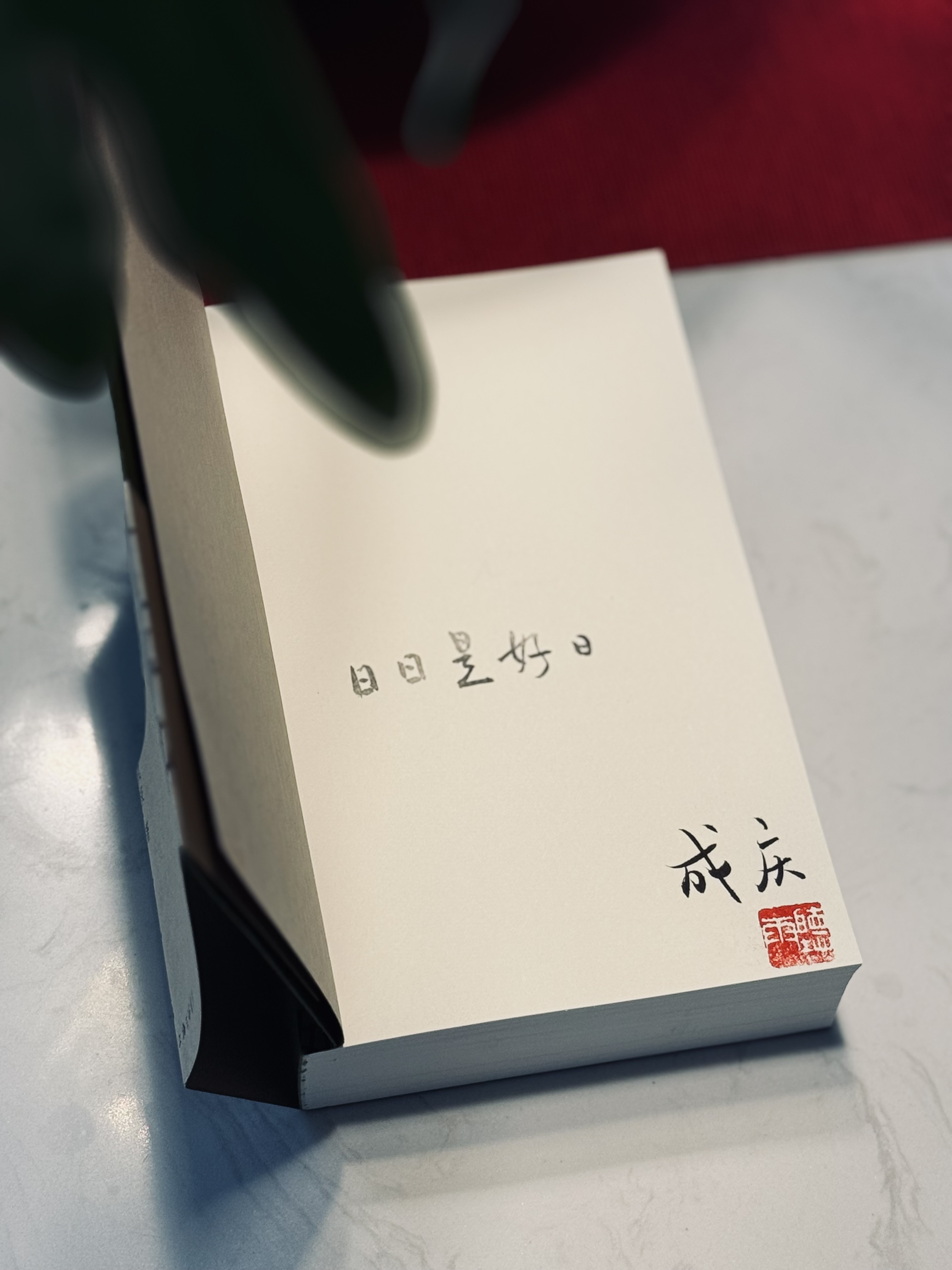
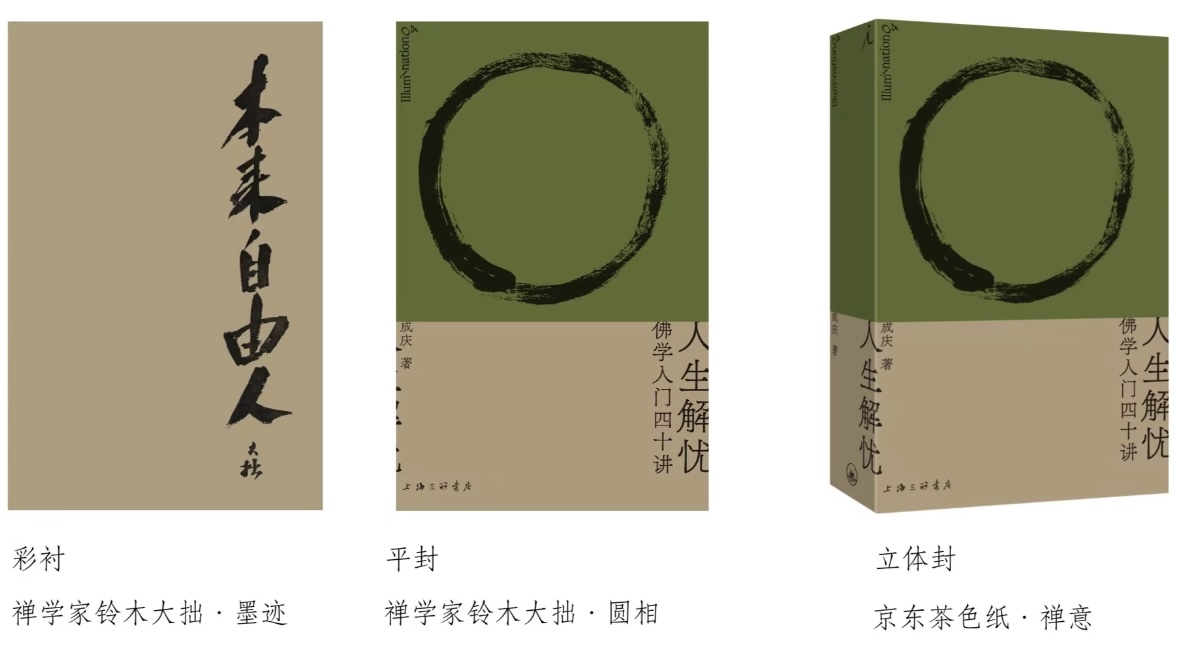
The program has now appeared as a beautifully designed printed book, entirely thanks to our colleagues at Imaginist. Through this medium, I hope my understanding of Buddhism can spread and genuinely help relieve life’s distress.
After the program ended, Vistopia colleagues began considering an advanced sequel. During its release, many listeners had already asked how to read and understand Buddhist scriptures. Wanting to teach people how to fish, I finally decided to create another Vistopia program on the Diamond Sutra. Beginning with this familiar scripture, we will share and study its wisdom together.
Besides interpreting the Diamond Sutra itself, I want the new program to realize my idea of public Buddhist education. I will devote substantial space to how the sutra helps us understand contemporary questions, why our age produces cognitive confusion, and how this ultimately causes problems of body and mind.
Over recent decades, Chinese people moved from intense concern with politics, economics, and society toward an extreme concern with settling individual body and mind. Although this sparked Buddhist and spiritual-practice booms, it also makes the Dharma seem merely an anesthetic for escaping secular crises. But that may be a misunderstanding, becausethe Dharma begins with individual cognition to address suffering in communities, society, nations, and all beings throughout the Dharma realm. Its solution concentrates on transforming cognition: to repair visible crises, first repair our ideas, then genuinely improve society and end suffering through more inclusive compassion and grounded action. This is the bodhisattva spirit.
I hope the new program will form still more wondrous connections with Vistopia listeners.
Thank you, and I will see you then.











 2024-11-08 15:41:18
 2024-11-08 15:46:07