



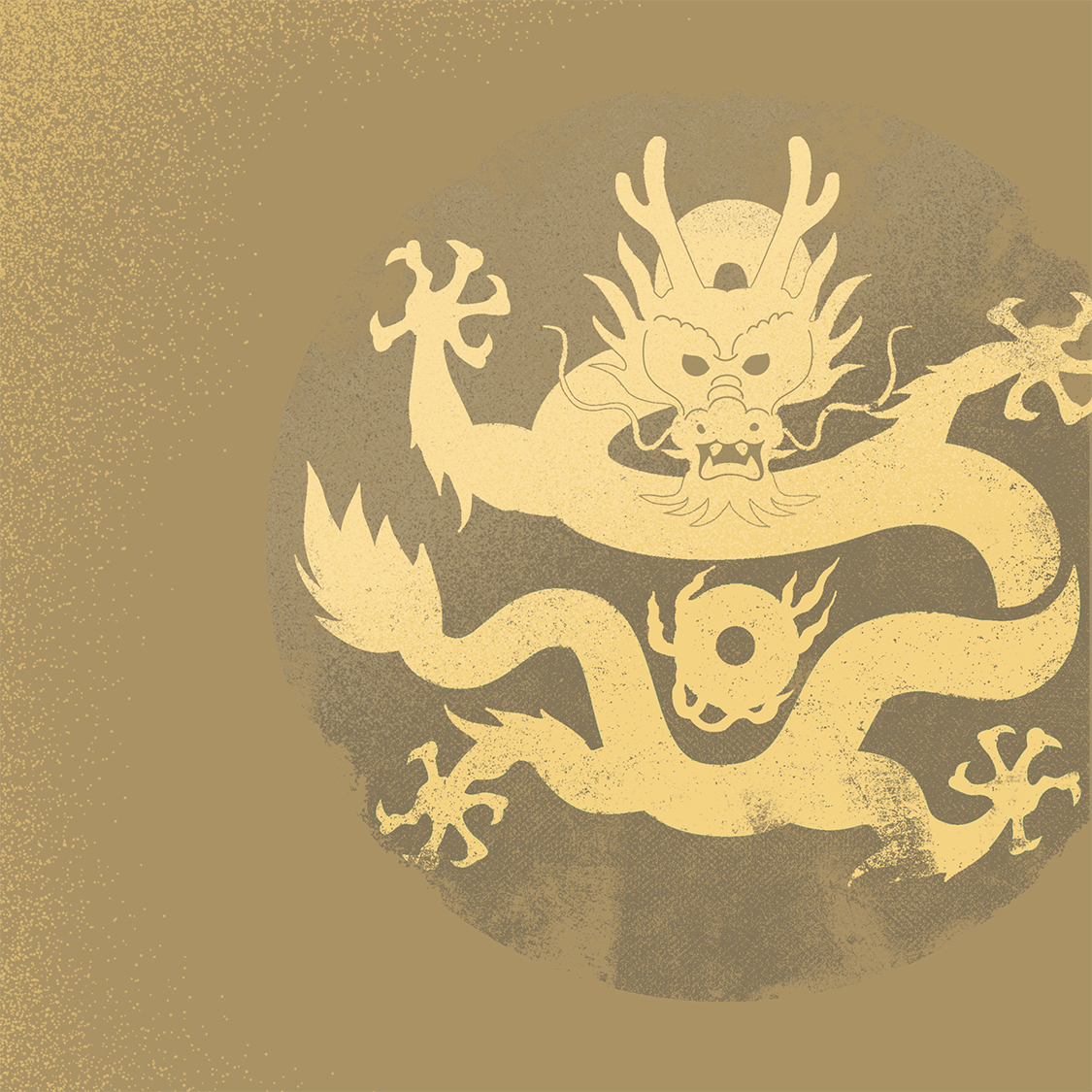
How China Confronted Change: The Qing Dynasty

Hello, I am Yang Zhao.
When It Becomes Possible to Record Human Experience in Full
Consider the environment in which we live. From a historical perspective, its defining characteristic is that ours is an age of recording and copying on a massive scale. Look at your phone, computer, or cloud storage: each contains thousands or tens of thousands of photographs and videos, and we take this entirely for granted. For much of every day, whenever we move through public space—walking down a street, taking transportation, entering a shop, or visiting a government office—cameras capture and record our faces and movements.
Twenty years ago, and perhaps even ten years ago, many people still approached photography selectively: pictures were taken to commemorate important occasions. Now that a phone can produce fifty or a hundred photographs a day, the standard separating important from unimportant has become blurred and difficult to maintain. The decision is no longer immediate and made on the spot; it has become secondary and deferred. We take the picture first, then plan to decide which images matter when we eventually organize them.
Many of us also know that the imagined moment when we will sort, classify, keep, and delete our photographs and videos is usually postponed again and again. It may never arrive. As cloud storage expands, it no longer needs to.
A little over twenty years ago, imagine someone describing a society filled with surveillance cameras—three or five at every intersection, six or ten in every shop—where footage could reconstruct virtually every place a person visited and everything they did between leaving home and returning. We would have assumed that description belonged in a terrifying dystopian novel, carrying forward the spirit of George Orwell's famous Nineteen Eighty-Four and warning us how dreadful the loss of freedom would be.

George Orwell, Nineteen Eighty-Four, Shanghai Translation Publishing House, 2009 edition
Yet today, if we lose something important and report it to the police, how do we react when they say, “Unfortunately, the camera at one intersection did not capture you passing”? We feel disappointed, perhaps even unable to accept that a surveillance camera failed to work. This is the enormous environmental change of the past twenty years. It challenges long-held ideas and definitions of history.
When we say history, we may mean two different things. One is the sum of past events and human experiences. This is history in the broad sense, history as such. It necessarily exists and necessarily forms the basis of our understanding and discussion. When we speak of “establishing the historical facts” or “historical truth” we assume that this underlying historical reality exists.
More often, however, we mean past experience that has already been selected, organized, and made tellable. When we say “history will record this” or speak of “leaving one's name in history” and something “worthy of being written into history” this is the definition we use. The two meanings are closely related: tellable history cannot violate the more fundamental historical reality.
But we must remember their ultimate difference. Most of historical reality is never recorded and therefore cannot be told or enter a historical narrative. That assumption now faces a powerful challenge. The next generation—and this is probably already happening—will be born into an environment where recording and storage are easier and taken still more for granted.
When I began using personal computers as a young man, the 3.5-inch disk could store 512 KB. I thought it astonishing that every paper I wrote in an entire semester could fit on one disk. Today, when I write a book, I use a 2 TB hard drive. Its physical size is not greatly different from that old disk, but its capacity is four million times larger. It would take four million of those disks to hold the same amount. Growth at this rate means that a comprehensive record of human experience is no longer necessarily impossible.
We can and should therefore ask: if all human experience truly could be recorded, how would our view and understanding of history change?
Telling History Means Choosing the Right Scale
In the past, history was necessarily simplified—forced to be simplified—because no event could preserve every source. Most evidence disappeared, leaving us to reconstruct and tell history from pitifully limited materials. Consider the assassination in November 1963 of John Kennedy, president of the United States and then the most powerful person in the world. Even for this event, we do not have enough evidence to explain exactly what occurred that day in Dallas, Texas.

The assassination of John F. Kennedy took place in Dallas, Texas, on November 22, 1963, killing the thirty-fifth president of the United States.
Besides this forced simplification, history also requires simplification in order to be useful. A map, too, must simplify. We are capable of making a map the same size as the territory, but such a map would be utterly useless. Only by reducing reality and discarding numerous details can a map perform its function: orienting us and helping us find where we wish to go.
If one day history as such—the whole of human experience—could be spread before us, it would help us no more than a full-scale map. It would be entirely useless. How could we narrate such a history? Nor could we gain any historical understanding from it. Paradoxically, when records become perfectly complete, history disappears.
This points to a necessity: history must simplify and select. As in mapmaking, telling history begins by deciding on a scale—or deciding from how broad and distant a viewpoint to see history. Scale matters.
Yet there is an unavoidable conflict. A larger scale can contain more detail but cover only a smaller area. A smaller scale provides a broader view but cannot show details clearly. No perfect, universal map exists; there are only maps best suited to different needs. The magical feature of digital maps on our phones is that we can adjust scale at any time. To travel in Beijing from the Fifth Ring Road to the Second Ring Road, we need a smaller scale to see the route. To locate the Hepingli Hotel, we switch to a larger one.

Illustration of map scale: Beijing's Hepingli Hotel
The same is true when telling history. A simple account lets us grasp immense human experience quickly. Yuval Noah Harari's famous Sapiens: A Brief History of Humankind is brief indeed: about two hundred thousand Chinese characters tell a history from two hundred thousand years ago to the present. Such a history retains very little of actual experience and necessarily deletes a great deal.

Yuval Noah Harari, Sapiens: A Brief History of Humankind, CITIC Press, 2014 edition
Many people forget this basic principle when approaching history. Historical narrative and understanding both involve perspectives selected for different functions. Each perspective simplifies differently, deciding what to omit and what to preserve.
An engineering topographical map, for example, shows no human-made roads or buildings. Its focus is winding, nested contour lines, perhaps colored to indicate different geological structures. Give you a natural topographical map of the city where you have lived your whole life and you may find it bewildering and recognize nothing.
History is the same. Let me repeat: compared with the available evidence, every historical narrative necessarily deletes far more than it preserves. Precisely because so little remains, the reasons for preserving and narrating it require special, careful planning and thought.
Every Historical Narrative Is the Result of Selection
There is, however, a crucial difference between history and maps. A map's principles of selection are basically fixed, or at least change far less than history's. Historical principles of selection vary greatly from one era to another.
When people look at a map, they know clearly that it is highly simplified. Yet when listening to or reading history, many treat a particular narrative as historical reality and as the whole of history. They do not recognize it as one selected account among thousands of possible narratives. When telling, hearing, or reading history, many people feel confused by a different account. They assume that one must be right and the others wrong, unable to recognize that the difference often lies not in truth and error but in different principles of selection, viewpoints, and chosen portions of the past.
The more simplified a history is, the more easily it creates the illusion of a single answer. Exclude every complex factor and retain only one-thousandth, one-ten-thousandth, or one-hundred-thousandth of the facts, and it is easy to produce a clean image that appears to be history itself. An account that includes more diverse and complicated elements and deletes less can approach the whole more closely. Complete history, history as such, could never be clean and tidy, reducible to a few sentences telling us clearly who was good, who was bad, who did what, and who caused which effect.
History is not so simple. We cannot present it in full, yet the undeniable fact is that real history—history as such—is greater than any historical narrative. Every existing narrative is the result of selection and can therefore never be a final verdict. Whenever you hear one historical narrative, remain alert to the possibility of others.
What I am doing is not meant to replace the Chinese history everyone has read, heard, and known; that would be meaningless. I want to show that different periods write different histories according to different principles of selection. We should investigate the reasons that produced those principles rather than accept inherited narratives wholesale.
Our present understanding of the Ming and Qing, for example, may be strongly shaped by biases formed between the late Qing and the establishment of the Republic. What kind of period was that? It was an age of surging anti-Manchu revolution, and a revolution did overthrow the Manchu Qing regime. Its success seemed to prove the government's weakness and incompetence. Yet China did not immediately become rich and powerful after the revolution, further confirming in many minds the grave harm caused by Qing rule. Viewed this way, history necessarily emphasized conflict between alien Manchus and Han Chinese on one hand and portrayed the Qing's many failures on the other.
Was the Qing Really a “Mistake of History”?
The late-Qing revolution overthrew the Manchus and created the Republic. Yet the Republic of China that replaced them was merely an accidental common denominator among many shifting revolutionary forces. Had victory not come so suddenly, and had the different forces had more time to ally and compete, the country clearly would not have been called the Republic of China and Sun Yat-sen would not have been its first provisional president.
The name “Republic of China” came directly from Sun, who insisted on it against competing views. Mainstream discourse spoke of a “republic” rather than a “people's state”; by ordinary logic, the new country would have been called the “Chinese Republic”. In Sun's own political theory, however, “republic” meant representative government and did not represent democracy's highest form. Democracy should go beyond representation toward direct rule by the people.
Sun therefore later proposed direct popular rights of initiative and referendum. Just as millennia of imperial rule ended, he set China's democratic ideal as a “people's state,” a new country governed through direct popular rights and more advanced and admirable than the Western republics then in existence.
Sun himself was an accident. Contemporaries called him the boastful “Big-Gun Sun.” Most people did not understand, and naturally could not care about, many of his ideas, including the direct popular sovereignty represented by his ideal republic. Revolution was driven not by passionate longing for democratic republicanism but by collective hatred of the Manchu Qing. Beginning around 1895, secret-society operations expanded over more than a decade into mass emotional mobilization. In the founding of the Republic, racism unquestionably played a more important and decisive role than republican ideals.
This intense Han-centered sentiment shaped historical selection. Projecting present politics into the past, accounts of the entire Qing dynasty singled out whatever could prove that it deserved overthrow and destruction—its worst and darkest aspects. One popular view held that the Qing was a mistake of history and should never have existed. Narratives of the dynasty's founding therefore repeatedly stressed Qing brutality after entering the passes, such as the “Ten Days of Yangzhou,” and its high-handed destruction of Han culture: the tonsure order of “keep your hair and lose your head, or keep your head and cut your hair” and the literary inquisitions.
The Ming was correspondingly idealized. If the Qing should never have existed, then the Ming should have continued; it had been wrongly displaced. Calls and actions to “overthrow the Qing and restore the Ming” were not merely highlighted but treated as correct and even legitimate.
In the 1970s, the great wuxia novelist Jin Yong wrote his final martial-arts novel, The Deer and the Cauldron. He still began with the Zhuang Tinglong “Ming History case,” a literary inquisition, and had his hero Wei Xiaobao born in Yangzhou before stumbling into the Heaven and Earth Society, which seeks to restore the Ming. But Wei also accidentally befriends the Kangxi Emperor and travels on Kangxi's behalf to Mount Wutai to find the retired Shunzhi Emperor. There he hears the old emperor give the young one a central maxim of rule: “Never increase taxes.”

Poster for the 1998 television adaptation of The Deer and the Cauldron, directed by Lee Tim-shing
The Deer and the Cauldron thus shows Jin Yong partly inheriting the old historical bias, portraying Manchu cruelty whenever he speaks of the early Qing. But it also reflects an adjustment in late-Qing historiography. The Qing could not have been entirely bad. If it was as terrible as claimed, we could not explain the basic historical fact that the dynasty successfully established itself after entering the passes and survived for more than two centuries.
One reason the historical view changed was that intense Han nationalism faded over time. Hatred of the Qing and the Manchus could not be maintained indefinitely, and researchers and narrators no longer read Qing sources with the same powerful aversion. Another equally important reason was a broad reconsideration of Ming sources and a different assessment of that dynasty. I outlined this in the previous season: it means reading Qing sources more calmly and objectively.
That is what this season seeks to offer, especially in its account of the Qing's founding. Unless we escape the negative impression of the Qing inherited from Han-nationalist historiography, we cannot properly grasp China's situation when the Ming collapsed. How did the Manchus arrive and establish the Qing? What trials and challenges did they face? What solutions did they propose? Had those solutions failed, there would have been no Qing dynasty.
From this perspective, Qing history divides into several clearer stages, and the founding stage in particular receives different emphasis. That affects the next question we must explain: why did this dynasty suddenly decline after the mid-Qing? How did it enter a descent it could not halt, plunging until it produced the great disasters of modern Chinese history? This is one of the season's main threads, and I wanted to explain it here in the introduction.
Thank you for listening. Until next time.
2025.07.17
Audio in Chinese
Related programs

Kodansha History of China, Season 1: The Age of Myth and the Xia Dynasty
From myth to history
¥36.00
Included with membership

Kodansha History of China, Season 9: The Ming and Qing Eras
Sea and empire
¥48.00
Included with membership

Kodansha History of China, Season 10: Late Qing and Republican China
The Last Dynasty and Modern China
¥36.00
Included with membership