




Finding Peace: 40 Introductory Lessons on Buddhism

Editor’s note: This bonus episode comes from director Chang Chao-wei’snew program Listen, the Island Is Singing: Taiwanese Folk Music, Culture, and Social Change. We invite you to listen!
Introduction
Hello, I’m Chang Chao-wei. Today’s episode is our first bonus, something novel for me. First, what is a bonus episode? Although I am a heavy user of a certain famous young video platform, I never understood the term. I looked it up on Baidu and learned that in Chinese it means a side story.
I understand side stories—who has not seen My Own Swordsman? Whatever the label, it fits our program. Each bonus invites a guest to discuss the Taiwanese folk music they experienced, making it that person’s side story. Who is our first guest? No suspense: this is the Cheng Qing side story. Professor Cheng has created two Vistopia programs.
My connection with Professor Cheng came through The True Nature, my documentary on Master Sheng Yen. He repeatedly invited it to screen in Shanghai and hosted post-screening discussions that I attended. We are both Buddhists, though Cheng practices more diligently. His recent programs Introduction to Buddhism and The Diamond Sutra have both been popular.
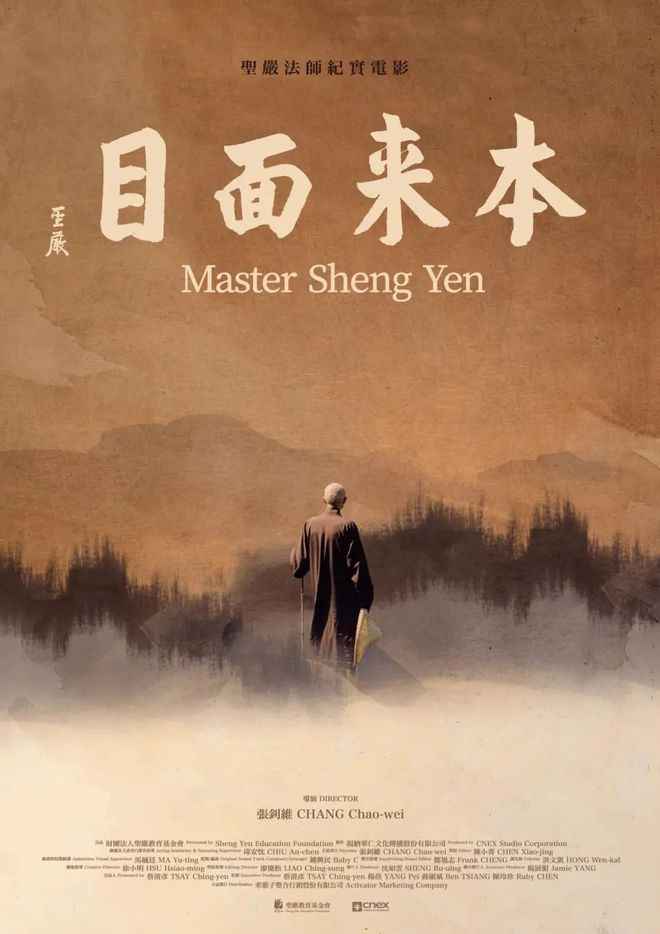
Director Chang Chao-wei’s documentary The True Nature
At a later meeting, he asked me to sign a book. To my shock, it was my own Who Is Singing Their Own Song? A History of Taiwan’s Modern Folk-Song Movement in the 1970s, long out of print. We had a second shared interest: Taiwanese folk music.
Given these layered connections, I invited him to our first bonus episode to discuss his relationship with Taiwanese folk music, how people in mainland China first received it, and its influence. We recorded in a Shanghai tearoom where we often meet.
By coincidence, an unquestioned senior star joined us that day: an actor, director, and singer who personally experienced the folk-song movement. Do you know who? Sylvia Chang.
She intended only to listen to our discussion, but in the second half I handed her a microphone. What side story will the three of us create? Please listen patiently from beginning to end.
Listening guide
Cheng Qing’s folk-music memories
00:04 Mainland listeners discovered Taiwanese folk music through cover versions
01:48 Teresa Teng: folk music as an outlet for personal liberation
03:35 Understanding modern Taiwan through music history
07:34 Taiwan’s Chinese cultural tradition is also partial
09:26 Who am I under the influence of Western culture?
13:42 When the mind is unsettled and life has no center
14:56 Where should our thought go?
Chang Chao-wei’s folk-music memories
17:07 The good things found on records
18:58 The split between intellectuals and musicians
21:24 Vaina: how can music express the local?
25:04 The contest among elite, political, and folk cultures
28:07 Mahayana and early Buddhism: what Buddhist wisdom offers cultural creation
Sylvia Chang’s folk-music memories
33:16 Bob Dylan: music fills an empty place in the heart
34:40 Lo Ta-yu had never visited Lukang when he wrote Lukang, the Little Town
40:18 Encounters in life require few explanations
44:14 Highly civilized societies suppress human expression
46:20 What is plurality? Face your feelings and sing your own song
How should Taiwanese folk music be introduced to mainland listeners?
50:04 My Deskmate: how do we express our experience of life?
51:43 Cultural difference fragments inner identity
53:15 Nature, cities, and modernization: folk music reflects life’s basic questions
55:05 The Olive Tree: many moving songs resist classification
55:41 Where Have All the Flowers Gone: folk music tells human stories
58:07 We use music to express our own lives
Related music
Sylvia Chang: Childhood
Zhu Fengbo: The Olive Tree
Bao Meisheng: Little Jasmine
Lo Ta-yu: Lukang, the Little Town
Bob Dylan: Blowin’ in the Wind
Liu Chia-chang: Plum Blossom
Tsai Chin: A Dream Boat Sailing Far Away
Hu Te-fu: Child on the Buffalo’s Back
Pete Seeger: Where Have All the Flowers Gone
2026.01.12
Audio in Chinese
Related programs

Listen, the Island Is Singing: Taiwan Folk Songs, Culture, and Social Change
Use music to settle the heart in an age of solitude
¥98.00
Included with membership

Journey to the West among Us: Zhang Yiwei's Close Reading
A world never seen before; at every step, a new flower
¥168.00
Included with membership

Shōwa Kayō: Japanese Popular Music after World War II
Music as a way to see the future
¥68.00
Included with membership