






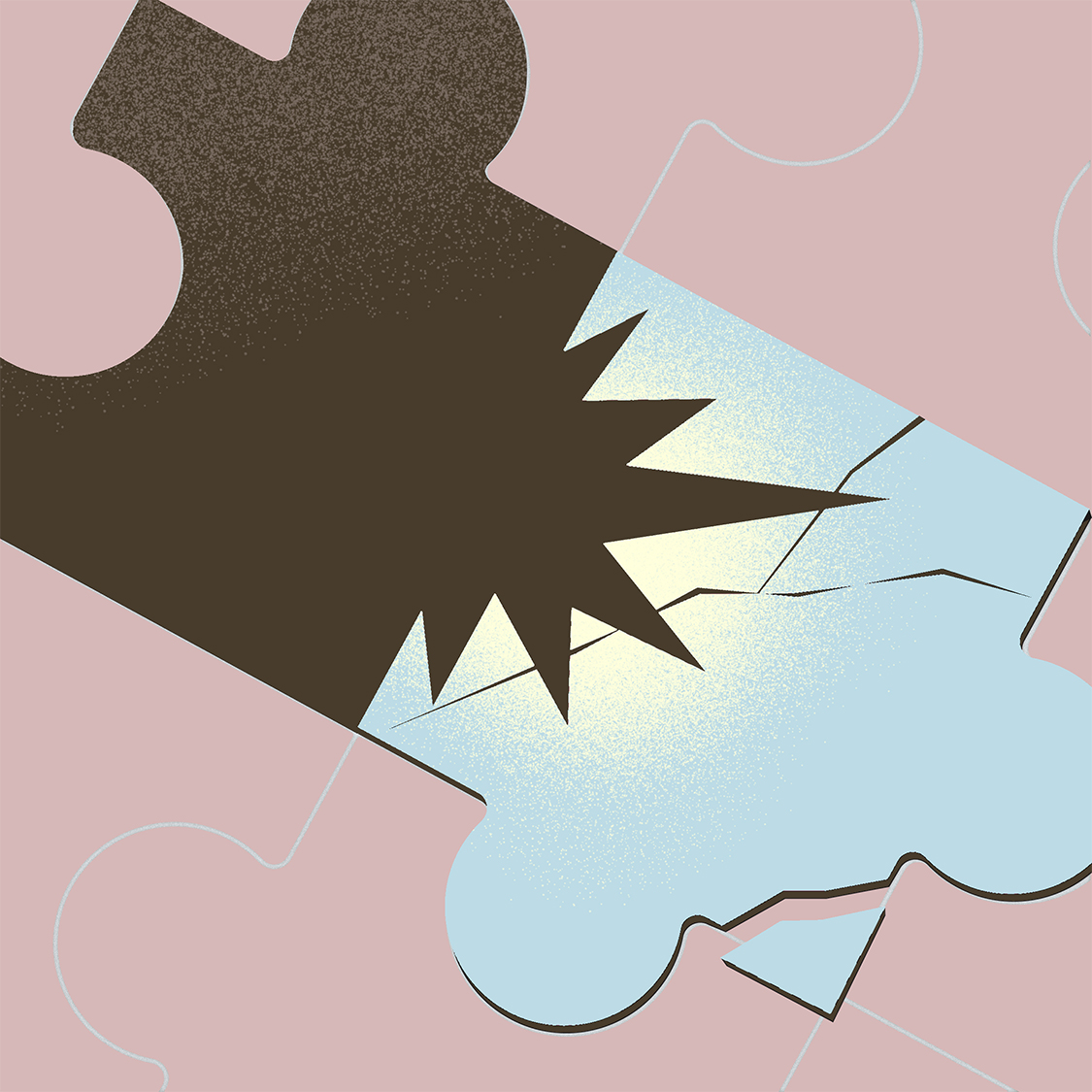
Unconventional Relationships: Escape, Healing, and the Search for Love

Hello, Vistopia listeners. I’m Cao Xuemin, and I’m delighted to meet you again.
First, a brief reintroduction. I earned a doctorate in social psychology at Fudan University, studying how personal experience and environment shape thought, behavior, and personality. I am also a counselor specializing in personal growth and intimacy and the author of popular psychology books including The Psychology of Breakups and The Psychology of Infidelity. For more than a decade, my principal work has been counseling, teaching, and writing.
Last year I createda Vistopia reading program called When Love Ends. Focusing on this increasingly widespread social condition and mood, it used ten works about love and its absence to move from “why” to “what can we do,” through family of origin, gender bias, power, and more. Listeners’ support ultimately allowed it tobe adapted into a book, and I sincerely thank you again.
The reading program’s limited length meant we discussed the “I” in relationship—self-love and growth—more than relationship itself. We said less about seeing one another truthfully and about how to love or cease loving.
As gender ideas spread, social structures change, and AI develops, toxic relationships are exposed and new forms practiced. Have you heard of or experienced abusive love, teacher-student romance, open relationships, self-insert fandom, cosplay commissions, or situationships? In counseling, I meet many people repeatedly trapped or long struggling in turbulent, bewildering, or painful relationships.
Some must remain secret; some lack friends’ and family’s blessing; some force a choice between love and dignity or bread; some continue after only one person remains; some are crowded because more than two love; some cannot continue or end; some are so rational that love seems absent; others resist clear description.
I therefore wanted another program that enters many kinds of intimacy, asking how they arise, what problems they contain, and how much possibility for love remains.
“Abnormal” describes; it does not judge
You have noticed the title: Abnormal Relationships.
During preparation we feared “abnormal” might offend. Where “normal” is violently defined and imposed from above, “abnormal” faces two exclusions: people considering themselves normal avoid what does not concern them, while people so labeled defend themselves against a term they reject.
We considered other names but kept this somewhat dangerous one. Before explaining the program’s origin and purpose, I should clarify the term and communicate our goodwill.
To me, “non-normal” and “not normal” differ. Both oppose normal, but carry subtly different meaning and tone.
“Not” is a colloquial negation often carrying subjective, critical disapproval. The prefix “non-” is objective, neutral, and descriptive, emphasizing logical nonmembership. Our title makes no value judgment; it simply defines a field of discussion.
Our alarm at words such as “abnormal” is itself worth discussing.
A civilized, progressive society should be inclusive. True openness makes the so-called normal and abnormal equal, without inherent hierarchy, quality, or moral rank. In one sense, civilization advances as the boundaries of normal and abnormal continually change.
For women, housework and serving husband and children were once the only “normal” behavior, while employment or refusing marriage was called abnormal. In a more civilized, inclusive era, homemaking, work, refusal of marriage, and other lives are all choices without such division or judgment.
The title therefore frames our subject accessibly while maintaining that normal and abnormal are equal.
What are abnormal relationships and abnormal elements?
What, then, is an abnormal relationship, and which will we discuss?
Here it means a relationship not openly discussed in the past, less common in life, or not currently mainstream.We divide them into toxic relationships such as teacher-student or secret affairs, ruptured relationships such as breakups and infidelity, and new relationships such as AI partners and situationships.
Beyond being less discussed, common, or mainstream, all three share one feature:they concern misreading, uncertainty, and exploration of love. This points to their core elements: things mistaken for love that are not love, including power, role, trauma, fantasy, and the thrill of transgression.
Take trauma in abusive love.
I often counsel people who have suffered enormous harm and pain but cannot release a person or relationship. They insist the other loves them, fantasize they eventually will, or simply declare this their only lifetime love and believe its loss ends love forever.
In fact, this may reenact trauma rooted in early attachment.
Growing amid emotional neglect, inconsistent response, or abuse can create a traumatic attachment pattern.
Seeking love and survival, a child instinctively rationalizes caregivers’ harm: “They have reasons; I should not be angry. They work hard and are wonderful; I should behave.” Pain remains in the body and the need for love and survival persists. With each new injury the child imagines: “If I try harder, or if they have time to see me, they will love me well.” Fantasy sustains the relationship and self and forms traumatic attachment.
Within it,intimacy becomes equated with pain, uncertainty, and struggle, while stability, safety, and warmth feel strange or unbearable.When hurt again in intimacy, the person cannot withdraw; the feeling is familiar and close. Entanglement is mistaken for deep, powerful love and harm for love’s inevitable darkness.
Beneath abusive love lies still deeper injury to the self.
Many clients facing harm think, “They treat me this way because I am awful or failed; it is my fault.” This repeats early rationalization.Behind it lies the traumatic belief: “I am bad, unlovable, and unworthy of love.”
It produces more sadness than anger. Rare anger may fail to motivate because pervasive helplessness abandons action and turns to numbing fantasy.
Through the lens of abnormal elements, trauma is clearly central to abusive love.It often comes from early attachment. If that attachment was abusive, perceptions of self and relationship may distort to adapt.Rationalizing harm, imagining “if only...then...,” insisting “they will love me,” and forming negative self-beliefs combine into deep trauma.Before awareness and change, trauma is attracted to relationships offering familiar harm and may unconsciously construct them.
What do abnormal relationships and elements have to do with me?
You may wonder why any of this matters to you. The answer is one origin of the program.
What we most want to reveal are the elements behind abnormal relationships: things mistaken for love that are not.Some are distant from love but can develop into it, such as excessive desire for safety. Others oppose and damage love and self, such as persistently unequal power.They exist in so-called normal as well as abnormal relationships, differing only in concentration.
The beautification of harm within abusive love also occurs in ordinary relationships, less violently but through everyday, hidden forms.
If we internalize “I am bad, unlovable, and unworthy” plus romanticized harm, even stable intimacy may contain tolerated boundary violations and neglect. Small injuries accumulate into cracks, encourage selfishness, and repeatedly lose opportunities for self-love and better mutual love.
The same traumatic belief also produces repeated demands for reassurance, which can make a partner feel distrusted and ultimately push them away.
Our smallest unit of discussion is therefore not the abnormal relationship but the abnormal element. Such elements exist in nearly all intimacy but create different forms and outcomes through differing concentration and response.
We begin with abnormal relationships because their concentrated elements are easier to perceive, then look back for the same forces moving secretly through daily intimacy.
I hope the program acts like a magnifying glass or X-ray for relational health. Awareness cannot solve everything, but it can stop us misrecognizing, distorting, and harming love; help us keep distance from abnormal elements; and leave room to maneuver, buffer, resist, and preserve ourselves before seeking and developing true love.
More important than relations with others is our relation with self. Recognizing abnormal elements helps reshape it. Abusive love, for example, is rooted in the wound “I am bad, unlovable, and unworthy.” Awareness is the first step toward change.Once we see abnormal elements in our self-relationship, we can rebuild it and establish a firmer self. Only then do we have the strength to feel, create, and transmit genuine love.
How will we discuss abnormal relationships and elements?
You should now have a broad idea of the program’s subjects. Let me explain our approach.
The three categories correspond to chapters titled “This Is Not Love,” “Can We Still Love?” and “Is This Love?”—and to three actions: escape, healing, and exploration.
Chapter 1 covers toxic relationships such as abusive, secret, and teacher-student love; Chapter 2 addresses ruptures such as breakups and infidelity; Chapter 3 explores new forms including cosplay commissions, AI partners, and situationships.
Each episode begins with one or more relationships, reveals shared elements, and combines theory with real cases to ask what, why, and what can be done:What elements are typical? How do they affect interaction and appear in normal relationships? Why do they arise and persist? What can we try to remove them or adjust their concentration?
One clarification: this discussion is difficult.Every relationship is individual and unique, yet also social and complex.I therefore analyze through three lenses: power relations, attachment theory, and gender.
First, power.
Many think a newborn’s first experience is love. Not necessarily: the first relationship may not be loving parent and child, but is fundamentally an all-encompassing power relation.
An infant cannot survive, express, or understand independently. Physical survival, psychological stability, and social adaptation depend entirely on caregivers. Infants, children, and even older minors occupy the lower position; parents appear omnipotent and indispensable above them. That is why our first experience is more fundamentally power.
Love can make power approach equality. Without it, neglect, exploitation, control, and harm harden and unbalance the relation.People long above or below may unknowingly form distorted views of self, others, relationships, and world, then enter or create abnormal intimacy.
Second, attachment theory.
Terms such as anxious, avoidant, and secure attachment are now familiar. But what is attachment?
British psychologist John Bowlby developed the theory from observing infants. To survive and develop, a baby forms an emotional bond with at least one primary caregiver, signaling through crying to gain attention and care. Caregiver responses shape interaction—the attachment pattern—and the baby’s view of self and others—the internal working model. These persist and guide later feeling, thought, and expectation.
These infant models become default programs for interacting with ourselves and others. Without awareness, we reuse them in nearly every important intimate relationship, where they are repeatedly confirmed and hardened.Rigid attachment patterns are a key cause of abnormal relationships’ emergence and persistence.Nearly every abnormal relationship and element closely relates to attachment.
Gender is our third continuing lens.
Gendered formation begins at birth. Before clear cognition, we receive traditional gender scripts.
A girl’s caregivers guide her according to customary ideas of raising girls. During rapid brain development she watches and unconsciously imitates similar figures in books, media, stories, and life: mothers, sisters, grandmothers, and others.
We also internalize gendered relationship scripts: how mother and father relate, divide duties, and draw boundaries.These scripts draft our later relationships. Existing inequality, suppression, or denial can become prototypes of abnormal relationships and elements.
Traditional scripts discourage or forbid men’s emotion, producing avoidance and suppression—an abnormal relationship with self. Such a man may initially seek an expressive partner, then treat the partner’s emotions as he treats his own: ignoring or belittling them, turning the relationship toward mutual harm.
Research also finds that people mentalize chiefly those seen as their own kind—interacting with them as independent individuals. In intimacy, especially heterosexual relationships, gender difference can obstruct that recognition.
Gender intertwines with power and attachment, encouraging expectations such as: you differ from me; I am above or below you; you must satisfy me or I you. The relationship leaves empathy, equality, and cooperation for prejudice, control, and struggle.
Power, attachment, and gender thus run throughout the program as origins, drivers, and points of change.
For specific problems I also share healing methods: mainstream approaches such as CBT, ACT, and motivational interviewing, as well as less common but effective mentalization-based and emotion-focused therapies.I want the program to ask not only what and why, but what to do. May its dismantling and rebuilding give you strength and hope to love—or not.
That concludes this introduction. In Episode 1, we enter abusive love, identify its abnormal elements, and seek an exit from its cycle.
Thank you for listening. See you next time.
2026.05.14
Audio in Chinese
Related programs
When Love Ends: The Infinite Life Reading List, Season 18
What Is Left to Say About Love?
¥48.00
Included with membership

Love and Fear: The Dilemmas and Possibilities of Marriage Today
How can we reimagine intimate relationships?
¥98.00
Included with membership

Why the World Needs Libraries — Audiobook
See the many faces of society through a single library
¥58.00
Included with membership


