



Unconventional Relationships: Escape, Healing, and the Search for Love

Hello, I’m Xuemin.
Welcome to Episode 1 of Abnormal Relationships. Today we discuss abusive love, perhaps the most universal and difficult relationship in this program to escape.
What is abusive love?
The term may evoke anguished romantic stories.
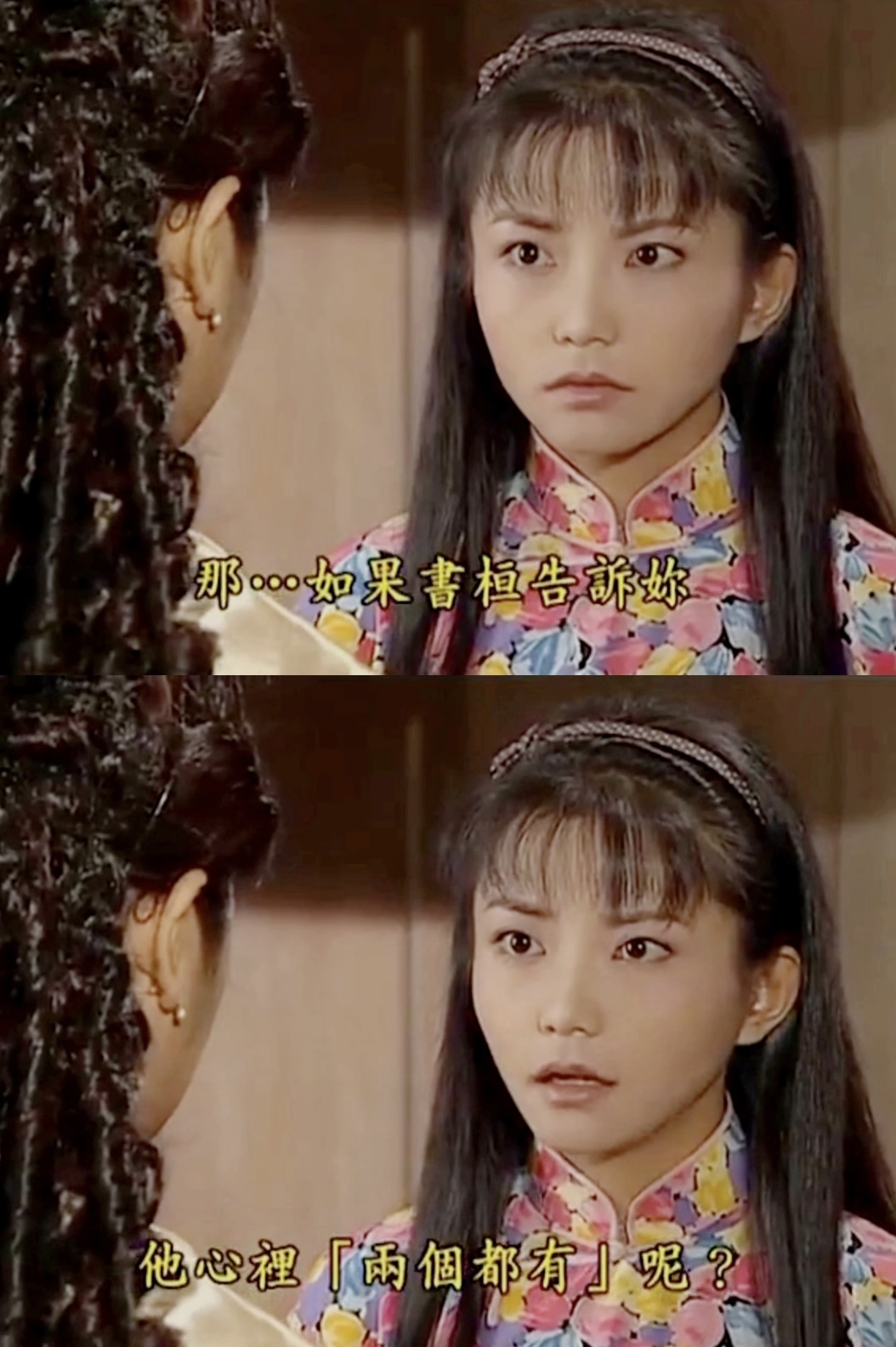
Fang Yu points out the triangle among Yiping, Ruping, and Shuhuan (image: Romance in the Rain)
Examples include the complex triangle in Chiung Yao’s Romance in the Rain; the half-lifetime separation of Manzhen and Shijun in Eileen Chang’s Eighteen Springs, caused by patriarchy, family background, and his avoidance and indecision; and Han Ding’s unrequited love for Luo Jingjing in What Can I Do to Save You, My Love?
They vividly illustrate abusive love:a relationship mingling love and pain, hope and disappointment, possession and loss.Such relationships exist not only in fiction but throughout daily life.
Psychologically, what are they? Begin with feeling.
If a relationship increasingly brings sadness, grievance, frustration, anger, anxiety, despair, insecurity, panic, and self-doubt; damages mind and body through insomnia, discomfort, or poor concentration; disrupts life and work; cannot be ended; and repeatedly cycles, it is probably abusive love. In other words,it need not involve extreme violence or betrayal. Subjective suffering and depletion already demand serious examination.
The abuse may look obvious while participants, especially victims, fail to recognize emotional mistreatment. Clients often arrive for instability, inability to manage work and life, or a doctor’s recommendation rather than the relationship. They defend partners: “They did not mean it,” “Their family or past wounded them, so I should love and tolerate more,” “I misunderstood; I am too sensitive,” or “They truly promise to change.” Thusabusive love causes pain while people remain unaware, pretend not to know, or cannot acknowledge depletion.
The introduction said abnormal relationships center on concentrated elements mistaken for love. What are they here, and what can awareness enable? Today we begin awareness, experiment, and action.
Abnormal elements in abusive love
I identify three representative elements: rationalizing or romanticizing harm, suppressing the self, and fantasizing about the future.
1. Rationalizing or romanticizing harm
We struggle to face a partner’s harm because admitting it means accepting they may not love or know how to love, that our time and feeling were wasted and betrayed, past love false and the future uncertain—a recognition that can cause psychological collapse.
For defense, we instinctively rationalize and excuse.We say they are stressed, or that family and past trauma explain behavior done from love.
Rationalization can reduce conflict and foster understanding, but only if the person reflects and changes after harm.Without reflection and adjustment, repeated excuses intensify harm and cost both people chances to change.Conflict and pain accumulate.
Rationalization makes harm tolerable through explanation; romanticization makes it meaningful through sublimation.Culture contributes greatly, especially romantic narratives. Even recent idol dramas romanticize harm, as in Our Generation.
After family tragedy, Jiang Qiaoxi vanishes from Lin Qile’s life without explanation or reply. When they later meet, he says he will eat at her home then takes a taxi away and disappears again, turning her joy into anguish and waiting. The series excuses him through circumstances and further romanticizes his harm by insisting they truly love each other.

Lin Qile collapses after Jiang Qiaoxi disappears again without warning (image: Our Generation)
Many love stories teach that pain is love’s necessary path, proof, or medal; unattainable love and agony become romance’s peak, while stable happiness seems dull and unreal.
People therefore interpret control, suspicion, or violence as fear of losing them, and emotional explosions as proof of investment. Harm ceases to look malignant and becomes evidence of love.
2. Suppressing the self
Both excusing and beautifying harm necessarily suppress the self, our second element.
An extreme classic example is Stockholm syndrome.
It describes victims of violence or threat identifying with, helping, or attaching to perpetrators instead of hating them.
The term arose from a failed 1973 Stockholm bank robbery in which two criminals held four employees for 130 hours. The hostages later felt grateful for care, refused to testify, raised defense funds, and opposed police. One woman even loved and became engaged to a robber during his imprisonment.
Why? Largely self-suppression, especially of emotion.
Trapped under sudden threat, victims have no safe outlet for fear, anger, and humiliation and forcibly suppress them. When death does not occur, temporary relief is reshaped into a tolerable story: the criminals did not truly hurt us and even cared for us. Gratitude and dependence make circumstance and fear less unbearable. Thusattachment to perpetrators is not natural emotional flow but compensation after real feeling is suppressed or distorted.
A counterexample clarifies.
The series The Confidence also depicts victim and criminal. After Ke Ying becomes an enemy of a criminal who returns as executive Feng Xiaosheng and takes revenge, he gradually falls for her, but she never loves him.

Ke Ying tells Feng Xiaosheng she feels only fear, disgust, and hatred (image: The Confidence)
She never suppresses feeling or excuses him through suffering or inability to love. She recognizes harm and her pain, fear, and hatred. Though temporarily powerless, she believes action can create change. Refusing suppression keeps boundaries clear and prevents abusive entanglement.
That is,attachment to a perpetrator is psychological defense, not rational choice. When real feeling is repeatedly suppressed, the mind seeks substitute safety; at extremes this produces attachment, as in Stockholm syndrome.In everyday relationships it appears more secretly through self-blame, rationalization, and romanticization.
We covered the latter two; how does self-blame appear?
We say “I am too sensitive” while sad, “I should be satisfied” while angry, or “I am too clingy” while hurt. Such speech silences feeling and trades self-deception for illusory safety. Eventually we lose space and capacity to feel and express. Emotion does not vanish, but sadness, anger, and grievance transform into insomnia, headaches, palpitations, and bodily symptoms.
Worse, suppression may wear virtue’s clothing.We learn sayings praising forbearance and retreat. Beneath their gentleness lies one message: emotion is wrong, dissatisfaction dangerous, endurance praiseworthy.
So we habitually suppress feeling amid conflict and harm. Both the partnership and our self-relationship deteriorate.Repeated “it’s fine” and “I’m fine” ignore reality, sever the true self, betray rights and needs, and move us farther from intimacy, happiness, and peace.
3. Fantasizing about the future
Once harm is excused and self suppressed, present reality cannot satisfy and emotion remains buried. Hope moves into fantasy to support a collapsing self and relationship.
Seductive fantasies include: a child will make an unreliable partner responsible; time will prove my love and make them love me; money will solve unhappiness.They bring comfort and make suffering meaningful because an imagined future will compensate or reward today’s pain, making abusive love harder to leave.
Why is fantasy so powerful? The Zeigarnik effect, our second psychological concept after Stockholm syndrome, helps explain.
Soviet psychologist Bluma Zeigarnik discovered thatpeople remember unfinished tasks more strongly and readily forget completed ones.Unfinished work leaves psychological tension like a stretched spring, accumulating unreleased energy and continually pulling attention—we cannot let go.
This effect is especially clear in abusive love.Such relationships contain unfulfilled promises, expectations, and changes. Occasional tenderness, brief promises, and vague hints create the illusion that fulfillment is one small step away.Despite recurring harm, we cling to that remnant of possibility.
The obsession also involves deep neural mechanisms.
Upon choosing a goal or relationship, the brain prepares for the future: prefrontal planning, dopamine for action, hippocampal memory, and other systems create tension that focuses effort.
Smooth progress releases tension and brings ease and satisfaction.Repeated interruption and struggle leave it suspended and constantly tugging.Reality’s pain is suppressed while unfinished expectation expands through the Zeigarnik effect, making departure harder.
In abusive love it is usually the latter, since expectations lack realistic grounds.Why would someone unwilling to change today awaken tomorrow? These are fantasies, not expectations. They briefly make pain bearable but repeatedly delay facing reality and deciding, producing the cycle:repeated hope and disappointment until disappointment becomes despair and erases hope.
Together, rationalizing harm hides reality; suppressing self drains resistance; fantasizing supplies excuses to persist. Interlocking like gears, they trap us in pain.
Trauma behind the abnormal elements
These are not isolated accidents. Beneath them lies a deeper, more stubborn root: attachment trauma.
Psychological trauma is not limited to disaster or violence; it is experience exceeding one’s capacity to bear.It is highly subjective. One person may regulate, return to reality, integrate, and grow; another bears enormous bodily and mental impact.
Attachment trauma shakes basic beliefs: am I lovable? Can I trust? Can relationships feel safe and satisfying? Once shaken, the mind builds protection against unbearable pain.
Under that protection, excusing harm, suppressing self, and fantasizing recur—admitting harm means facing that I am unloved; expression once brought rejection, humiliation, or punishment; and a cruel present leaves “someday it will improve” as the only comfort.These are automatic defenses activated by attachment trauma. Understanding its origin reveals abusive love’s depth.
Attachment theory is one useful tool. As introduced earlier, childhood interaction with caregivers shapes attachment and how we perceive self and others, our emotions and beliefs about inner world, relationships, and environment, and our automatic responses.
I see attachment theory not as a theory of loving and being loved but of trauma: it reveals how interaction with a stronger party affects the development of someone physically and psychologically powerless.Theory, practice, and counseling show that unstable, neglectful, or invasive early attachment is a major source.
Consider two representative patterns: anxious and avoidant attachment. They offer a new understanding of abusive love.
Anxious trauma comes from inconsistent caregiver response. Unpredictability creates “hyperactivation”: only stronger emotion and demands win brief attention.
Avoidant trauma comes from reliably distant response or intrusive control. Caregivers may meet survival needs but ignore emotion or impose their will, disregarding the child’s feeling. The child despairs that emotional needs bring neglect or harm and adopts “deactivation”: suppressing needs and avoiding dependence.
Anxious and avoidant people often attract and harm each other.Most abusive couples bear traces of both patterns.Recall abusive stories and ask whether this interaction appears.
Why attraction and harm? Their respective trauma:the anxious fear abandonment; the avoidant fear neglect or engulfment.
Initially, false complementarity offers hope. Anxious warmth, focus, restraint, and observation seem to the avoidant like gentle acceptance with ideal warmth and space. Avoidant independence, calm, initial passion, and careful response seem to the anxious like stable, enduring love. Thuseach sees what was once desired but denied, easing loneliness and creating temporary harmony.
As intimacy deepens, trauma and defenses activate, forming the classic pursue-withdraw cycle.Anxious signals such as frequent contact and expressed needs change from warmth to control in avoidant eyes, activating childhood engulfment; the avoidant withdraws coldly. Withdrawal strikes anxious abandonment, producing stronger pursuit.Pursuit and withdrawal repeatedly deepen both wounds.
Paradoxically, the cycle also produces illusory satisfaction.At peak conflict, the anxious often yields first from fear, suppressing needs and pleading gently. This gives the avoidant distance and control, making the partner seem safe and love hopeful. The avoidant’s apology or small kindness then relieves abandonment, making love feel recovered.
Hope restored and love recovered reenact unmet childhood wishes: the avoidant wants no intrusion; the anxious wants no departure. Brief reconciliation indirectly fulfills both, sustaining the fantasy that this time will differ and the other will change.Fantasy hardens, trauma continues, and the Zeigarnik effect governs repeated cycles mistaken for love.
This painful entanglement that consumes both yet cannot be left is abusive love’s distinctive feature.
How can we leave the cycle?
After identifying elements and early trauma, can we escape, and how?
Though we cannot change childhood or family of origin, we can end seemingly fated abusive love,because we can choose how to understand past experience, live now, and move toward the future.
I offer four actions also used in counseling.
1. Face harm
First remove filters of rationalization and romanticization and face both distortion and harm.
Before that, thank yourself.Those distortions once protected us: maintaining surface calm amid chaos, preserving belief in love and hope amid collapse, and providing strength to survive. This wisdom deserves recognition.
I ask clients what a reaction once gained. Appeasing may bring attention; yielding, praise; silence, brief peace and autonomy. Seeing this ends shame and condemnation, becausethough imperfect, it may have been the safest feasible choice then.Self-understanding and release from blame awaken empathy and place us on our own side.
Recognition and empathy make change an active choice born of acceptance, not forced correction or abandonment of a supposedly awful self.
With empathy, reawaken bodily perception.
The body is more honest and sensitive than consciousness, directly sensing pain, tension, fatigue, comfort, pleasure, and relaxation. It is harm’s alarm.Trauma often disconnects people from it.They normalize discomfort or distract through consumption, entertainment, and work until the body’s voice and alarm weaken.
Thereforebegin in a quiet, safe place and attend to the body.
Close your eyes, feel heartbeat and breath, and scan from head to toes. Notice shallow rapid breathing, a tight brow, or curled fingers and toes. Deliberately release them and breathe slowly and deeply. Repetition teaches the difference between tension and openness, helping you recognize fatigue and seek relaxation.
Practice and journal daily, anchoring genuine calm, comfort, ease, joy, and happiness in memory.Gradually distinguish bodily signals from habitual numbness, avoidance, or overexcitement.
In counseling I guide body scans and relaxation repeatedly because bodily trauma memory is deep and stubborn, habitually producing numbness or tension rather than ease.
If illness has appeared, also review its course and what everyone did during treatment. Worsening rather than recovery may show that a harmful relationship continues and the partner ignores or threatens health and even life. This is hidden physical abuse. Recognizing it often activates survival instinct and acknowledgment of harm.
Next,extend attention from bodily feeling to cognition: identify distorted beliefs and build reasonable ones.
I ask clients to narrate events and compare subjective feeling, understanding, and explanation with objective language, behavior, and result. “They have reasons” or “they love me” may conflict with observed cold words and selfish acts, signaling distortion.
People long suppressed or avoidant may struggle to speak; drawing and sand trays allow nonverbal expression. Claiming happiness while creating dark colors and sharp lines offers another clue.
Once distortions become clear, systematically review every life domain: what happened to body, career, relationships, money, time, energy, and emotion?
When work overwhelmed me, did my partner support me or play games while forcing more chores upon me? How often, and how many sleep-deprived days did I endure both jobs?
When seeing others’ peace, do I ask whether I am bad, flawed, or insufficient? How often? How long since joy and calm appeared, and how frequently do pain, grievance, anxiety, and doubt consume me?
What did the partner do to and for me, and how much of what I reject did they cause?
Such questions face harm by reconnecting fact and feeling.
2. Reconnect with anger
After facing harm, reconnect with suppressed and denied feelings, especially anger.
Self-blaming grievance turns inward toward “am I not good enough?”while anger and resistance identify injustice, carry greater power, and more often produce change.
For a once-small, isolated, helpless child, anger meant risky, unwinnable conflict and worse harm. Not becoming angry was protection.
Now grown, with more resources and energy, we can and must cultivate the ability to face and use anger.Express it so a partner encounters real feeling. When harmed, seek outside support from friends, counseling, or law.
Cultures praising harmony treat anger as destructive, butanger can protect, motivate defense of rights, and improve the chance of peace and happiness.Moving from avoidance to facing and using anger is crucial.
3. Return to reality
Leave future fantasy and refuse a terrible today for an imaginary tomorrow.
When clients describe recurring harm, I ask: “If every day of your life repeated today’s interaction, but a button could stop it now, would you press it?” Almost all say yes.
In reality, the button may be a boundary-setting negotiation, temporary separation, or decision to leave.Answers differ, but it must be concrete and feasible.
Then I ask whether the button has appeared and whether either person acted. Usually the answer is silence or no.
Clients gradually see they delay not because the relationship is unclear but because they fantasize that suffering will end and happiness arrive, although close observation shows no change occurring.
To leave fantasy, I suggest a simple exercise:observe and record every harm, including time, context, interaction, and effects on mind and body.
Observation and records counter emotion’s selective attention and memory.“This time differs” and “later will improve” lose ground before evidence.Only then can we return to reality.
4. Build a secure base
Finally, find or build a secure base.
Psychologically, it is somewhere always available for support and calm.
A healthy relationship or professional counseling can support exploration and hold us when tired or hurt. More broadly, social security and a friendly culture provide stable psychological background and external support, giving courage within uncertainty.
Supportive intimacy and humane environments are long projects requiring time, energy, setbacks, and correction; later episodes expand them.
More urgent now is recognizing and leaving harmful relationships and environments.Even before departure, build two psychological defenses between self and harm: a buffer and a filter.
The buffer gives time and space to slow down, observe events, and notice feeling. The filter distinguishes another’s projection, expectation, and manipulation from our true feeling, allowing thought and action to reduce outside influence.
Facing harm, reconnecting with self, and leaving fantasy all build these defenses and preserve agency and clarity amid difficulty.
Abusive love occurs beyond romance
Finally, a summary.
We discussed three common elements: rationalizing or romanticizing harm, suppressing self and emotion, and fantasizing about the future. We traced them to attachment trauma and used attachment theory to explain repeated abusive relationships.
To leave, remove external filters; face harm with self-empathy; awaken bodily perception; recognize distortion; reconnect with suppressed emotion, especially anger; use observation and records to break fantasies; and seek or build a secure base. This last, vital and lengthy task unfolds throughout the program.
Apart from romance, the content applies to abusive patterns in family, friendship, and work.There too we may enter cycles that are painful but impossible to leave.The lens of abnormal elements helps us see the operating logic and move from passive endurance to active choice—whether reshaping or ending a relationship.
That concludes today. Thank you; see you next time.
*All cases have been de-identified. To protect clients’ privacy and welfare, some people, experiences, and events were adapted, combined, or reconstructed and do not map to one real case. Cases requiring communication and contingency plans were handled according to professional ethics.
2026.05.14
Audio in Chinese
Related programs

When Love Ends: The Infinite Life Reading List, Season 18
What Is Left to Say About Love?
¥48.00
Included with membership

Love and Pain: 30 Attempts to Break Free from Hurt
Move beyond instinct and understand harm committed in the name of love
¥128.00
Included with membership

Idealist Salon Vol. 011: Searching for Lost Love
A members-only cultural salon in video
Members only