


Why Discuss “Total Space”?
We want to expand our research and strive to use materials from Chinese art to think about questions that extend beyond China. These materials matter to all humanity. The methodologies, theories, and aesthetic questions we draw from them should have broader value. I believe this is a direction we need to explore together; I do not claim we have already reached it.
Let me begin with the title. What is “total space”? I speak of “three historical contexts and three research methods.” Across these three lectures, I want to explain total space as a complete, overarching concept or method—a way of studying art. Because there are three lectures, I will not concentrate on one moment, dynasty, or kind of object, but select three different historical contexts.
The span approaches two thousand years. The second lecture discusses Dunhuang; the third suddenly leaps to the Qing dynasty. The periods and materials differ enormously. Much of today's material is archaeological. Tomorrow we move directly into the history of Buddhist art, and in the third lecture enter the Forbidden City and the Palace Museum. One method and idea runs throughout: what I call total space.
Three Levels of Total Space
Total space comes from the concept of the “total work of art”, or Gesamtkunstwerk. The term was proposed not by an art historian but by the famous German composer Richard Wagner, 1813–1883, whom you have probably heard of. Wagner created many operas and was especially renowned in that field. In 1849 he proposed the idea of the total work of art.
What did he mean? Composers had traditionally written music; opera naturally combined music with sung words and other elements in performance. Wagner believed that opera was not merely music, singing, or even libretto. It should encompass the entire stage. The stage gathers many art forms: music, voices, instruments, architecture—the stage itself is architecture—and painting, because the scenery is painted. It has architecture and therefore space, as well as performance, sets, and words.
He argued that we should create a total work of art: opera should integrate spatiality, temporality, painting, and music. The concept immediately became influential. In the twentieth century, artists and theorists developed it beyond opera. Architects, for example, began to imagine a building not as an empty shell but as something containing painting, sculpture, gardens, human life, and much else.
The idea continued to ferment. In contemporary art, some artists advanced it beyond artworks and physical infrastructure to social and cultural space and interactions between works and people. All entered the concept of the total. The concept continues to develop and may appear differently in every field.
I used it myself in a book some of you may have read, A Spatial History of Art. In chapter three, I applied the concept to analyzing art-historical materials. Art history traditionally studied painting as painting and sculpture as sculpture, separating everything into scattered fields.
Could we use total space or total art to bring different forms together? They have an “original context”. Since all these forms belong to that context, we should look at them together. I began considering this problem in chapter three of A Spatial History of Art, but changed the term from “total art” to “total space.”
In that book, I proposed three levels of “total space.” The first is relatively close to conventional art history. It considers objects, images, arrangements, architecture, and other visual and material forms: their relationships and coexistence, and how these elements jointly construct a “visual and material space.” We have an environment containing many elements and ask how they relate.
The second level expands somewhat, even beyond the boundaries of art history. It includes “nonvisual sensory experience.” We perceive by seeing, hearing, tasting, and smelling. Since we study works of art, we must recognize that some things were not made only to be seen.
Shang and Zhou bronzes, for example, originally contained food and wine. Documents from those periods discuss odors produced when offerings were made to ancestors. A Han boshan incense burner emitted smoke; when incense burned within, its smoke became clouds and mist around a mountain of immortals. The effect was not only visual but included fragrance.
The tombs we discuss today yielded many objects. They are not merely attractive bottles and jars: they held food and ritual wine and included incense burners, musical instruments, dancing figures, lamps, and flower arrangements. All occupied their archaeological context. To treat them only as visual art is too narrow. When you see a bowl, do not merely say, “What a beautiful bowl.” Ask what it originally contained. Archaeologists have found contents still inside many objects and sometimes analyzed them, so we genuinely know what they were. This is the second level.
The third adds the activity of a subject. What I have described so far is still an environment. The third level includes a subject's activity and experience. An environment always contains someone. Sometimes it is not a living person but an imagined deity or soul moving within it. Once we speak of experience, there must be a subject that experiences. The third level therefore considers not only objects and environment but the subject's activity and feeling. I call it “experienced space.” The first is visual-material space, the second sensory space, and the third experienced space.
Tomb Art: A Natural Example of Total Space
Let me explain two names. Leigudun and Mawangdui refer to two intact ancient tombs. Many tombs have been excavated, but some were robbed in antiquity and others in modern times. To study total space, intact tombs are best because everything has been preserved, giving us abundant material and room for interpretation. Leigudun Tomb No. 1, better known as the tomb of Marquis Yi of Zeng, is at Suizhou in Hubei, formerly Suixian. Mawangdui has three tombs; here I mean Mawangdui Tomb No. 1 in Changsha, Hunan.
Before discussing them, I need to explain the subtitle: what is an outer-coffin tomb, and what is concealment? Not everyone here studies archaeology or art history, so I will briefly introduce these two crucial terms.
“Concealment” is an extremely important concept. How did ancient Chinese people define burial? Today we might define a tomb functionally: when someone dies, we bury them. The earliest ancient definition was: “Burial means concealment.” The deceased was to be hidden, together with everything associated with that person.
This definition comes from “Tan Gong” in the Book of Rites, written around the fourth century BCE during the Warring States period: “Burial means concealment. To conceal means wishing that others not see. Therefore clothing is sufficient to adorn the body; the coffin surrounds the clothing; the outer coffin surrounds the coffin; earth surrounds the outer coffin. The soil is returned and trees planted.” Clothing properly adorns the body, a coffin encloses it, a larger outer coffin encloses the coffin, earth covers the outer coffin and fills the grave pit, and trees are planted. Everything inside is hidden from view. This determined the form of ancient Chinese tombs, especially outer-coffin tombs from remote antiquity through the end of the Western Han.
An outer-coffin tomb is a deep pit, sometimes more than ten meters deep, with a large wooden box—the outer coffin—built at the bottom. The coffin sits within it, surrounded by many beautiful objects. The entire conception is concealment: no windows, only a great sealed box.
Chinese tombs over thousands of years, through the Western Han and until the late second century BCE, had two important features. First, they were deep—dug extremely far down. This differs from many parts of the world. In Europe, a stone sarcophagus may be raised high or placed on an altar and made public. China insisted on “concealment.” Korea and Japan also built burial mounds, but placed the chamber at ground level rather than digging. Second, the Chinese concept of “concealment” was crucial, producing a “separation of life and death.” Great depth placed the dead and living in two different realms. This is fascinating.
To me, concealment resembles conceptual art today. Conceptual art is often not visual but intellectual: you may not see it, but must understand it through thought. Questions of life and death and ancient people's remembrance of the deceased are apprehended not through the eyes but through thought. Ancient and contemporary art seem far apart, but it is interesting to consider tombs, especially outer-coffin tombs, as a kind of conceptual art.
This is the form of such a tomb, shown in Figure 1: a very deep pit with an outer coffin constructed at the bottom. Sometimes the pit is not meant to be entered at all; it exists to make installing the outer coffin possible. Enclosure and self-sufficiency are therefore vitally important. This state is especially suited to the idea of “total space” because the tomb creates an entirely enclosed space.
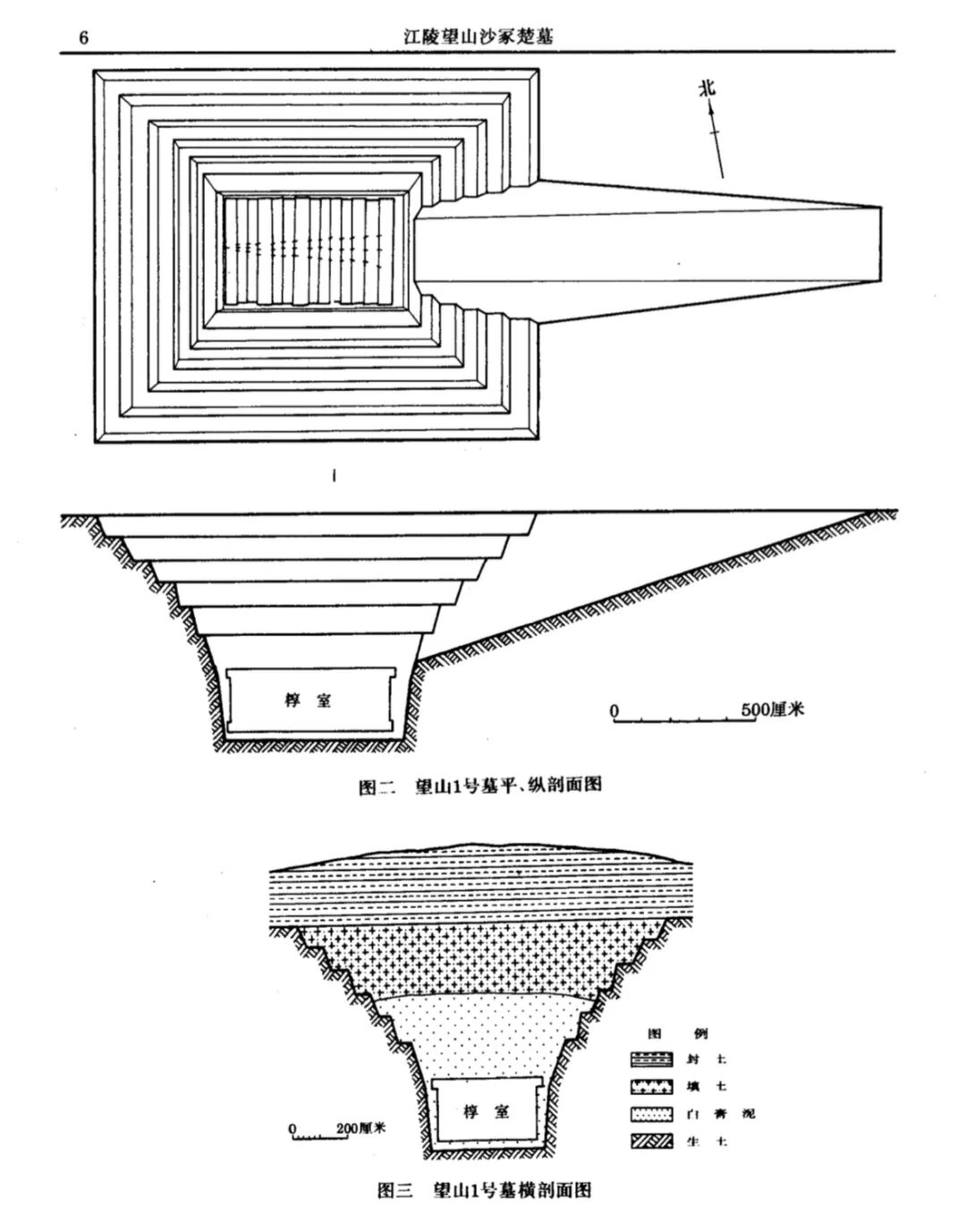
Figure 1. Cross-section of Wangshan Tomb No. 1
Everything lies inside. It may look simple now, but a tomb could contain thousands of objects—paintings, sculptures, and many beautiful things—all within one great box. What story does it hold? What secrets and information? I believe “total space” can help us understand what is inside.
*This episode is selected from “Total Space: Three Historical Contexts, Three Research Methods,” part of the 2025 Pan Tianshou Memorial Lectures hosted by the China Academy of Art from March 4 to 7, 2025. It was edited for audio, with minor cuts and added music.
Editor: Jiyang
Preview ended. Subscribe to read the full article.