



Xia Wen is gone. Although we had known for years that illness plagued her, and that she had been critically ill several times, her optimism and tenacious vitality made us believe she could always defeat disease.
I last saw her several years ago at an event held by People's Literature Publishing House. She was in a wheelchair and had to be carried upstairs where there was no elevator, yet she remained animated and cheerful. Her deep affection for the press was plain; she always cared about its development. Her daughter's memoir is so vivid that reading it brings Xia Wen before one's eyes.
One could say she gave her life to Balzac. Perhaps no other editor or literary scholar devoted herself so completely to one author, decade after decade. My acquaintance, friendship, and admiration for her professional dedication also began with Balzac. So many memories come to mind that I do not know where to begin. I found an essay I wrote about her twenty-two years ago, in 1999, and have revised it slightly as a temporary expression of remembrance.
2021
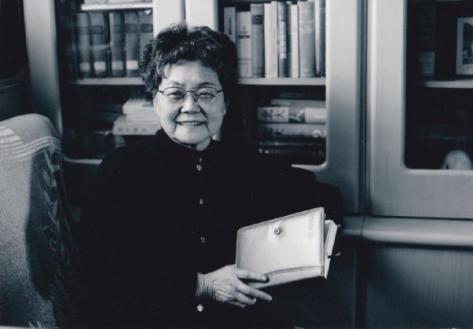
Xia Wen
I recently read “What Should Be the Measure?” in Achang Visits the Book Market, a column in Wenhui Book Review, and strongly agreed with it. The article mentioned that Ms. Xia Wen spent fifteen years editing the Complete Works of Balzac. As one of its translators, I experienced this personally and have long wanted to write about it. I welcome this opportunity to speak freely.
My involvement in translating Balzac was entirely accidental. In the early 1980s, when the project had just begun, Xia was seeking translators and asked whether I would undertake part of it. So began our happy collaboration and then our friendship. Looking back, the collaboration was serious and candid from the beginning, grounded in a shared understanding.
Translation was an avocation for me, so I insisted on choosing the work myself and on a generous deadline. She agreed. She explained that the press required first-time translators to submit a ten-thousand-character sample before a final decision. I readily agreed. To avoid wasting my time, she suggested choosing the work first, beginning at the beginning, and submitting the first ten thousand characters. This was considerate. I later learned that thinking constantly of translators was her usual practice. The rule itself was both reasonable and necessary.
Recently, Wenhui Book Review discussed improving translation quality and proposed “sample translation” as a new idea, apparently so resisted that it was difficult to carry out. I was baffled. The system had existed for years and was no novelty; it was still practiced in the early 1980s. Although Xia had approached me and I was a few years older, with some “seniority” in foreign languages, I had never published a translation of French literature. She could not rely on hearsay or assumption but had to follow a rigorous assessment. This demonstrated the press's seriousness and the editor's dedication. I felt no disrespect; on the contrary, it reassured me that the series' standards were protected and that I would not later be ashamed to appear in it.
From the outset we therefore had a tacit agreement: both sides cared about the quality of the translation and nothing else.
Editor and translator truly complemented one another. Xia not only possessed excellent French but was a Balzac specialist, which needs no elaboration. More unusually, she read source and translation with a care beyond that of ordinary editors. Many “responsible editors” of translations today do not even understand the source language; even a competent editor is ordinarily under no obligation to check the original.
Xia did not compare every sentence, of course, but I felt she read far more against the French than most editors—or at least knew the original so well that she judged the translation accurately.
Balzac is filled with allusions. Some refer to real history and people; others he invented. He could mingle fictional characters from The Human Comedy seamlessly with historical figures and bring them back across multiple books. For translators, this greatly increases the work of finding sources for annotations.
In a few places my learning and resources failed and I left the question to the editor. Without complaint, she patiently supplied what was missing. When I found an ingenious solution to a difficult passage and felt privately pleased, Xia often noticed and praised it, modestly saying that she had learned something. At such moments I felt I had found a true understanding reader. Naturally she also found and pointed out omissions. In every case she proved that she had read with care. The difference from editors who reproduce every slip of a translator's pen and every punctuation error is immeasurable.
I learned much through our collaboration, above all a far deeper understanding of Balzac. After I completed a draft of The Civil Servants, Xia found the authoritative annotated Pléiade edition in France and photocopied it for me, enabling me to correct many partial understandings and mistakes.
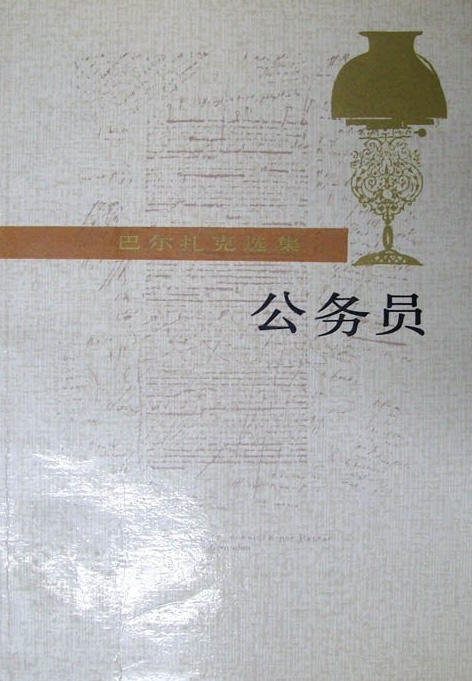
Balzac, The Civil Servants, translated by Zi Zhongyun, People's Literature Publishing House, 1989
In a complete works of this scale, translated by many hands, countless personal and place names had to be standardized. The editors assumed this entire task. There was no computerized typesetting; everything was done manually. As I understand it, Xia hired someone specifically to assist, producing several drawers of index cards. Imagine the meticulous, tedious labor required simply to make proper names consistent across the dozens of eventual volumes. At some point this requirement seems to have vanished from publishing. Even in single-volume translations and essay collections, the same person's name is often rendered differently only pages apart. The “responsible” editor ignores it or shifts all responsibility to the translator. Does guarding against this no longer fall within editorial “responsibility”?
Xia's respect for translators and protection of their rights also deserves mention. She personally delivered books and collected manuscripts, cycling everywhere. Once we talked late at my home. The bicycle parking area had closed and the last bus had gone. Rather than trouble me, she walked from my then-home near Qianmen East Street all the way back to Fuxingmen. When I learned this later, I felt terribly guilty for becoming absorbed in conversation and forgetting the time.
Whenever she proposed even a minor change, she first obtained the translator's consent. China had not yet joined international copyright conventions, and I knew nothing of remuneration or contracts. Yet within what was then possible, Xia did her best to protect translators' interests. There is no need to detail every small act that revealed her care. She later invited me repeatedly to translate more Balzac and other authors, but my own profession occupied me and I declined. Looking back, I regret letting such a collaboration pass.
I thought little of many things at the time because she was not unique among editors of the older generation. Only after dealing with more publishers and seeing and hearing more did comparison reveal how rare such professional skill and dedication had become.
Recently, a retired former classmate translated an academic monograph for another well-known press. He lived in Haidian and the press was in Dongcheng. Although the responsible editor was perhaps thirty years younger, the elderly translator always had to make the journey. After delivery, the editor once summoned him by telephone and scolded him for the translation, though the editor's limited knowledge made the criticism unsound. My classmate, a kind older gentleman, endured it. When the book appeared, the index page numbers had simply been copied from the foreign original, although the translation did not print original pagination on each page. I heard no suggestion that the editor accepted responsibility for this absurd failure.
Another colleague was invited to translate a scholarly book then popular in China. A serious scholar, the translator explained that a theoretical work of some depth required time for deliberation, especially because different translators working separately needed time to standardize the whole. The publisher actually “requested” that they not be too serious and omit foreign-language annotations for technical terms to save “trouble,” caring only about speed. Only after the translators fought back did the publisher reluctantly accept some scholarly standards.
Yet when the book appeared, the foreign title printed in huge letters on the cover was misspelled. When a translator pointed this out, the publisher replied that most people reading a translation did not know foreign languages anyway! That gave the game away: the book existed to fool outsiders. And this was a sizable, by no means unknown press. No wonder so many translations of “classics” on the market are unreadable.
The rudeness of that young editor may not be universal, but publishers' disrespect for translators and authors, broken promises, and careless treatment of their rights are not isolated.
There remain many young and middle-aged editors who love their work and respect authors; I have been fortunate to meet some. Unfortunately, the larger environment makes it difficult for them to inherit and extend the spirit of pursuing publishing quality diligently for decades.
This returns us to the question at the beginning: by what standard should publishers evaluate editors? In the late 1980s, cultural and publishing circles already joked that presses were being “forced into prostitution”: profit-only policies compelled them to cater to vulgar tastes and made serious books difficult to publish.
At one meeting, I never forgot a statement by Deng Shusheng, a senior editor at People's Publishing House: “Old editors find the present situation desolate. Young editors do not, because they have never been old-style editors.” The rich implications of “old editor” can be felt but are difficult to express. Now it is the turn of dedicated middle-aged editors to lament mandatory profit targets and other unspoken constraints. Meanwhile, irresponsible errors like those above often have no effect on an editor's evaluation.
How can fine editors be cultivated under such conditions?
If every restaurant becomes fast food and owners discourage careful craft, master chefs have nowhere to use their skills, successors cannot be trained, and diners gradually forget what real cuisine tastes like. A vicious circle forms. Publishing and readers shape one another: the industry must respond to readers, but it also has a duty to cultivate and guide them.
The subtle, long-term influence of a fine editor should not be underestimated. Editors once discovered and nurtured authors who went on to major achievement. Today, such editors—and such independence—may have little room to exist. Seen this way, Xia Wen was fortunate to live in an age that allowed her dedication and learning to flourish.
Beyond her special devotion to Balzac, Xia possessed profound knowledge of French literature and studied other writers as well. In 2016, while repeatedly entering and leaving hospital, she published the 460,000-character The Rational and Critical Spirit of French Literature, which should be regarded as her final major work.
*2021
Editor: Jiarong
Preview ended. Subscribe to read the full article.