



Today is the second lecture in this series. The three lectures concern three moments and historical contexts. The first moved from the Eastern Zhou to the Western Han. Today we visit the Mogao Caves, chiefly from the Northern and Southern Dynasties through the Tang. Next time we leap to the Qing and the Forbidden City. These are three periods and distinct settings, with different architecture and circumstances. Yet I believe the idea of “total space” helps us understand all three and offers something like a method.
I should stress that “total space” is not a universal cure. It cannot be applied to everything. It may not suit a single painting, for example. It is better for complex situations where many things form a whole. Such a whole has an overarching framework: the Forbidden City has one, and the outer-coffin tomb discussed last time constructed a great box inside a grave—a powerful spatial frame.
Why Approach Dunhuang Through Space?
When we mention the Mogao Caves today, everyone imagines a great complex of grottoes in the desert, a clear framework. What logic and history operate within it? What did people do there? Those questions form stories within a total space. The method is well suited to such subjects. A school might also be a total space, as might West Lake. When a complex setting contains abundant material, how can we think it together?
Let me explain again the basic meaning of total space. The idea comes from the composer Richard Wagner, 1813–1883, who proposed the Gesamtkunstwerk, or total work of art, in 1849. He was a composer of opera but was not satisfied with music or opera alone. He imagined opera as an entire stage filled with different sounds, performances, scenery, figures, and speech. All of these together formed total art. His pursuit seems extremely modern.
Much that we do today no longer fits the traditional model in which an artisan carves jade for a lifetime or a painter does nothing but paint. More and more people work across forms and consider contexts that combine many kinds of art. Such combinations also existed in antiquity and can serve as a research method.
Wagner's concept influenced not only playwrights and musicians but writers, novelists, anthropologists, and contemporary artists. I remember that Qiu Zhijie of your academy, with whom I once collaborated, applied the concept of total art to contemporary practice.
I developed total art into total space, which I define on three levels. The first level still resembles art history: we identify objects, images, and architecture, find their connections, and see how they jointly create what I call a “visual/material space.”
The second level is more complex and moves beyond art history because it includes taste, smell, hearing, and perhaps touch, manifested through images and objects. Last time we discussed food, incense burners, beautiful dancers and musicians, and instruments placed in tombs. The designer was not simply arranging attractive objects as if in an exhibition, but constructing a total space filled with different perceptions. This is illuminating for contemporary art as well: can we consider things beyond the visual, spatial, and material and allow other senses to participate? I call this second level “sensory space.”
The third level adds a subject. The space is not empty or merely material, filled only with objects and images. Someone within it can perceive and perhaps move. The subject may be a person or an invisible spirit. In the tomb discussed last time, ancient people believed that the souls of the dead were present as subjects.
The subject today is different. As I will explain, to visit a Mogao cave we must imagine ourselves as a whole person viewing and entering it. A subject must be present: total space must possess subjectivity. It cannot be merely an empty material thing. These, again, are the three levels.
Last time, total space took the form of an outer coffin beneath a tomb, shown in Figure 1. We discussed the logic of the many things it contained. Today we turn to a radically different space.
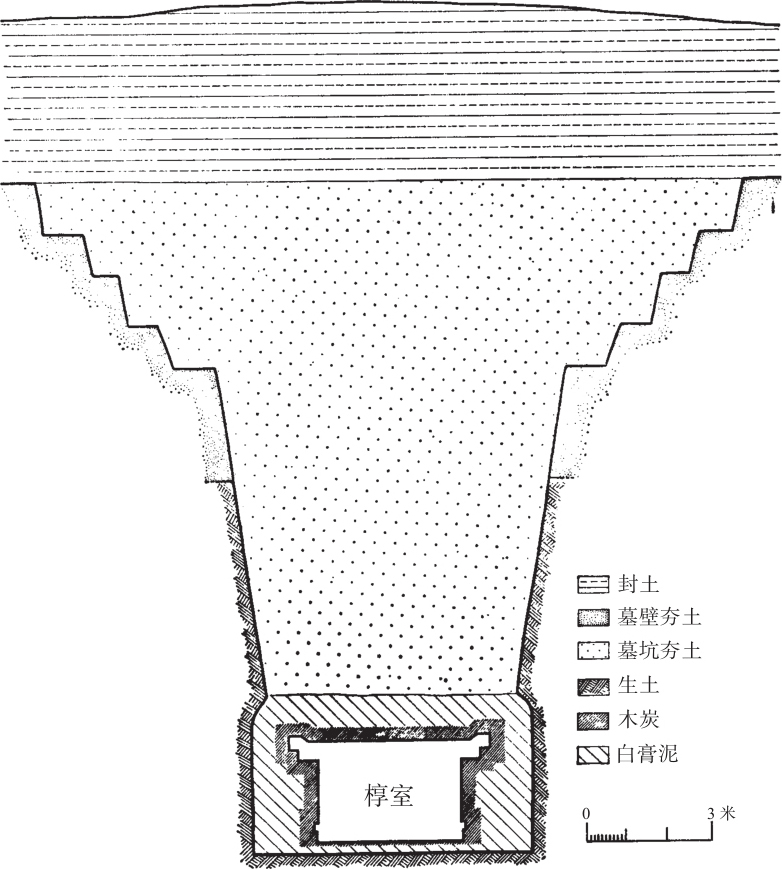
Figure 1. Cross-section of Mawangdui Tomb No. 1, Changsha, Hunan; early Western Han
Mogao's Spatial Framework——Pilgrimage and Meditation
I do not know how many of you have visited Mogao, shown in Figure 2, but the caves belong to a larger environment. Their space has many faces and distances, together forming a total space.
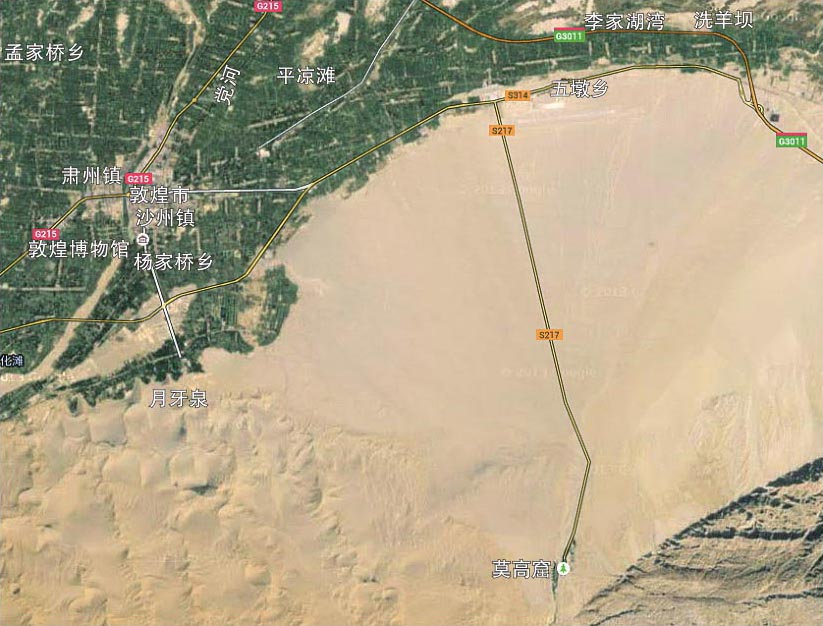
Figure 2. Route from Dunhuang city to the Mogao Caves
Today's subject is “Dunhuang and the Mogao Caves: Pilgrimage and Meditation.” These two terms represent two kinds of action. Imagine ancient monks and other devout people visiting the site chiefly for two reasons. One was pilgrimage: traveling a great distance to worship the Buddha and offer incense. Many monks also lived inside and practiced meditation. This is vital because many spaces acquire meaning through activity.
A Space in Constant Transformation: How Should We Tell Mogao's Story?
This talk contains an underlying question I want to share: how should we tell the story of Dunhuang? Dunhuang art is an exceptionally important and precious Chinese artistic treasure. Contemporary people have a responsibility to tell its story. The site stands before us, filled with beautiful sculpture and painting, but it is silent. It is exemplary material; storytelling is our task. There are different ways to tell stories, and many art historians are themselves storytellers.
Research enables us to construct a story. History itself is a story; art history studies works of art and then tells a logical, profound story about them. I do not believe there is only one story. Different methods, schools, audiences, and ages all tell stories differently.
A popular way of telling Dunhuang's story divides it according to dynastic history. Figure 3 is an English chart created by the Chinese scholar Duan Wenjie, former director of the Dunhuang Academy, whom I knew. It represents years of important work by the academy. Nearly five hundred caves in Dunhuang's southern zone contain murals and sculpture. The chart assigns each a number and a historical period: one belongs to the Sixteen Kingdoms, another to Northern Wei, another to Western Wei. This enormous chronological table represents today's most common way of telling Dunhuang's story.
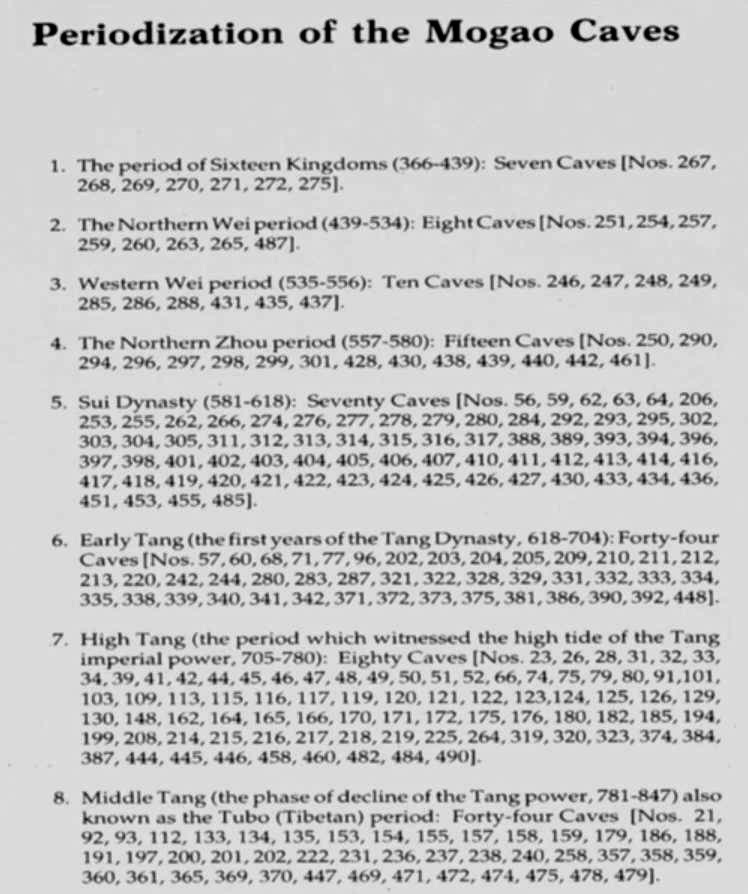
Figure 3. Detail of a chronology of the Mogao Caves, Dunhuang Art through the Eyes of Duan Wenjie, 1994
Books introducing Dunhuang and Mogao often proceed in dynastic and chronological order, simplified in Figure 4 into a timeline with representative caves. What does this method do? A visitor today sees many densely packed, tiered caves—and only a portion at that—with no apparent logic.
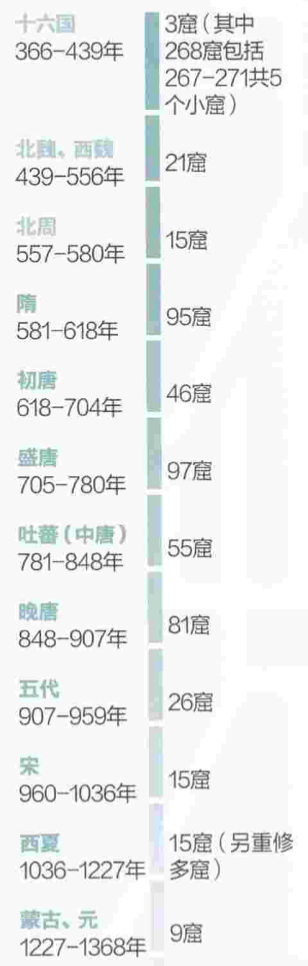
Figure 4. Periodization and dating of the Mogao Caves, Chinese Heritage, December 2019, p. 21
What do scholars do? As the arrow in Figure 5 suggests, we transform them into a basically linear history. The result becomes a story that can be told from beginning to end. This is the standard practice. It is important and should not be abandoned. But is it the only method? That is my question.
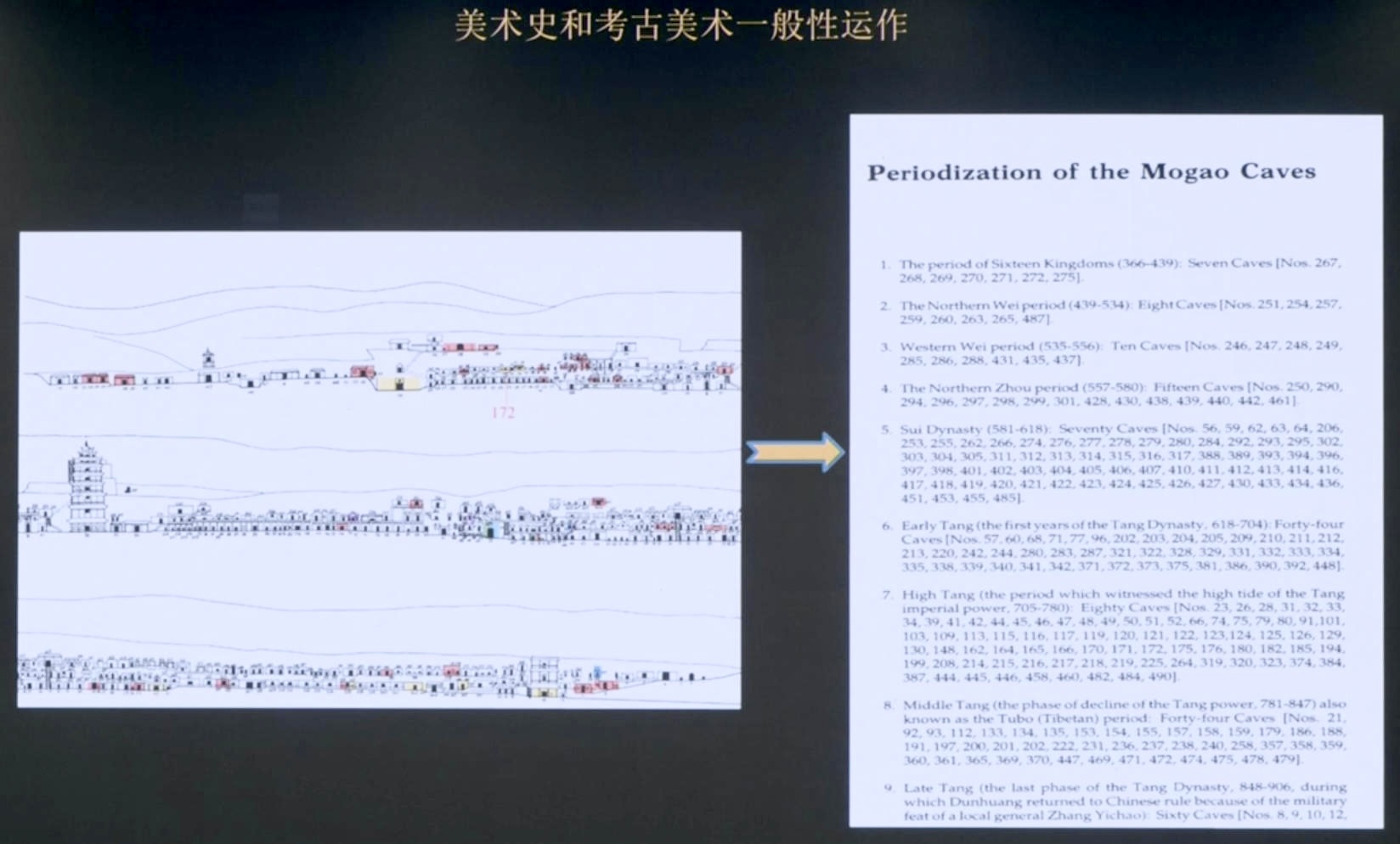
Figure 5. Conventional operation of art history and the archaeology of art
I think there are other approaches, including today's perspective of space and total space. Instead of beginning with time and abstracting the site into a line, can we retain its concrete, actual impression and still tell a story within its spatial framework?
Nor should we imagine a single Mogao. The site is one place but has had many appearances and histories. Figures 6 and 7 show three. At the beginning of the twentieth century, the British explorer Marc Aurel Stein, 1862—1943, photographed caves that were often broken open, fractured, or exposed, shown at left in Figure 6. In the 1940s, Shi Zhangru, who later joined Academia Sinica in Taiwan, drew an early plan, shown in Figure 7, of a small portion. At right in Figure 6 is Mogao today, thoroughly repaired and fitted with concrete façades. The scenes are entirely different.
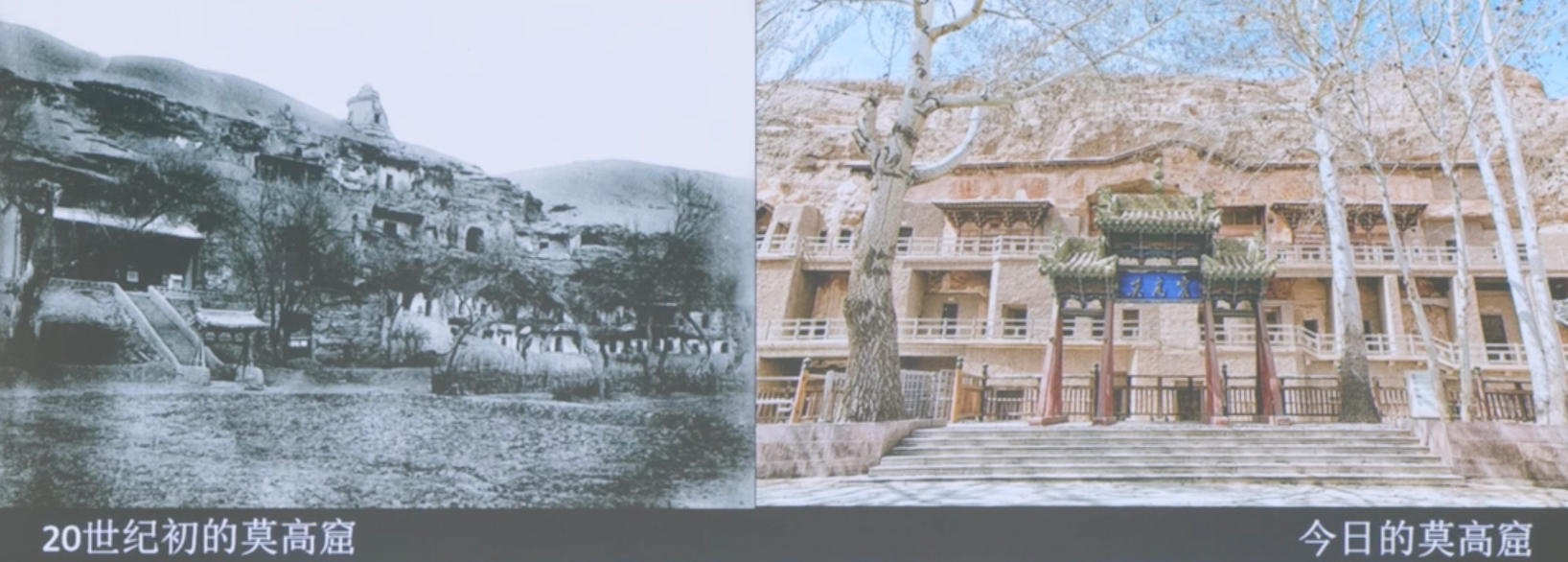
Figure 6. The Mogao Caves in different periods
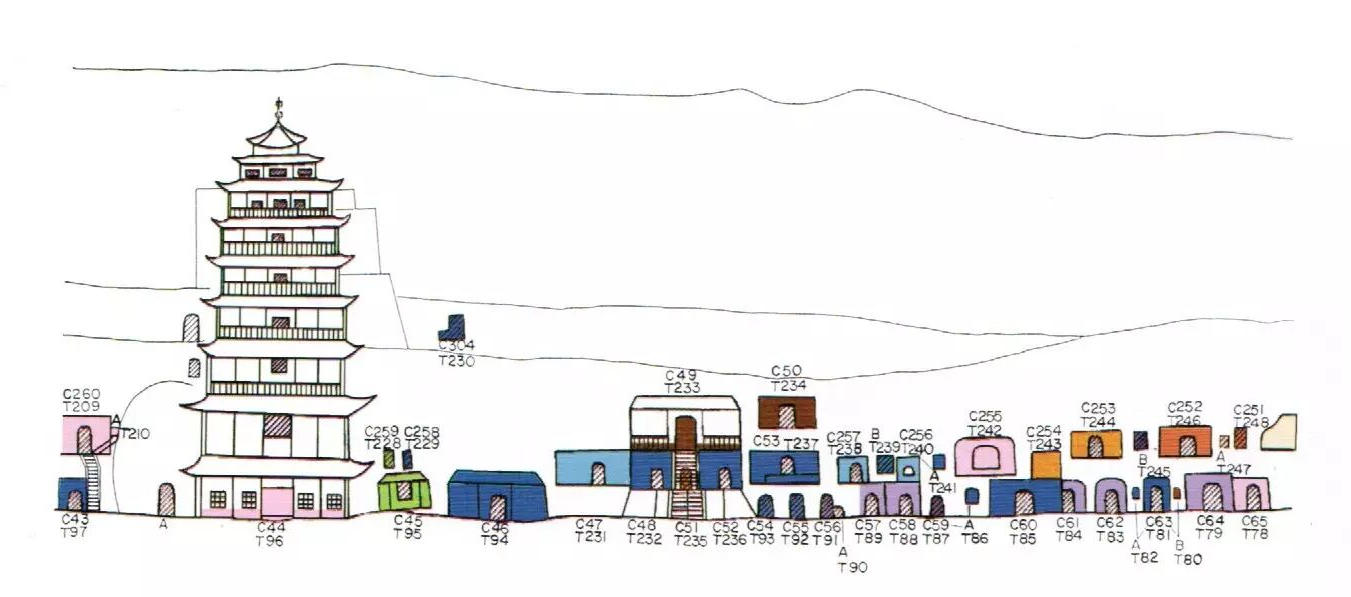
Figure 7. Shi Zhangru's drawing of the Mogao Caves
Today's Mogao reflects only today's state. The caves resemble a living organism in constant transformation, never fixed in one form. The ceremonial arch, for example, was moved in its entirety from Dunhuang county town to its present position at Mogao in 1958. It did not originally belong to the site but was added later to improve its appearance. Mogao, then, has been many different things. Our research should continue to treat it as a spatial concept. We should not rush to abstract it or immediately turn it into a linear history.
It did not originally belong to the site but was added later to improve its appearance. Mogao, then, has been many different things. Our research should continue to treat it as a spatial concept. We should not rush to abstract it or immediately turn it into a linear history.*This episode is selected from “Total Space: Three Historical Contexts, Three Research Methods,” part of the 2025 Pan Tianshou Memorial Lectures hosted by the China Academy of Art from March 4 to 7, 2025. It was edited for audio, with minor cuts and added music.
Editor: Jiyang
Preview ended. Subscribe to read the full article.