



Finding Peace: 40 Introductory Lessons on Buddhism

Editor’s note: This bonus episode comes from the podcastNobody Knows, Episode 32. Host: Meng Yan. Post-production: Ke Lin.
For more, visitKnowledge and Actionin its app, or search for and subscribe through Xiaoyuzhou, Himalaya, QQ Music, NetEase Cloud Music, Apple Podcasts, Sanlian Read, Qingting FM, Lizhi Podcast, WeChat Listen, Spotify, Amazon Music, and general podcast clients such as Overcast, Pocket Casts, and Castro.Nobody Knows。
Listening guide
Lying flat is actually a form of resistance, while Buddhism teaches us how to loosen our own bonds.
Have we become unable to live better while pursuing a better life?
Can Buddhism offer a better way to face life’s choices calmly? Not necessarily. But know that seeking calm actually places a higher demand on yourself.
What career choices did Cheng Qing and Meng Yan make after university?
A brief interruption involving an electric drill
Must we experience enough before letting go becomes easier? If we refuse to accept fate, are there other choices?
“The fewer things attached to us, the freer we become.”
Social media manufactures countless dreams, and multitudes move through different dream worlds every day.
The modern predicament: seeming to know much without exploring anything deeply.
What is genuine awakening like?
Whether we can relax and become completely free depends on whether we can turn around within the conditions of each moment.
What is the natural manifestation of present conditions? How can we be “just so”?
What is compassion?
Is Buddhism a passive teaching? What does it mean to make effort in accordance with conditions?
If life is a great dream, why should we still make an effort?
Affliction can sometimes become a positive condition for practice.
Transcript
Meng Yan:Hello, I’m Meng Yan. Welcome to a new episode of Nobody Knows. Today I’ve come to a temple to meet a new friend whom I greatly respect and like, Professor Cheng Qing. I want to record a podcast with him and ask questions that deeply intrigue me.
Today is fascinating. We’re sitting in a temple tearoom, with Professor Cheng brewing tea across from me. I especially love sunlight and am delighted to sit here. Dappled sunlight is falling on the folding screen beside us, and the feeling is wonderful. Professor Cheng, could you first introduce this place?
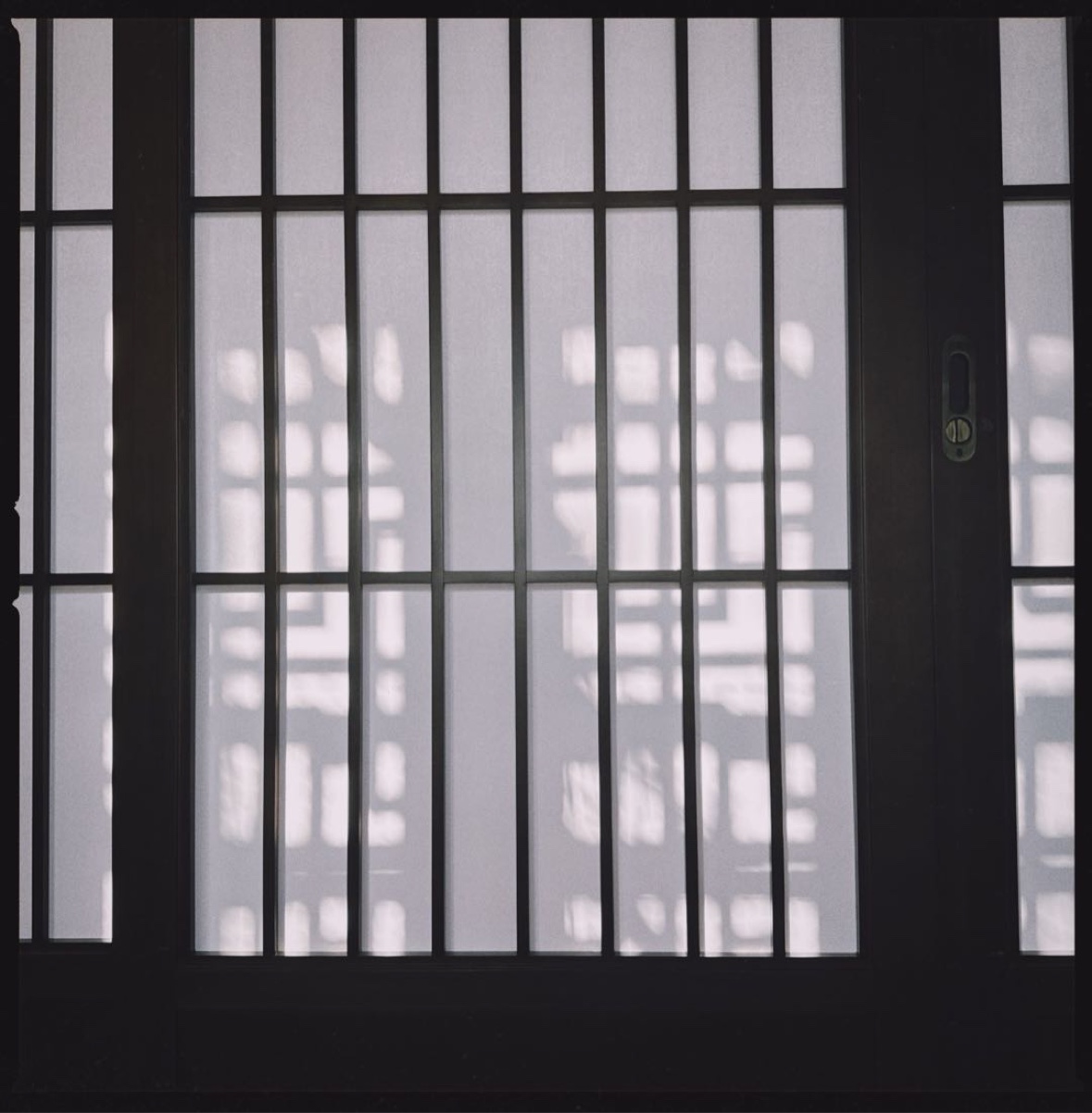
Cheng Qing:Hello, everyone. This is Yongfu Nunnery in Shanghai’s Baoshan District. Its location is unusual because it moved here around 2000. It once stood in a corner of Shanghai University’s western campus and was relocated when the university was built. But conditions are impermanent. This site was originally wasteland; later, Shanghai University expanded and built its eastern campus here. The completed temple thus ended up in the university’s middle. They do not connect directly, and one must still cross a road to enter, but geographically it has become a temple within a campus.
Why did I bring Meng Yan here? I have taught nearby for a long time and know the temple well. We organize many activities and exhibitions here, including Chan art shows and lectures. It is both like a temple and unlike one, with a strong cultural atmosphere. Interested friends in Shanghai are welcome to visit.
Meng Yan:That explanation also shows why I asked you to record this podcast. Yesterday a friend observed that I produce few episodes and asked how I select guests and topics. I said I choose questions that strongly interest me; my solo episodes follow that rule. For guests, I choose people very different from me or those who fascinate me so much that I want to ask them, face to face, the questions deepest in my heart. Professor Cheng is one. Since we have said we’re in a temple, perhaps you could briefly introduce yourself. I find it amazing that you teach Buddhism at a university.
Cheng Qing:I teach Buddhist courses at Shanghai University: foundational theory, an introduction to Buddhism, Chinese Buddhist history, and a general-education course open to all students. I teach that last course most often because I want to dismantle fixed prejudices about Buddhism. Its content differs from other courses. I seldom discuss Buddhist history, religious forms, or ritual. Instead I show film clips such as The Matrix, Hayao Miyazaki’s The Wind Rises, and Satoshi Kon’s Paprika. I want students to see questions humans commonly ponder: the relation between reality and illusion, and how the world operates. Buddhism speaks of causes and conditions, often understood as affinity. These films have nothing to do with Buddhism, yet their modes of thought sometimes resonate with it and encourage students to observe surrounding phenomena. We begin with questions, not an established religious form or conceptual system.
I often say that although the course teaches Buddhism, it is completely open and exploratory. You need not read much Buddhist theory. You discover that its questions are ones you have always pondered and that Western cultures and other religions also consider; only their final answers differ.
I invest great effort in this course. Many students remain in contact afterward, sometimes seven or eight years later. Not because they are especially interested in Buddhism, but because its ways of asking and answering questions resonate. They also accept certain ideas more readily, such asthe meeting of two people being a matter of affinity, an idea latent in the Chinese spiritual background. When I express it, many recognize something they previously felt only vaguely.
Besides teaching, I research Chan history in the Ming and Qing dynasties and modern Buddhist history. Most of my work now concerns Ming-Qing Chan. Many believe Chinese Buddhism declined after that period, but new documents allow fresh research. I conduct specialist scholarship and public, general Buddhist education at the same time.
Meng Yan:You’ve taught for many years. Have student numbers kept growing? News often shows young people visiting temples. I imagine that few enrolled when the course began but many do now—is that right?
Cheng Qing:Actually, the opposite. There are several reasons. At first, university policy for general-education courses was permissive. Few courses were available, so my largest class filled all two hundred places even after selection; two hundred was the limit because there was no larger room. Later, more teachers offered courses and we were no longer allowed such large classes. It is a policy constraint. A class now receives at most seventy places. If opened up, demand would be high, but policy limits it.
Meng Yan:Is there an exam?
Cheng Qing:Assessment is a short essay, using what I think is a good idea: students must not repeat books and must express their own thinking about a question of life. Any form is allowed, even poetry. They may write however they like, becauseour education system gives students too many limits and constraints but never encourages self-expression.I find many moving things in their assignments. These students are neither rigid nor thoughtless; institutional demands have suppressed them until they no longer know they can think.
Meng Yan:I strongly agree. What you said reminds me of a recent conversation about Chinese-language education. Schools teach students how to compose and grade essays through quantification: Is the central idea clear? Are paragraphs orderly? Are there parallel phrases and memorable lines? I read some highly rated essays and some rated less well. To me, writing and communication should convey one’s genuine inner feeling to another person, yet precisely this authenticity is obscured by the system you described.
Cheng Qing:We always had an exam system, but its constraints have intensified. In the past, we knew exams had to be managed, which was fine, but read extracurricular books and wrote for our own amusement. As a student I often wrote essays, while knowing that exams required compliance. The constraints were less powerful then.
Now, beyond exams, society and families seem to discourage free growth. From childhood, a broadly accepted model confines children to standardized cultivation. They study Olympiad math, piano, and every sort of class, while no one seriously observes what suits them. One may be suited to painting, another to research, one to speaking, another to quiet solitary thought. I loved reading as a child. Today, parents would surely ask why I waste time on so many extracurricular books.
Meng Yan:Idle books.
Cheng Qing:Right. Our old desks had lift-up wooden tops, so we hid idle books inside.
Meng Yan:Do you know what I did? I wrapped martial-arts novels in my textbook covers.
Cheng Qing:Yes, we did that too.
Meng Yan:But when a child does this and a parent walks behind, the child becomes unnatural. I did, my mother discovered me, and she scolded me terribly.
Cheng Qing:Even then, however, we retained space to explore freely. Today, children’s external and internal conditioning has reached an extreme.
I just finished grading last semester’s work. Some students’ inner voices made me both happy and sad. They needed one general course among many to provoke self-expression and felt it was something they had not done in ages. These young people are only in their twenties and not yet graduated, yet at life’s youngest stage their expression has already been closed down. In dormitories or alone, they lack time and energy to consider such questions because no one encourages them—and most people need encouragement.
The many psychological problems among young people relate to this closure. They are not encouraged to express their ideas and receive others’ resonance, so no positive cycle forms.
My sole requirement is that students not copy papers or books, but write their own thoughts directly. An essay may contain no Buddhist term at all, yet if it expresses genuine thought I give it a high grade. My task has been achieved: the course has at least loosened their bonds and helped them relax.
Education today, at both secondary and university levels, places too many demands and constraints on young people. That is why lying flat arose. Lying flat is resistance; it is not relaxation, because the person still faces society’s brutal pressure. Relaxing means releasing burdens and choosing what you want so you can travel better. It resembles putting down unnecessary weight and walking lightly. It is not collapsing under a burden while a whip strikes behind you, shouting that you quit, then sitting silently without resistance. I want people to set down what they need not carry.
Meng Yan:Yes. What you said reminds me of a favorite book I recently reread, Yuval Noah Harari’s Sapiens. A passage that scarcely affected me the first or second time struck me forcefully now: was forming agricultural civilization good or bad for humanity?
In one sense it was certainly good: prehistoric people ate more regularly and went hungry less often. By worldly results and for the species as a whole, agriculture supported ten or a hundred times as many people and the population expanded dramatically. Yet prehistoric people may have lived freely and at ease—sleeping late, hunting a boar or gathering fruit, then playing with friends. Agricultural society brought many benefits, including full stomachs, but also disciplined people into institutional motions: rise early, transplant rice, tend crops. Humanity increased in number, but whose individual happiness was greater: agricultural people’s or prehistoric people’s?
Reading that, I thought about education, agriculture, and industrial civilization. Like teaching composition, what are they for? They create more products and services and improve life. Yet in pursuing numerical management, they easily reduce us to insignificant numbers and tools. Exams presumably began as a way to measure whether someone expressed themselves well. Numerical management turns this into counting striking phrases, parallel sentences, and clarity of theme, gradually making behavior uniform.
Cheng Qing:Harari’s view certainly attracts criticism. Reflection on civilized society did not begin today. Daoism, viewed now, is a classic critic of modern civilization because it holds that expanding rational thought takes people farther from the Way.
Western thinkers such as Rousseau likewise criticized modern private property. He gave the memorable example of the first person who placed a marker in a field and said, “This is mine.” For Rousseau, modern human wrongdoing began there, because privatization brought systems of power and exploitation.
We need not go so far as to declare primitive society better. The point is that humanity’s gradual pursuit of happiness contains the crisis you mentioned. Large agricultural societies seeking to give more people the same resources inevitably expand and institute management—governance. Dynasties throughout history collapsed when those systems failed, creating catastrophe, then another good era formed after the cycle. This appears to be a recurring pattern of human thought.
At the individual level, I agree that we cannot choose our age. Within a large environment, we must find personal balance. In today’s university system, I cannot return to what I imagine were better conditions in the 1980s or 1990s. I can only withdraw from what everyone in this age pursues alike, reducing needless pressure. I seek an individual distance from the age so it does not sweep me in.
At the historical scale, honestly, there is no plan dictating what civilization must become. Its additive development is what Buddhism calls collective karma: if everyone thinks this way, society goes this way. Walk outside and tell people to stop tutoring and testing, and no one believes you. Shared cognition creates the result. But as an individual who sees the problem, can you step slightly back from this suffocating system?
I often tell parents that their own thinking is their child’s medicine. Unless the parent steps back, the child remains bound to the system’s standards and runs forward forever. The child may not adapt; even if they become an enviably driven high achiever, they may not be happy. Individuals must judge their environment and make their own choices.
Meng Yan:But that is so difficult. As you said, a parent steps back while the surrounding environment does not. Everyone advances through one value and consensus, raising every child similarly. Stepping back brings immense pressure.
Cheng Qing:That is society’s challenge to the person. Within a community, you may reject its values yet maintain some distance through skill. Complete departure is difficult, but maintaining distance is wisdom.
When I graduated, as I told you before, I entered mainstream industries. I worked as a telecommunications engineer and as an editor at a financial newspaper—both excellent jobs then. Looking back, I escaped just in time. That is life: today’s best choice may become the worst in twenty years. The standard for choosing should come from understanding one’s own nature. I knew I wanted to read and think, which made me happiest; I did not calculate life by the immediate input-output ratio. Such choices necessarily carry risk. No one can promise total safety. Many people want society or another person to guarantee that a path will work. Applicants now trust Zhang Xuefeng to say which major has a future, yet after twenty years we see risk in every major.
I studied electronic engineering, and many classmates joined Huawei. That looks good now, but no one knows when an industry will transform, as large internet companies have. Life is full of risk. Can you recognize beforehand that you accept it and possess a way of thinking or wisdom to face and resolve whatever risks arise? That makes greater demands on a person.
Meng Yan:Certainly. What you said reminds me that my first job was at Sun, a server company.
Cheng Qing:I know server companies very well.
Meng Yan:Ha! Our paths are unexpectedly similar. Sun was in Wudaokou, Beijing, which we called the center of the universe because so many IT companies were there.
A few days ago, chatting with a friend who had once chosen a place in Wudaokou, I became nostalgic and walked to the building where I first worked. The autumn sunlight was beautiful. Sitting there, the scene returned vividly: I had left university full of confidence and entered Sun to write code every day.
I remembered imagining that I would become the best engineer, write excellent code, buy my first car, and gain promotion and raises through hard work. I never predicted the stories along my road or what I do now. My present is completely different, and I do not know my future either. As you said, people cannot foresee so much. Faced with uncertainty, we desperately want someone such as Zhang Xuefeng to point out a bright path—the brightest path.
An electric drill starts
Cheng Qing:Should we move somewhere else?
Meng Yan:It’s fine. I don’t think we need to move.
Cheng Qing:It’s downstairs, right? I’ll check and speak to them. (He goes downstairs to negotiate with the workers.)
Cheng Qing:I spoke to them. They’re right outside us.
Meng Yan:Can they stop?
Cheng Qing:Yes. I asked for forty or fifty minutes.
Meng Yan:Wonderful. Thank you!
Cheng Qing:Should we rerecord that part?
Meng Yan:No. It can all be part of the program.
Cheng Qing:Yes, perfectly natural.
Meng Yan:A small interruption just occurred. While we recorded over tea, loud renovation noise came from downstairs, so Cheng Qing went down and asked them to give us some time.
While you were gone, I watched both myself and you. We had been speaking with great enjoyment, but now I cannot quite recover the rhythm. I thought about how often we discuss Buddhism and how life contains so much we simply cannot control, right?
Cheng Qing:Right.
Meng Yan:The two of us wanted to talk and record a podcast, but many things cannot be controlled. The work happened to be right here, directly downstairs—what a coincidence. My mind desperately hoped it would stop and anxiously wondered how long it would last. Those thoughts are fascinating.
Cheng Qing:Yes. Every problem in life becomes simpler once you give up controlling or dominating it and ask instead how to address it. Yet in society today, everyone hopes that a person, institution, spiritual teacher, or political or financial authority will say, “Follow me and nothing will go wrong.” No such person exists.
Meng Yan:No such person exists.
Cheng Qing:Every Buddhist teaching on awakening and practice begins by asking you to acknowledge that things will not follow your wishes. This does not condemn you to misery. When you accept disappointment and release the expectation that things remain stable, the mind instead becomes peaceful.
Buddhism does not make you a ruler with enough power to force everything to operate according to your ideas. Every moment is impermanent. Impermanence may bring what you call good—an investment suddenly rises, for example. But what feels good conceals a crisis because its opposite, something outside expectation, inevitably waits. If you accept rise and fall equally, viewing return and risk impartially, only the practical question of response remains. The single goal of winning has faded. This is difficult, but at least the intense expectation weakens. When an investment fails one day, suffering is relatively smaller.
Meng Yan:Yes, but it is hard. This morning, two colleagues arrived first and warned me that renovation noise might prevent recording. I watched myself because I truly wanted to talk with you. A few years ago, I would have felt deeply disappointed that the ideal environment was gone and the morning lost. When it actually happened, I was not so dejected. An enjoyable conversation was already worthwhile. Whether it was recorded, how the episode turned out, or even whether excessive noise kept us from publishing no longer seemed important. I wondered whether I could let go only after experiencing enough. Is letting go impossible for people at twenty or younger?
Cheng Qing:From the perspective of Buddhist practice, there are two kinds. Some understand a principle and can immediately put it into action, relaxing and releasing each matter once the reasoning is clear. Most people are as you described.
Meng Yan:Are there many of the first kind?
Cheng Qing:Very few. Buddhism says, “Principle may be suddenly awakened to, but affairs must be practiced gradually.” Understanding a principle is one thing; realizing, trusting, accepting, and incorporating it unconditionally into character requires being honed through events. At a certain age, after enough experience, you discover that many old assumptions cannot operate as expected.
Meng Yan:And even when things go that way, nothing terrible necessarily happens. Enough such moments temper you, as you said.
Cheng Qing:Through experience you understand that this is simply how things are. The young sometimes resist reality, believing they can always change something. Chinese people often say that with age one accepts fate, but that sounds intensely passive. Buddhism does not accept fate; it transforms it. I know broad conditions are absent, so I slowly turn them. Like switching railway tracks, perhaps I cannot change direction instantly, but over ten years I can enter another track. This keeps thought from polarizing between total victory and complete hopelessness.
As you said, with enough time and experience, your life transforms gradually without your noticing the process.
Meng Yan:It is hard to notice, though major turning points may be felt.
Cheng Qing:Yes, especially when the environment changes unexpectedly. After enough encounters, you learn always to believe that something will appear in a way you never imagined.
Meng Yan:Exactly. When the noise began downstairs, I instinctively thought that I could not control it but could try to influence it in my own way, perhaps turning it into something good. It can become part of our content, showing listeners what we do when such things really happen.
Still, perhaps I can think this way only because I have undergone enough fluctuations and setbacks. Without those experiences and knowledge, realization remains difficult, right?
Cheng Qing:Yes. For example, I often reflect that as a university teacher I have a secure, modestly comfortable position in Shanghai. What would I do if one day I had nothing? When every identity label by which others recognize me disappears, how will I respond? This asks where inner attachment lies beneath the visible appearance of my life.
Meng Yan:Exactly.
Cheng Qing:Thinking this way often benefits life. I do not claim complete equanimity, but first imagine the loss and see what concerns remain. No one knows what life will become. A marriage may be good for ten years, then suddenly collapse and leave a man with nothing. Some never recover. Could he instead smile at life, do what needs doing, and continue living well? This is a great lesson: meeting any environment without panic. Success culture tells you to calculate everything in marriage and life planning, never lose, and fight over every detail.
Meng Yan:Sign every possible agreement in advance.
Cheng Qing:Plan every strategy. Such a life may formally obtain what it seeks, yet the heart may not be happy.
Meng Yan:Yes. However clever we are, our knowledge of the world is too small to calculate everything the future may bring.
Cheng Qing:Far too limited.
Meng Yan:A few days ago I posted: “The fewer things attached to us, the freer we become.” A friend had asked why I never replace my car, always wear the same few outfits in winter and summer, and travel with only a tennis bag. I said those are tangible, visible things. Perhaps even fewer intangible things are attached to me.
On an earlier podcast I said that I consciously keep deleting pieces from my profiles, such as being the founder of a former company or graduating from a certain school. When fewer tangible and intangible things attach to you, you are freer. Nothing can tie you down, and losing anything remains bearable.
Cheng Qing:That is fascinating. I often say identity appears to bring happiness but also increases affliction. An official or university professor has authority in a classroom and receives respect, but outside campus the identity changes with conditions; you are simply ordinary. You do not board the subway wearing a sign that says university professor.
Meng Yan:A sign reading: “I am a university professor who teaches Buddhism.”
Cheng Qing:Or “I am wealthy.” Because you cannot release the identity, offense in that space makes you angry. Social news often shows a luxury-car driver hitting a cleaner, stepping out, and demanding, “Do you know who I am?” Leaving aside good and evil, consider how heavy the self-label is. Everywhere, that person insists on who they are.
Buddhism calls this an illusory label of self. Carry it everywhere and some environment will always make it inapplicable. You may possess power in one place and become nobody in another—somebody becomes nobody.
Release the label and you become free, changing conduct with the environment. Here in the temple, I am an ordinary friend chatting with you. In the classroom or elsewhere, my role changes. I sometimes test myself with different social groups and watch for discomfort, since we become accustomed to particular speech and subjects. I often chat about daily life with the elderly couple who clean our residential garbage station. This is not necessarily a deliberate display of kindness; I am testing whether I can embody equality before every person.
Meng Yan:And genuine equality.
Cheng Qing:Yes. I begin from their life, not mine. Such conversations start with daily matters: “Have you eaten today?” They speak of children and relatives. Strip away subjective self-identification and conversation in that setting becomes easy.
Traveling in the countryside, we may suddenly meet a local or another traveler and communicate easily because identity falls away. In cities, self-identification is intense: where I live, how much property I own. These things cling to us at every moment and destroy freedom.
Meng Yan:Yes, creating many afflictions, right?
Cheng Qing:Yes. Our subtle attitudes toward delivery workers, couriers, and servers reveal whether we genuinely respect people. It is not performed politeness but a slight loosening of identification with self.
Meng Yan:I like that. Do you want others to think you polite, or are you sincerely curious and listening carefully?
Cheng Qing:After stripping away labels, you see a meeting formed by affinity at this place and time. We meet different people every day. Place each encounter within a large temporal and spatial setting, and it is simply the manifestation of conditions. Insist on carrying a label about who you are into an encounter with another labeled person, and it becomes a rigid drama dominated by human intention. What was easy becomes a tragedy, comedy, or farce from a script you imagined.
Meeting various people in my community, I may find someone interesting and observe something outside my daily experience. Strong curiosity arises: why do they act this way here? I no longer think, as before, that they do not belong to my group and should leave. This is openness toward people, not treating them as an excluded, marginalized, or unacceptable group. Buddhism seems to teach subtraction.
Meng Yan:That reminds me of Bhante Gunaratana’s Mindfulness in Plain English, a book I have reread many times. Last year a passage particularly moved me. I do not remember it exactly, but it said that meditation is like rust remover, gradually dissolving corrosion attached to the mind. The labels and concepts we mentioned slowly melt and peel away, making you freer.
Our conversation has moved from what agriculture attached to humans, through industrial society, to social media, algorithms, and approaching artificial intelligence. More concepts and labels gradually attach to us, making us less free. How do we reverse the process and peel them away?
Cheng Qing:Internet society creates an illusion by applying many labels that shift instantly. Online I can identify and act through multiple labels at once, appearing to have no label. In fact, I have learned to switch among them while exerting myself intensely within each. The result is enormous inner depletion.
Social media appears to open a larger space for exchange but burdens the mind beyond endurance. Scrolling Douyin, emotions change continually. You seem to taste countless things but end exhausted because you exert yourself intensely in every state.
I often compare internet society to a mass of tiny dream bubbles. In the past, a lifetime might contain only a few dreams, perhaps one great Dream of the Red Chamber, from which we finally awoke. Modern society jumps instantly from one small dream to another. Yet in every dream you strive and cling intensely, captivated by its colorful sights and sounds. Without enough wisdom to step outside, how could it fail to consume you?
One moment brings intense sensory stimulation, the next deep sadness. A normal person without reflective capacity cannot physically or mentally sustain such switching. This is an important source of modern psychological illness: amid so much information, people cannot maintain distance. They decide to stop looking at their phones, but few possess the will. Most move daily among different dreams, consuming enormous mental energy.
I have also observed growing interest in Chinese medicine. Leaving aside fierce disputes with Western medicine, its theories at least analyze spirit, vitality, and blood, and many of its ideas explain modern bodily problems. Much begins with mental depletion, producing insomnia and depression. Internet society’s greatest problem is manufacturing countless small dreams while we lack the capacity to emerge from each intact; all of them draw us in.
Meng Yan:That suggests that before social media invaded life so extensively, opportunities for such experiences were fewer or unfolded more slowly. We chiefly encountered friends, teachers, and family, gradually entering society and seeing people unlike ourselves. Social media and the internet expose us rapidly and massively, with continual switching.
Cheng Qing:Growing up in a small county, we expanded the world slowly through books. Our bodies reached the provincial capital and then another city only through effort. Modern people receive all the world’s information simultaneously, though ordinary minds cannot process so much.
Douyin and social media offer endless popularized knowledge, but how could one person digest it all? It becomes a burden. Paid-knowledge services have intensified learning anxiety: if I do not study, I fall behind. Yet people never ask what they themselves can actually do.
I often recommend the saying that a person may do only one thing well in a lifetime. This does not mean merely brewing tea; it means life has roughly one direction. Society now promises innumerable directions and avatars doing different things simultaneously, which ordinary people cannot bear.
People today know much, but deep thought weakens. Shallowly exploring different objects, they seldom see the universe’s deeper truth through one thing. You seem to know quantum mechanics or a philosophical theory, but only through secondhand introductions, never through serious personal exploration.
Meng Yan:I understand.
Cheng Qing:In investment, once you enter deeply enough you will see universal principles. Why must I simultaneously know so many other things? Modern craving for knowledge has reached an unbearable degree.
Meng Yan:As an old saying goes, enter the Way through an art. Whether brewing tea, investing, painting, or doing anything else, the underlying patterns are ultimately the same—the patterns of the world. Only by drilling deeply enough might we touch them. Study ten things shallowly and the Way remains distant.
Cheng Qing:Why does Buddhism ask you to observe the mind deeply? Nothing you do leaves its operation. As you said, you continually watch how you recognize and respond to daily events. Buddhism calls this practice: turning inward to observe mind. Over time, patterns become visible. Why do I cling here? Why am I afraid? Behind both lies cognition. Slowly touch its underlying logic and you locate the problem, difficult though it is. Even without completely resolving it, seeing that level already solves many daily problems.
Meng Yan:You research and teach Buddhism and meet many enthusiasts, monks, and gurus. Suppose someone understands and realizes these teachings—a state we call awakening. Among those you know, who comes closest? If naming them is inconvenient, what is such a person like?
Cheng Qing:Buddhist circles usually keep awakening deeply private. Even someone who experiences it does not proclaim it. But in Taiwan I have met people who, from my observation, had similar experiences.
Chan says an awakening experience does not finish everything. One must protect it and gradually temper it through events. Leaving details aside, I find such a person genuinely free. Some assume practitioners should have only one emotional state. No: they have many sides, showing different attitudes while trying to help different people. This is freedom.
I then understood why eminent Chan masters sometimes struck and shouted, and other times appeared gentle and kind. They were free people changing with conditions.
Meng Yan:Meaning they have no attachment?
Cheng Qing:Right. They tell different people different things, always considering the listener. This is unlike ordinary duplicity. The aim is to help you under present conditions. A monastic may tell an ordinary believer to bow to the Buddha and offer incense, knowing that person cannot yet enter or understand deeper principles.
Meng Yan:So it is fine to tell them which direction they can begin from?
Cheng Qing:For now, this is all they can do. At other times, a question receives the deepest, most direct guidance. The teacher manifests what differing conditions require. Is that not the greatest freedom? We often feel unnatural switching between one person and another because we have not reached that state.
Meng Yan:Not so effortless.
Cheng Qing:Exactly. Without effortlessness, there is no freedom.
Meng Yan:External conditions change, but you do not.
Cheng Qing:Right, because attachment remains, especially attachment to self. Before external circumstances, you cannot relax and turn as conditions turn. I can at least say such people exist today, though they are exceptionally rare.
Society lacks exemplars who display the free state of life I described. Everyone is confused and exploring. The greatest problem is not a shortage of theory or methods, but thatno one shows you through their way of living that such a life is possible.Without confidence that people can attain such freedom, you return to old cognitive patterns.
Meng Yan:I once recorded a podcast with a friend who is also interested in Buddhism. If I had to summarize it in two words, we talked about relaxing—a way of looking at things. Today I have found two more words that I love: freedom. It describes another aspect of a person.
How far do you think you are from complete relaxation and freedom?
Cheng Qing:Perhaps only one thought away, perhaps extremely far. Time is not a fixed concept. Everything depends on whether we can turn around within the conditions of each event and moment.
After studying Buddhism for years and doing some so-called practice, I sometimes find that life changes in a single instant. A principle becomes clear and suddenly you relax. Insight may arise in the shower or while doing something unimportant: “Oh, it can be like this!” At once, much tension releases.
The profound awakening described in scriptures surely requires effort. But we need not ask how much longer it will take. Some condition may suddenly trigger understanding amid our effort. No one should fixate on distance or difficulty.
Buddhism says everyone is originally free; too many things are merely attached to us. Sometimes we need courage—as people of my Sichuan generation say, “This is who I am.” With the resolve to break through completely, turning around can be very quick.
Chan schools such as Linji carry the air of generals and heroes because they can pick things up and put them down. Modern people’s difficulty is that mental depletion has made us too weak either to lift or release. Many elders we met in the 1980s possessed boldness and resolve. Among younger people today, I often see poor physical health and weakened body and mind. They lack enthusiasm to take something up, yet cannot bear to relinquish it. Profound experiences of life are then difficult to complete.
Everyone’s work is complex now. Some must first restore physical health, which requires bringing the psyche back into balance, before pursuing the deeper experiences we described.
Meng Yan:I like that answer. It resembles what John Astin, the wise older man we watched together, told Sam Harris. Asked how long meditation takes to reach a good state, Astin replied that the more you ask how long, the less able you are to arrive. Fascinating—and the same as what you just said.
I have another question from a recent conversation with a friend in finance. He noted that I teach investment ideas such as value investing and buying good assets cheaply for long-term holding, yet those phrases contain immense background information. Like you, I explain them differently to different people and situations, somewhat like Buddhist Dharma gates. But could someone hear me, seem to understand without truly understanding, believe they do, then act boldly and lose more money—or invest when they should not have invested at all?
Cheng Qing:Education always carries risk. Buddhist theory subdivides this in many ways. When the Buddha teaches, everyone below understands differently. Even in the same environment, each receives a condition differently; that is dependent origination.
Because teaching is risky, minimizing these problems greatly tests a speaker. You need intuitive observation, not ordinary rational calculation about what to say. The less attached you are to your own opinions, the more naturally the best response to present conditions manifests. It is expressed intuitively.
Ordinarily, before explaining a principle we prepare notes or plan our words. Buddhism sees a problem here because the speech is not the natural manifestation of present conditions. This makes enormous demands on speakers and educators. They must respond intuitively—not with the impulse of desire, but with a trained spontaneity that unfolds with the world’s reality or true character.
We are drops in a river, yet insist on standing within it as stones, obstructing the flow and becoming unnatural. If I know the world flows downward and play my role as wave or drop, I approach its original character and my words fit the moment.
The world operates just so, but an enlarged self insists on moving against conditions to do what it wants, making everything unnatural. Education becomes this way too. Teaching a child or student with the fixed intention that they understand immediately or benefit at once already departs from naturalness.
Meng Yan:It is less ‘just so.’
Cheng Qing:Less so. You can only make your best effort, intuitively resolve their doubt in that moment, and let the encounter be complete. Afterward, do not remain concerned, regretful, or self-satisfied. Things then become natural.
After teaching for more than a decade, I have changed. At first I worried whether I spoke well enough and whether students approved. Gradually, the world came to resemble a vast river. Some waves circle nearby longer because they enjoy your words; others simply flow past. Accept both equally, attend to the present task, and new conditions unexpectedly arise.
Meng Yan:Returning to my friend’s question: suppose students without enough background misunderstand your meaning—dependent conditions, for example—and do something disadvantageous. Of course, good and bad change with time and place. Is that also acceptable?
Cheng Qing:Investment differs slightly because you must discuss motivation more. It shares features with other fields, but people care especially about returns. Behind that lies affliction—greed.
Suppose someone invests to help others or give their family a comfortable environment. That is a wholesome intention. Someone else invests from excessive personal sensory desire. Buddhism sees this as an afflictive drive that naturally brings the harmful consequences discussed.
The greedier an investor, the more emotionally unstable they become. If they know how to use returns for meaningful work, motivation changes. In China and the West, many major entrepreneurs and investors gradually broaden their vision. They may begin for themselves, but personal enjoyment of wealth is limited. As their mind expands, the scale of their undertakings grows. Motivation is therefore an important measure.
Meng Yan:From another angle, why educate at all? In Buddhism we speak of wisdom. Much of our discussion concerns understanding the world, the level of wisdom. Two other words may be compassion. Why must we teach others or transmit what we consider right?
Cheng Qing:Because we see others suffering. If no one in society suffered, education would not arise.
Buddhism begins by seeing one’s own suffering, then enters compassion by seeing the suffering of sentient beings. We ordinarily assume people suffer from lacking money, food, clothing, or shelter. Buddhism sees that as superficial; deeper suffering is cognitive. Someone with little money may be happy. Why liberate or teach? To help another recognize mistaken views. Simply giving money and making them rich may not resolve suffering; many become wealthy and enter deeper predicaments. Seeing a person trapped in a view, Buddhism believes a cognitive shift can let them leap free. Compassion performs that function.
Buddhism also uses the word “unable to bear”—unable to bear another’s suffering. First you see your own pain and seek escape and settlement. Gradually you see others are the same. Buddhism’s eight sufferings—birth, aging, illness, death, separation from what is loved, not obtaining what is sought, meeting what is hated, and the suffering of the aggregates—are universal. When changing your own view resolves them, you trust that others can do likewise. Moving from oneself toward others, the bodhisattva appears.
Compassion is crucial in Mahayana. One does not seek a small private utopia; individual freedom becomes genuine only when sentient beings, when everyone, can experience freedom. That sounds slightly Marxist.
I greatly admire Master Hongyi, who often wrote a line from the Flower Garland Sutra: “Seek no comfort for oneself; seek only that sentient beings leave suffering.” This is the bodhisattva spirit. Hongyi was famously solitary, yet his chronology shows him teaching relentlessly across Fujian in later life. Physically weak and not an especially gifted speaker, he still lectured laypeople from place to place. It is hard to imagine what spirit sustained him.
Meng Yan:By your earlier terms, he was an introvert?
Cheng Qing:Yes. In his first half of life he appeared a romantic, brilliant literatus; later he became intimately connected with ordinary people and believers. Knowing his own comfort was limited, he used his strength to help others. This shows compassion’s importance.
Meng Yan:Media now shows many young people visiting temples, bowing, and seeking prayer beads. Behind this is a society and world growing more uncertain, where events differ completely from imagination. We cannot choose our age, and the world may differ from what everyone expected. Thus lying flat and being Buddha-like became popular terms, though I dislike both because they sound passive.
People may also mistake Buddhism for a passive teaching. I worry that uncertainty makes them do nothing, minimize choices and action, hide in a corner, or choose something apparently secure so life’s changes cannot affect them.
For me, reading and studying these teachings has not done that. It has made me braver and more perceptive yet relaxed about results. I can exert myself fully in pursuing what I want without clinging to the outcome. That seems the proper state, not doing nothing.
Cheng Qing:Being Buddha-like and lying flat reflect habitual dualism: either obtain the goal or decide life is meaningless. Many mental patterns work this way. We begin intensely stimulated, striving toward a target, then become dejected and desperate when it proves impossible.
Buddhism is not dualistic; it critiques dualism. Striving without fixation on results has a good Buddhist description: making effort in accordance with conditions. Attend seriously to every condition while accepting every outcome. Results change with conditions and are not yours to control. You act and complete things just so, and the result manifests just so, without the thought of domination.
Human thought’s blind spot is the desire to control and dominate self, others, and world. This comes from the basic error of assuming an independently existing subject, which immediately opposes objects. Butthe world’s truth is that you are within me and I within you.
As we speak, we mutually enable each other. Physically analyzed, we are masses of protons, neutrons, and electrons without clear boundaries. Informationally, I speak and you respond, continually changing each other. The fixed border—I am I and you are you—is an innate cognition that generates the instinct to dominate.
Buddhism asks: while mutually enabling, changing, and influencing each other, where can a clear you and I be divided? You act yourself while knowing other factors affect the action. You therefore do what you can with less craving to control the result. Complete whatever present conditions permit. Every outcome is an outcome, including failure; you merely refuse to accept some of them. In retrospect, the results we imagine often seem absurd.
Meng Yan:And failure may be failure only from your present viewpoint.
Cheng Qing:Every completed event may become a condition from which something future begins. How can you arbitrarily declare it bad?
Unfold this thinking and the world fills with possibilities. A lifetime offers many things to experience and attempt, rather than abandoning everything that misses a target.
Meng Yan:The renovation downstairs has started again. I recently heard your podcast with Vaina and the song that became so popular.
Cheng Qing:“The Great Dream.”
Meng Yan:Life may be one great dream. If life is dreamlike and illusory, why make an effort?
Cheng Qing:An interesting question. Many think they can lie flat in a dream. Yet knowing life is a dream does not erase its vivid activities. Second, an awakened person sees others suffering because they do not know they are dreaming, and can wake them to that fact.
Awakening means waking within the dream, not denying the dream’s significance. Why does life as dream seem negative? Because people feel what they once grasped is now unattainable and fall into annihilationism or nihilism. But if everything within the dream can be experienced, why must it be uniquely and absolutely real before you experience it?
You can enjoy virtual reality while half dreaming and half awake. At times it feels false, at others real. Reality frightens you; falseness relaxes you slightly. You can enjoy your dream fully while knowing it is false.
Meng Yan:Knowing it is false is fine. In The Matrix, offered the red or blue pill, you would choose to wake, right?
Cheng Qing:Yes—wake and return. The film is an excellent analogy. Neo ultimately returns to save people. Knowing the Matrix is false, he still strives to rescue them. Dream is widely misunderstood. It is a manifestation of conditions, not nonexistence, because everything is dream. Within it, you experience and live just so, knowing only not to attach. Dream removes attachment; it does not deny appearances.
Meng Yan:What you said about dreams and everything discussed earlier returns me to a word I had not considered before today: freedom.
I love Xu Wei and many of his songs about freedom, including “Free as the Wind” and my favorite, the widely known “Blue Lotus,” whose lyric says no one can stop my longing for freedom. Suddenly I understand freedom’s state. Life may be a dream, yet I can give it everything without clinging to results and release them at any moment. Freedom may mean putting down every material possession, identity label, and mental concept, then responding intuitively to changing conditions, speaking with others, and remaining curious. That would be genuine freedom.
Cheng Qing:That is why Buddhism has endured and why so many people pursue this road: human instinct seeks freedom, though proposed paths differ. Political solutions too claim to struggle for freedom. Buddhism and Daoism simply diagnose the problem differently. Each person must experience which freedom suits them.
After all our discussion, belief becomes concrete only in each individual life. You have this one road, not a medicine for every alternative. That gives great room for choice, yet only one route through this life. It is risky but worth the effort. Buddhism comforts me by viewing life broadly and saying it extends beyond this lifetime. I can relax: if I make a mistake, I return and try again. As long as direction remains, effort can continue. The system tells us: I cannot do it this time, but that is all right; proceed gradually.
Meng Yan:I do not entirely agree. I have no experience of what I did in a former life. How can I guarantee a future one?
Cheng Qing:When something cannot be proved, instinctive faith sometimes carries it; there is no other way. I loved reading from childhood. Where did that disposition come from? Siblings differ in what they love to think, read, and play. Since childhood, I have felt something intuitively pushing us to strive, connected with past experience.
Meng Yan:That reminds me of a joke. A friend who practices yoga loves walking, and his teacher said, “Perhaps you were once a free-range chicken.”
Cheng Qing:There are many jokes like that! Buddhism has theories about innate disposition, but reason may not provide a convincing answer. You choose the perspective from which to see it.
Meng Yan:Do you have afflictions now? Many, I suppose?
Cheng Qing:Yes, many, chiefly subtle ones that cannot be resolved at once—a faint sense of opposition, for example. Without profound realization, daily life unconsciously sets us against other people and the world.
I once studied political thought, which intensified opposition; now it is much better. I still like and dislike many social phenomena. Such preferences are not necessarily wrong, but the afflictions they generate remain. That is all right. Many surface issues have been resolved, already making life very different. For me, that is an immense benefit.
Meng Yan:One final question. When afflicted, do you resolve it alone, give it time to digest, or confide in a friend?
Cheng Qing:I rarely confide. Some problems can be considered in solitude or meditation, a method of contemplative cultivation. Another method is to work with them in action: the same circumstance appears repeatedly, and you observe and meet it. Affliction sometimes becomes a positive condition for practice. A new teacher expects students’ approval and response; teaching repeatedly tempers that expectation until the work becomes increasingly natural.
Meng Yan:I understand. It comes from doing it enough?
Cheng Qing:Action and reflection reinforce each other and become part of character. Encountering the circumstance next time, you naturally see it as normal. Treat everything as normal and many afflictions disappear.
Meng Yan:Exactly. The renovation noise downstairs now sounds almost like pleasant background music.
Cheng Qing:Yes! I hope listeners are not troubled by it and accept everything.
Meng Yan:Today I feel one tiny step closer to freedom and less concerned about the noise. Its effect on the program, whether the episode is good, and whether it can be published no longer seem so important, right?
Thank you, Professor Cheng. Any final words?
Cheng Qing:Practice is a lesson everyone must face. Beginning in 2023, I think Chinese society has moved beyond a historical stage of excessive outward search for goals and reached a new starting point of observing the mind and beginning again. What I most want to share is encouragement to look inward. That alone may resolve a major problem in life.
Meng Yan:All right. Thank you, Cheng Qing.
Cheng Qing:Thank you, Meng Yan.
2023.12.13
Audio in Chinese
Related programs

Idealist Salon Vol. 009: Every Day Is a Good Day—Beginning Now
A members-only cultural salon in video
Members only

The Diamond Sutra in a Modern Perspective
A dialogue between prajna wisdom and the dilemmas of modernity
¥98.00
Included with membership
Confucius, Mencius, and the Learning of the Exemplary Person (Video Course)
How can we attain the state of life proper to a human being?
¥198.00
Included with membership