




Unconventional Relationships: Escape, Healing, and the Search for Love

【🤲🏻❤️: This bonus featureis bestpaired with the main episodeforfull flavor!】
Hello, everyone. I’m Xuemin.
This is the bonus feature for Episode 2 of Abnormal Relationships. Using the Japanese drama Tokyo Love Story, I discuss why a relationship between a confident person and an insecure one is often illusory love. What kind of illusion is it, and why does it arise?

Tokyo Love Story (image: Douban)
First, let us review the love story of Rika and Kanji.
Tokyo-born Rika comes from a wealthy family and is independent, confident, and excellent at work. Open and passionate, she loves Kanji without reservation. Kanji comes from an ordinary small-town family and meets her after moving to Tokyo. He sometimes answers her love warmly but more often hesitates and retreats. He grows heavier and she more disappointed, until he cheats with Satomi, his hometown high-school crush, and Rika leaves with dignity.
Many viewers ache for Rika, but I see a love destined to split. One could even say they never loved each other, because confidence and inferiority rarely develop into true love.

Rika leaves a note and takes an earlier train (image: Tokyo Love Story)
Let us begin with insecurity.
Newly arrived from a small town, Kanji already lacks confidence. Surrounded by excellence and confronted with his limitations, he calls himself a “poor, second-rate fool.”
Psychological research agrees on insecurity’s negative effect on love.
Insecure people continually judge themselves as unworthy. They withdraw from intimacy, believing distance hides the awful self and prevents harm. Yet they may also appease excessively, believing that only satisfying a partner makes their existence worthy and safe. Appeasement then accumulates anxiety and resentment.
Once these feelings accumulate, they demand stronger proof of love—what is popularly called emotional value—through suspicion, silence, and quarrels that consume affection.
Worse, insecurity invents hostility in a partner. An ordinary remark feels like attack or criticism, creating conflict that further erodes love.
Now let us discuss confidence.
Why does bright, confident Rika like Kanji? Why are confident people readily attracted to insecure people? Strangeness and contrast produce fantasy.
To confident eyes, insecurity’s caution looks like care, hesitation like restrained prudence, initiative like intense love, and awkwardness like charming authenticity. They interpret insecurity entirely from confidence and therefore misread it.
The mismatch concerns not only viewpoint but environment and group.
In highly gender-unequal Japan, confident heterosexual men hold power but may appear arrogant and selfish. By comparison, an insecure man seems modest and sincere. This false halo created by his peers helps explain why excellent, confident women may be attracted to fragile, insecure men—not merely from a wish to protect.
Confidence and insecurity may initially attract: one thinks she found special love, the other that he is finally seen or has won a trophy. Continued intimacy soon exposes problems.
On Kanji’s birthday he wants to invite Rika to dinner, but before he asks she claims to have plans. She is lying to prompt a clearer expression of care. Insecure Kanji immediately retreats in disappointment without trying. Only after repeated effort from Rika does he speak. Though she instantly accepts, he feels defeated and hurt rather than happy.

After Rika tests him, Kanji speaks honestly but feels deeply defeated (image: Tokyo Love Story)
For a confident person, each interaction means taking initiative and becoming happy together,ultimately centered on “us.”For an insecure person, it seeks proof: am I safe, indispensable, and loved?It is ultimately centered on “me.”。
With different centers, the same relationship feels entirely different. Confidence sees flirtation where insecurity sees danger; confidence regards expressing needs and asking for words of love as normal, while insecurity feels pressure. The insecure person resents attention no longer shining upon them and fears demands they may not meet; confidence can calmly face present inability and work to change it.
When confidence meets insecurity, their cognition and feeling of the same intimacy differ enormously.
The mismatch frustrates the confident person, who finds the other never initiates or expresses love and interprets this as lack of love. The insecure person grows dissatisfied and anxious because confidence cannot be controlled, and turns toward someone who admires and needs them, over whom they already hold a psychological advantage—for Kanji, his hometown friend Satomi.
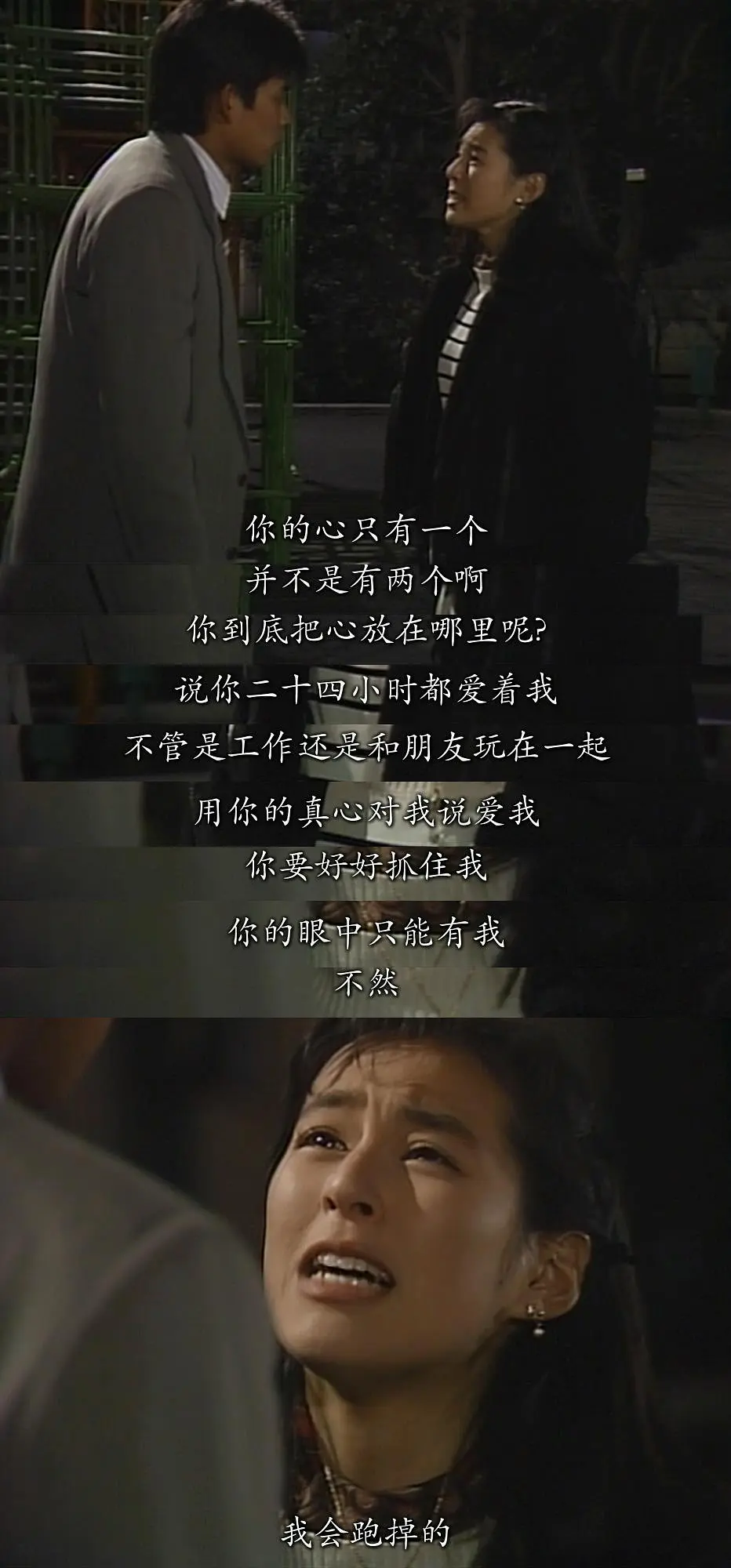
Rika is deeply disappointed by Kanji’s indecision (image: Tokyo Love Story)
Ultimately I do not think Rika and Kanji ever loved. She loved an imagined Kanji and would not even admire him if she could read his mind. He merely enjoyed the prestige of being loved. Their relationship was illusory love.

Years later, Rika meets Kanji again and expresses her thoughts on love, relationship, and self (image: Tokyo Love Story)
That is all for this bonus feature. I look forward to your thoughts on confidence meeting insecurity and other forms of illusory love, and to hearing what bonus topics you want next. Until next time.
2026.05.25
Audio in Chinese
Related programs

When Love Ends: The Infinite Life Reading List, Season 18
What Is Left to Say About Love?
¥48.00
Included with membership

Love and Pain: 30 Attempts to Break Free from Hurt
Move beyond instinct and understand harm committed in the name of love
¥128.00
Included with membership

On Eros: Philosophical Revelations of Love
Return to the source of love and discover what it reveals
¥68.00
Included with membership