



The Origins of Totalitarianism: How Total Domination Works and What It Leaves Behind | Citizenship Course, Season 9

Arendt and The Origins of Totalitarianism
Hello, I’m Yang Zhao. In our Ten Lessons in Citizenship series, we now reach the ninth section: Hannah Arendt and her book The Origins of Totalitarianism.
This is one of the twentieth century’s most important works of political thought. Many people know Arendt’s name, her idea of the banality of evil, and her discussions of the masses, society, and loneliness. A new translation of another major work, The Human Condition, is also available. Information about her is everywhere.
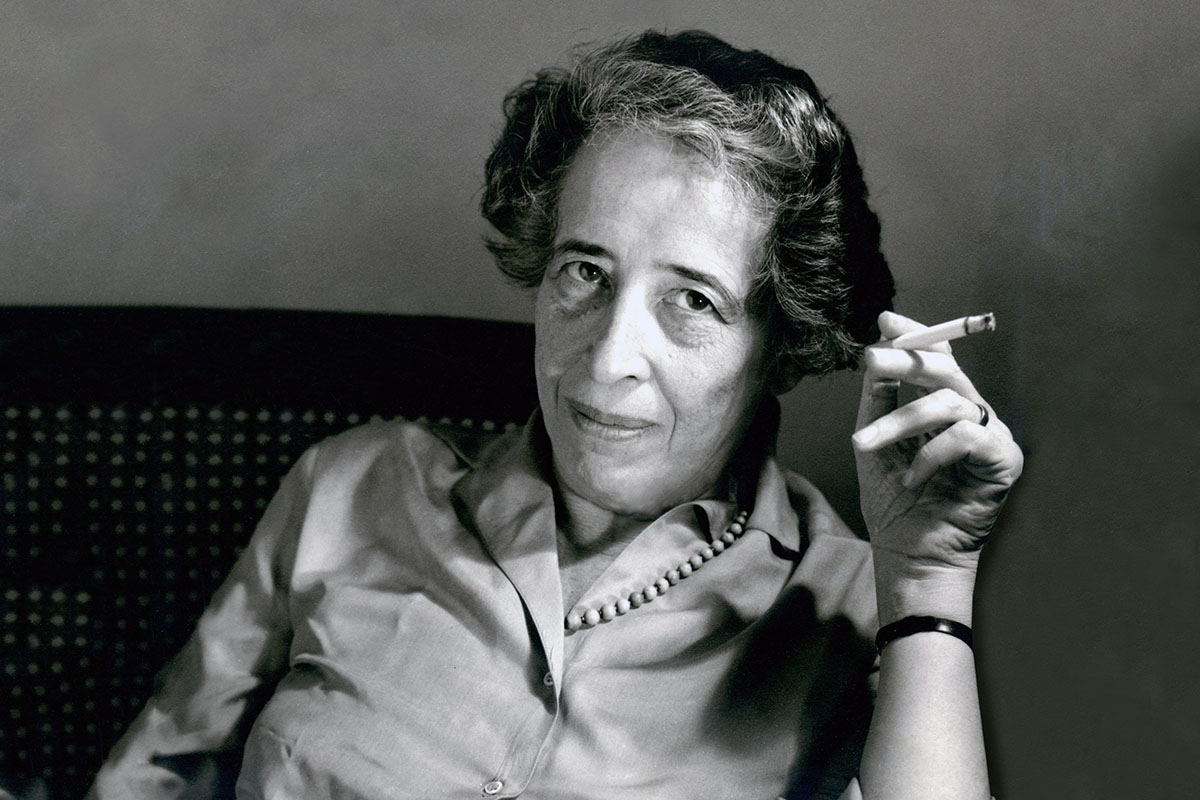
Hannah Arendt
Her name is often invoked in public debate. Yet the central work here isThe Origins of Totalitarianism. Its title promises to explain totalitarianism and, more importantly, how it became a singular twentieth-century phenomenon.
Few people, I suspect, have read the whole long and complex book. Arendt’snarrative moves from European antisemitism through imperialism to Nazi Germany and Stalinism, comparing Nazi fascism with Stalinism to explain totalitarianism.
It is at once history and political analysis, informed by the profound philosophical thought of a trained philosopher. Its interwoven lines resist reduction to a few neat conclusions.
Another reason the book receives limited attention is the question: what does totalitarianism have to do with us?
Why Is This Book Still Worth Reading?
We already know Nazism was evil, concentration camps and the Holocaust were immense crimes, dictatorships suppress freedom, and masses persuaded by common propaganda can produce catastrophe. If so, why still read The Origins of Totalitarianism?
Nazi Germany, Stalin’s rule, and World War II now seem distant. Totalitarianism appears to belong to a dark but finished age, making the book an object of historical curiosity rather than practical help in understanding the present.
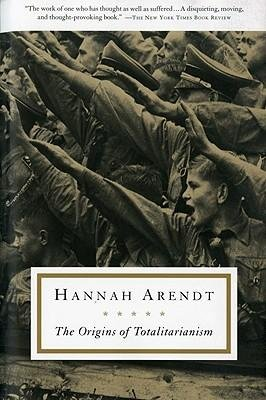
Yet I want to tell you:The Origins of Totalitarianism truly deserves to be read. Arendt does not merely say that Nazis were evil or dictatorship dangerous. She asks a far harder and more disturbing question.
How could a highly civilized society with modern science, law, bureaucracy, and education transform so completely and suddenly into political disaster? Totalitarianism was not barbarism invading from outside; it formed within modern society. Many of its conditions belonged not only to Germany or the Soviet Union but to the structure of modern politics itself.
This connects it to Ten Lessons in Citizenship and our discussion of Dialectic of Enlightenment: modern culture and history can develop surprising consequences. Reading Arendt today does not mean history will return identically or that every disturbing contemporary phenomenon should be labeled totalitarian.
On the contrary, Arendt warns us not to replace understanding with familiar labels. Genuine understanding matters.
She asks us to see what changed before totalitarian rule: how human relationships loosened, the public world collapsed, facts lost common standards, and isolated, disoriented, powerless individuals were absorbed into an immense, closed political movement.As long as those problems persist, this book is not only about the past.
Arendt’s Unique Position: Participant, Not Observer
Arendt occupied an unusual intellectual position. A German-born Jew trained in philosophy under Martin Heidegger and Karl Jaspers, she fled Nazi Germany for France and later the United States.
She did not study totalitarianism calmly from outside history. She experienced the collapse of Europe’s political order, became stateless, and witnessed refugees and exiles. Politics for her was not an abstract arrangement of institutions but the fundamental question of whether people can speak and act in a shared world.
She therefore found existing explanations of totalitarianism inadequate.
The first treated it as intensified traditional tyranny: a ruler gained greater power, used greater violence, and abolished more freedom.Arendt believed this missed totalitarianism’s novelty. Earlier tyrants wanted obedience; totalitarian systems sought to govern behavior, thought, memory, and the sense of reality, making people submit entirely to a supposedly irresistible law of history or nature.
Nazism interpreted history through racial struggle and Stalinism through class struggle. Rulers portrayed themselves not as willing individuals but as executors of historical law.
A second explanation attributed Nazism to German national character, antisemitic tradition, or political backwardness.Arendt did not deny these factors, but a cause located in one nation’s character cannot explain totalitarianism as a modern political form.
Her extensive treatment of nineteenth-century antisemitism, the nation-state’s crisis, imperialism, and colonial rule shows that totalitarianism was not sudden madness but grew through contradictions accumulated in Europe’s political order. Her inquiry echoes Horkheimer and Adorno’s Dialectic of Enlightenment.
A third explanation made totalitarianism a direct result of economic crisis or class conflict. Collapse, unemployment, and poverty can certainly promote political extremism.But Arendt asks not only whether people are poor, but whether they still belong to a stable world. Someone in hardship may remain rooted in family, community, union, party, and local organization; someone materially comfortable may feel placeless, misunderstood, and powerless in public life.
Totalitarian movements attracted not simply the poor but those deprived of social connection, political belonging, and orientation in reality.
Ordinary Participation: The Starting Point of the Banality of Evil
Looking back almost eighty years, we often tell a clear moral story: an evil dictator and Nazi propaganda deceived the public, then secret police and concentration camps crushed opponents. True as it is, this reduces the problem to a few villains controlling an innocent majority.
Arendt’s crucial insight was thattotalitarian rule depends neither solely on fanatics nor only on fear and force.It requires the participation of vast numbers of ordinary people, some silent and many cooperating, who in the process relinquish responsibility.
They really are ordinary, not necessarily wicked or ideologically fanatical: a civil servant registering people, arranging transport, processing property, or transmitting documents; a parent preserving a job and saying politics has nothing to do with them. When everyone isolates a tiny task from the whole and no one accepts responsibility for the outcome, enormous crimes can be completed through everyday procedures.
Arendt’s later phrase “the banality of evil,” developed at the Eichmann trial, is not central to this book but continues the same question. Evil may appear not as fierce malice but as failure to think and judge, and refusal to view one’s actions empathetically from another person’s position.
Her analysis does not excuse wrongdoing; it enlarges responsibility.
If totalitarianism comes only from monsters, anyone who is not a monster can relax. But if it requires countless ordinary people to cooperate, the questions change: are you the sort of ordinary person who stops judging, abandons public responsibility, and says politics is none of your concern? Then the issue includes you.
The question is not only what bad people do, but under what conditions anyone decides, “I need not think; I will stop thinking.”
From Class Society to Mass Society: Social Ties Break
Arendt pays close attention to the social conditions preceding totalitarianism, describing a transition from class society to mass society.
Traditional class, religion, occupation, and locality constrained people but also gave them clear positions. Modernization broke these structures, increasing freedom while removing attachment and belonging. As parties, associations, local communities, and public organizations weakened, disconnected individuals became a mass.
Arendt’s masses do not simply mean large numbers or poorly educated people.Their defining feature is the absence of solid public relationships. They may live in crowded cities and meet many people without participating in a shared world. They distrust parties, media, and law, believing every public statement false and every politician merely performing.
Under such conditions,an extreme movement becomes powerfully attractive by supplying an apparently complete explanation: your failure is not accidental; disorder comes from a hidden enemy; destroy that enemy and order and success will return.
Totalitarian ideology offers this captivating logic, deriving every answer from one simple premise: a common enemy.
If race struggle determines history, every event becomes a racial conspiracy; if class struggle does, every opponent is a class enemy. Contradictions do not revise the ideology but supposedly prove the enemy more cunning. A closed world then relieves people of complex, uncertain, frustrating plural reality.
This explains whytotalitarian propaganda need not persuade people of each particular fact. Its deeper aim is to destroy their ability to distinguish truth from falsehood. Continually rewriting history, issuing contradictions, and affirming today what it denies tomorrow may produce not belief in every claim but universal cynicism.
People conclude that answers and truth are impossible because everyone lies. Without shared facts, public discussion loses its basis. Only allegiance to an ideological position, force, and capacity to harm remain.
Solitude, Isolation, and Loneliness: Three Different Conditions
Arendt’s analysis of loneliness deserves special attention.
She distinguishes solitude, isolation, and loneliness.
Solitude is neutral and can support thought and inner dialogue. Political isolation means inability to act with others. Loneliness is most dangerous: one loses not only others but even inner dialogue, no longer knowing whether experience is real or judgment trustworthy, and unable to use others’ perspectives to confirm what world one inhabits.
Totalitarianism offers lonely individuals power. They long to enter something larger, receive a certain explanation, and escape the anxiety of personal judgment. Joining a vast movement transforms an ignored, insignificant individual into part of history’s current.
Ideology supplies above all belonging: the assurance that one knows the secret of the world and stands on history’s inevitably correct side.
Thinking and Judgment: Personal Responsibility Against Totalitarianism
Arendt did not understand totalitarianism as a merely institutional problem.
It begins with a broken relationship between people and world. When shared facts, public space, organization, and joint action vanish, politics degenerates from participation into dependence on power. People stop asking how to live together and ask who will restore order, defeat enemies, and prove that history is on their side.
This is why thought and judgment matter so much to Arendt. Thinking is not mere knowledge. Eichmann knew his orders caused mass death, yet failed to stop and ask what he was doing, how he would see it if done to him, and whether he must judge differently when law becomes an instrument of crime.
What is needed is judgment, not simply applying ready-made rules. Ordinarily we rely on law, moral custom, and social consensus. Buttotalitarianism changes rules, legalizes crime, makes obedience virtuous, and treats refusal to participate as guilt.
Then the individual cannot merely say, “I followed the law” or “everyone did it.” One must preserve the ability to judge when no reliable rule remains.
Arendt connects that ability closely to imagining other people’s positions.Judgment cannot begin only from self-interest or demand unanimity. It means understanding how one shared world looks from different positions.Politics needs public discussion because no individual possesses the whole world. A public realm forms only when different people describe what they see, correcting, debating, and challenging one another.
The Origins of Totalitarianism is thus more than historical research into antisemitism, imperialism, and nation-states. Its history points toward a fundamental political question: what kind of society enables freedom?
Freedom’s Opposite Is the Disappearance of the Public World
Freedom is central to Arendt. It is neither private noninterference nor merely a vote. It begins when people appear together in public, speak, act, initiate something new, and accept responsibility for their common world.
A society may retain elections and democratic forms while its public space shrinks and loses political vitality. When citizens become consumers, spectators, or statistical units, and expert bureaucrats alone manage public problems, ordinary people gradually decide common affairs do not concern them.
Political apathy can coexist with longing for a powerful figure to solve everything. Both apathy and fanaticism may arise from powerlessness: people cease to believe they can join others, contribute judgment and ability, change conditions, and create a better world.
This book concerns ordinary citizens not because everyone must become an expert, but because totalitarianism’s opposite is not merely the absence of a dictator. Healthy political society requires citizens to care about public life, hear different views, and refuse obedience when necessary.
Civic responsibility appears in how we discuss common affairs, treat strangers, and confront institutional injustice, and in whether we habitually surrender responsibility to experts, superiors, majorities, or an ultimate leader.
No Simple Prescription, Only Continuing Practice
Arendt offers no simple recipe for preventing totalitarianism. Institutions, education, and information alone cannot abolish the danger: highly educated people can obey evil systems, and information-rich societies can overflow with lies.
Modern people must learn to judge, act, and accept consequences. They must not deny responsibility because they play a small institutional role, surrender judgment because everyone behaves alike, or escape a complex plural world into a closed theory that explains everything.
Reading the book today, we should not rush to decide which country, party, society, or leader fits the totalitarian label. The label can become an escape from the genuine thinking Arendt persistently asks of us.
We should instead ask:
Does our society retain shared facts? Can people still organize, deliberate, and act together? Does a public language survive, or has it been occupied by propaganda, conspiracy, and divisions between friend and enemy? Do we increasingly treat unlike people as enemies beyond dialogue? Do individuals inside immense systems still acknowledge responsibility?
Totalitarianism’s deepest danger is not only immense state power but the loss of our ability to live together. When everyone retreats into private life, distrusts others, and despairs of meaningful public action, a void opens. Totalitarian movements fill it with identity, enemies, order, necessity, and a supposedly correct historical direction. They erase diversity, reduce people to examples of a race, class, or law of history, and finally try to eliminate spontaneity so nothing unplanned can begin.
Arendt always insists that human beings possess the capacity to begin. Every birth—natality—brings new possibility into the world, and genuine political action can open an unpredictable situation. Totalitarianism seeks to eliminate precisely that uncertainty.
It expects history to follow a declared inevitable path and people merely to obey its law. Free politics does the opposite: it recognizes difference, the uncontrollability of action, and the need to rebuild a common world continually through disagreement, discussion, and above all responsibility.
The book therefore offers no comforting historical conclusion, but an enduring political demand: never regard freedom as complete, never surrender judgment to authority, and never treat the public world as irrelevant scenery.
Freedom must be practiced repeatedly by each of us in concrete moments. It requires defending facts, resisting the reduction of every question to friend-versus-enemy struggle, leaving loneliness to build relationships for common speech and action, and asking even when obedience is easiest and silence safest: What am I doing? Will I accept responsibility?
This is why Arendt’s The Origins of Totalitarianism deserves attention today. I hope we can engage together with these immense questions of both history and present reality.
Thank you for listening. Until next time.
2026.08.13
Audio in Chinese
Related programs

The Spirit of the Laws: The Purpose and Dignity of Law | Citizenship Course, Season 1
How Can Power Be Checked and Civil Liberty Protected?
¥48.00
Included with membership

The Road to Serfdom: Freedom in Crisis | Citizenship Course, Season 7
Why civil liberty matters in both economics and politics
¥48.00
Included with membership
The Road to Freedom: The Infinite Life Reading List, Season 15
Through history's tunnels in search of freedom
¥48.00
Included with membership